
Community holes
Your window to hike across a municipal golf course is closing!

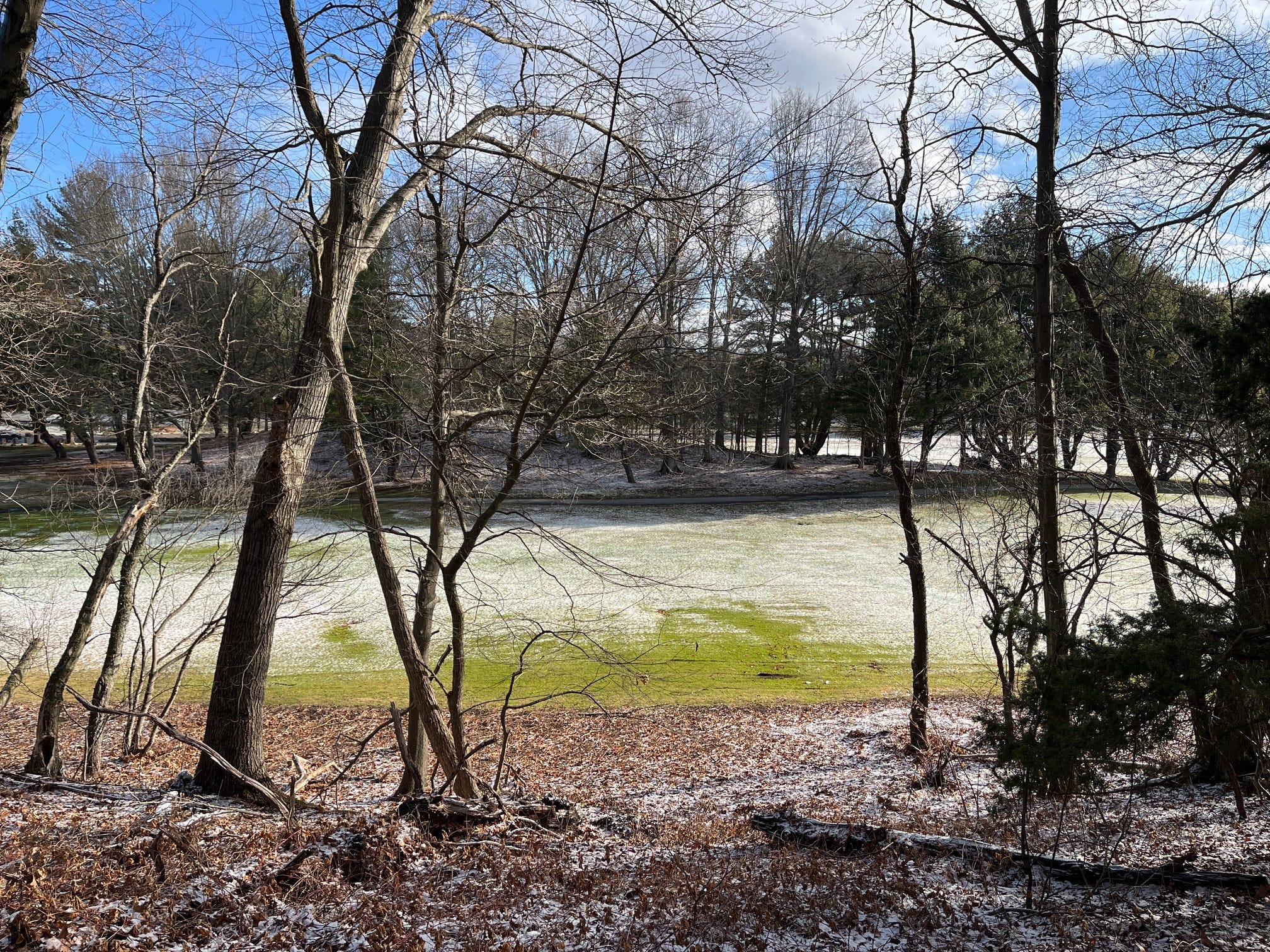
As far as outdoor recreation is concerned, there are the four seasons that most of us live by, and then there are the micro-seasons; special, short-lived events that can turn a routine walk outside into a treasured memory that you’ll revisit for years. It might be exploring the Providence Riverwalk just in time to spot tens of thousands of herring in the water, swimming upstream and down to fuck. Or you might be visiting Southern California and hiking an oceanside trail on some evening between June and October, when higher concentrations of bioluminiscent plankton can cause the waves to glow.
Either of these are reason enough to plan a trip. But this week, to my horror, I realized that I’ve been sleepwalking through one of the most unique micro-seasons in places that experience colder and soggier conditions during the winter. Regions in which the conditions that materialize between November and April are enough to make people look out their bedroom windows and say, “I would not want to be playing golf today.”
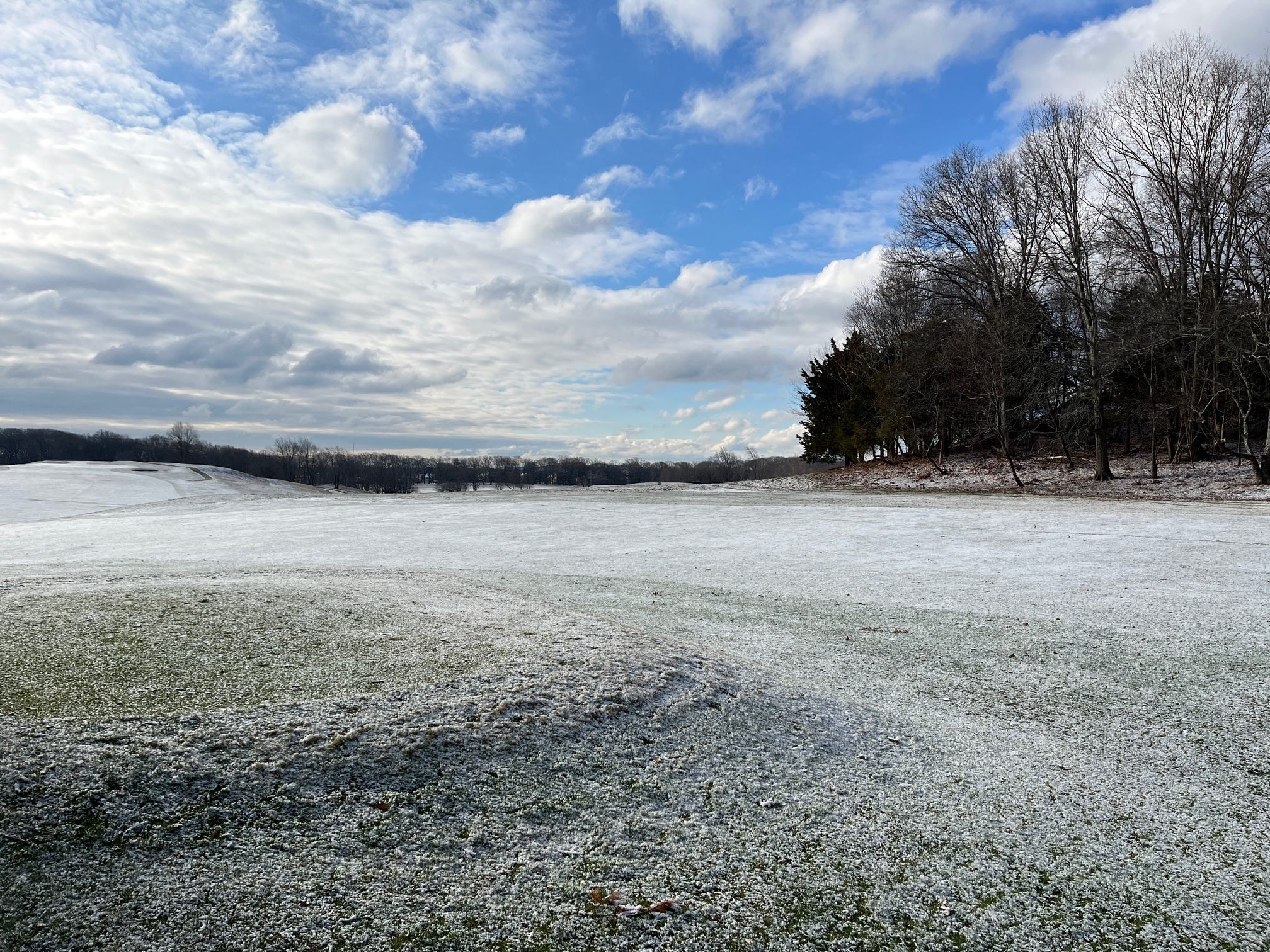
We’ve visited golf courses in Mind The Moss before—between the subversive joy of trespassing on a golf course, to the unsung landscape architecture that make some mini-golf courses better than others. And every time I’ve written about golf courses, with their sculpted beauty, recreational exclusivity, and dodgy ethics, a lot of you have responded with comments, rants, and policy ideas; all of which I appreciated. The golf course seems to be an object of shared fascination and frustration for many of us. So as we approach the last days of March, I want to encourage you to take advantage of your dwindling opportunity to go for a hike…across a municipally-owned golf course.
According to the National Golf Foundation, there are around 2,939 municipally-owned golf courses in America—which boils down to 18% of our total golf courses. Contrary to what one might assume in our age of inequality, privatization, and austerity, public golf courses are actually doing well, with strong visitation rates and sustained growth against a broader backdrop of golf course shrinkage! Think about that for a moment. As total golf course real estate declines, municipal golf course territory is expanding. That’s pretty special in this moment of American culture and history. The problem is that this expansion of land and opportunity for golfers comes at a cost, paid by folks who enjoy hiking, birding, forest bathing, and other activites that don’t pair well with flying balls that can crack skulls. For those of us huddling under that umbrella, there’s a seasonal window when municipal golf courses become accessible to us, and it’s now.
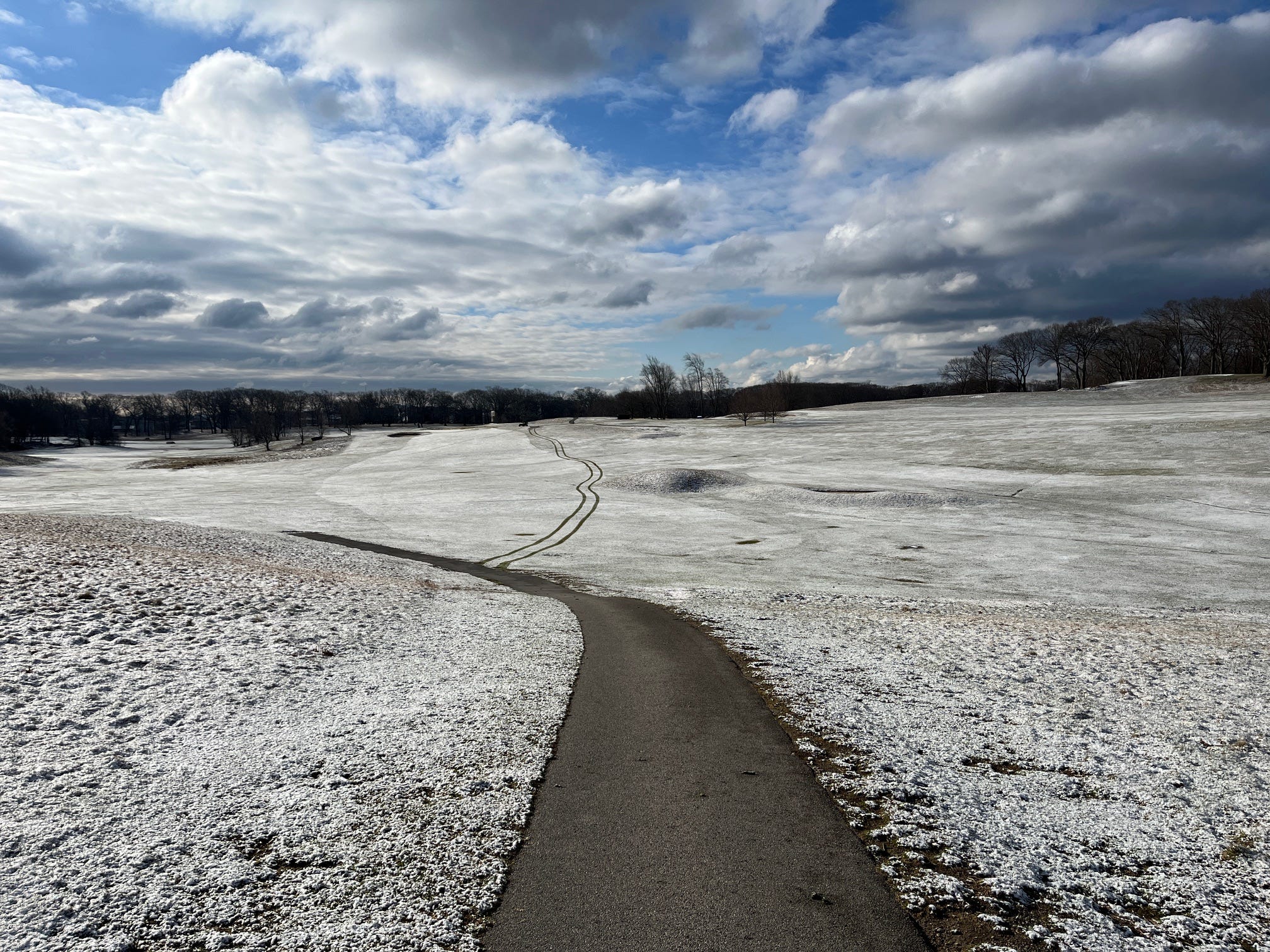
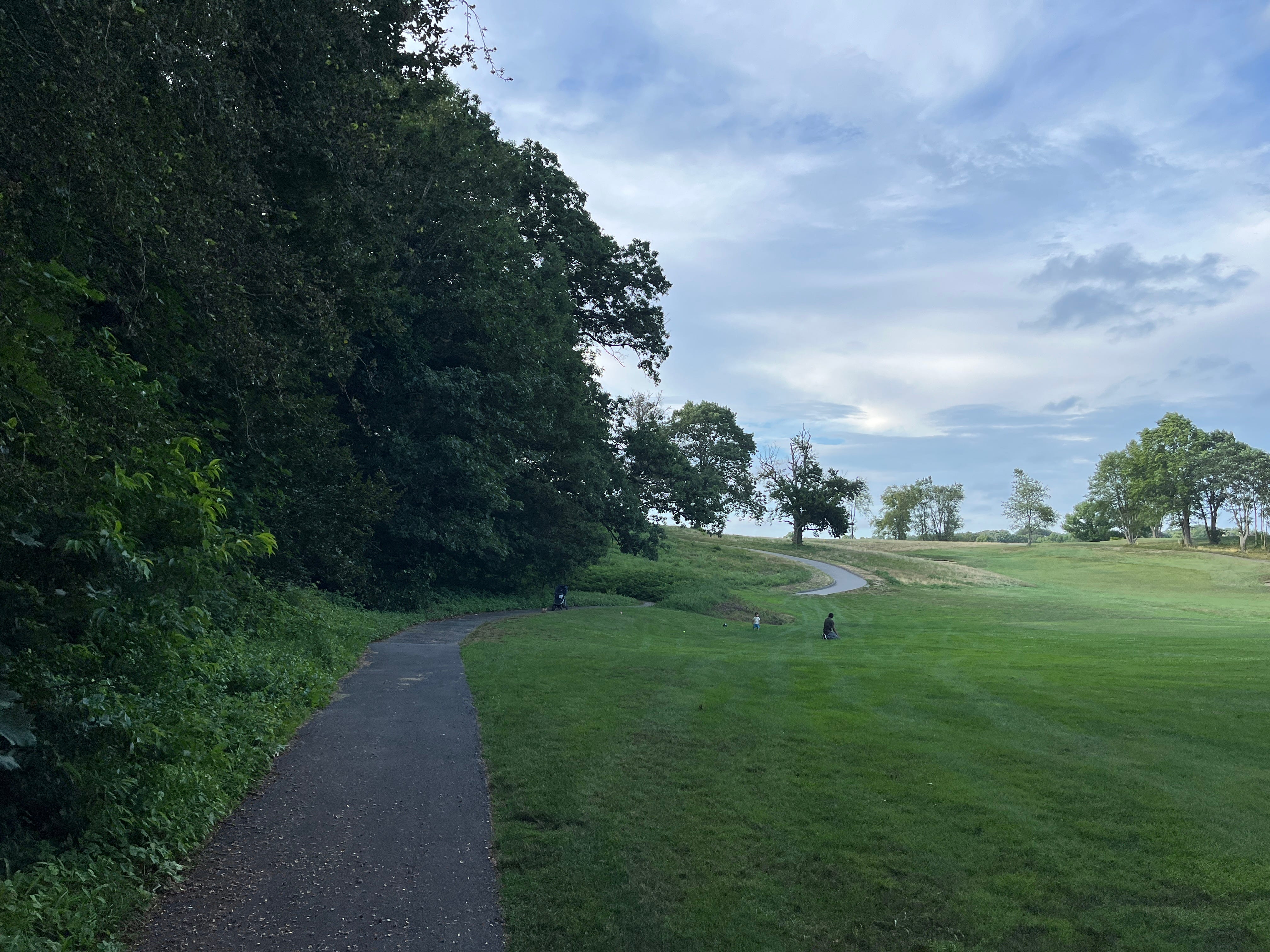
Consider Franklin Park, the southern crown jewel of Frederick Law Olmsted’s Emerald Necklace park system, which connects several neighborhoods here in Boston. Nearly half of Franklin Park’s 527 rustling acres is occupied by the William J. Devine Golf Course. In the summer, it’s a forbidden zone for anyone who’s not wielding a club, but now—if you can look past all the Canada Goose shit—the hills of this golf course are downright romantic. On a sunny late winter/early spring day, you can even detect a hint of green in those hills. Their topography is not unlike the verdant humps of The Shire, as seen in The Fellowship of the Ring. To freely walk across such humps, in a city no less, is a special type of outdoor excursion. So that’s what I did on a bright Tuesday morning this week. I got up early, threw my laptop and work supplies in a backpack, and instead of jumping on the bus or train, I spent a lovely hour squelching my way across the William J. Devine Golf Course and enjoying the solitude of being there at the end of winter. My eventual destination was a bus stop near Egleston Square, on the north side of Franklin Park, but hiking there via the course allowed for the most naturally immersive morning walk I’ve had since Boston’s first snowstorm of 2026.
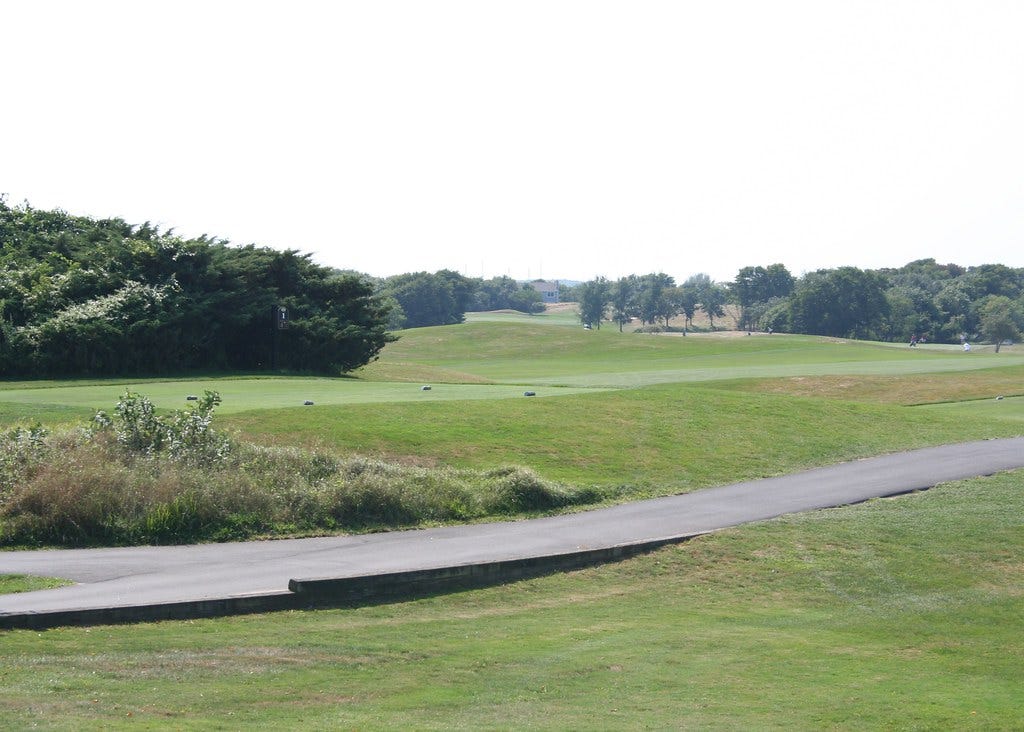
That’s just one example of what a municipal golf course hike can look like. A planned scenic detour on your morning commute, if you happen to live near a golf course. The municipal golf course takes many forms, and some of them are palatial enough to be worthy of regional travel. At the far eastern edge of Long Island, New York’s Montauk Point is packing a monster municipal golf course—buffered by woodlands, ponds, and of course, lots of sand traps. And since the Montauk Downs State Park Golf Course is ultimately a small piece of a vacation destination that draws hordes of visitors every summer, the golf course is within a short walking distance of other curiosities that can make for a full day of exploring; like the Arthur W.B. Wood Windmill House (the only house in Montauk with a windmill!) to the Fort Hill Cemetery (moody as hell!) Better yet, the Montauk MTA train station offers direct rail service to New York City and it’s less than an hour from the Montauk Downs golf course by foot. You can experience Montauk’s canopies, slopes, and seabreeze in a most unusual manner if you go ASAP.
Most golf courses in places with wintery climates tend to open back up for tee time in early-to-mid April. So I’m not exaggerating when I say that these next few weeks are your final chance to experience a golfscape that’s truly accessible to the greater public until this time in 2027. Probably, at least. I imagine that as summer droughts become more regular in more regions of the U.S., the question of whether maintaining golf courses is ethical will keep flaring up. (If a town or city is using limited resources to keep public land healthy and safe, it will be tougher to justify those expenditures if a large piece of land is only usable for a niche segment of the public.) As that question looms, it’s possible that some municipal golf courses could be converted into public lands of more uses. There’s already a precedent for cities buying private golf courses and turning them into parkland. Last year, Denver scooped up the 155-acre Park Hill Golf Course and voters there approved a $70 million public investment to transform the course into a rewilded park with trails, athletic facilities, and community gathering spaces. The architecture firm Sasaki is co-leading the project with Denver’s Parks and Recreation office, and the completed park will be one of the Mile High City’s biggest.
For now, most of us will have to imagine what a rewilded golf course could look like. But if you’re able to take a walk across your closest municipal course this weekend or next week, savoring all the soggy grass beneath your feet and the immense quietude that follows you from hole to hole—on the eve of golf season firing back up again—you might get a slightly sharper picture of how these polarizing green spaces could facilitate good health and happiness for a lot more of us, somewhere down the road.
Thanks for Sharing ☺️🙏🏼
Hi Miles,
Our Village group,Neighbors Connect a program of Ethos, walks around Franklin Park Golf Course every Tuesday at 9AM.
Come join us , we start at the junction of Forest Hills street and Williams street.
We are an older group 70-90 and we love to walk and talk.
John McGuire