Earthly limits
Knowing when it's time to walk away from a new recreational interest

One of the upsides of living in the Internet age is the sheer number of windows into unfamiliar lifestyles and recreational hobbies that we’re offered. I never realized how many young people are using peptides and counting “macros” until the Instagram algorithm started doubling down on fitness content. On a healthier note, a lot of us have discovered the joy of outdoor activities such as hiking, birding, fishing, and even ultra-running through exposure to seasoned pros who’ve been using social media to share their joy and expertise with the wider public. This makes the prospect of trying out a new recreational activity feel more tangible. And sometimes, when the gears click into place after the first few exposures, our lives can change unexpectedly fast.
Earlier this spring, after breaking my pinky toe from stubbing it too hard on the leg of a love seat (is there anything more emasculating than cracking a bone on furniture?), I got back into biking after a years-long hiatus. It came back to me like…well…riding a bicycle. Within a month of pedalling around Boston’s protected paths and bike lanes, joining the BlueBikes program, and procuring a used bike for trips beyond the city, an opportunity to escalate my free-wheeling presented itself. I accepted an assignment for a story about mountain biking—a story that would benefit from the perspective of someone totally new to “MTB” culture. I gamely accepted, and grabbed my helmet.
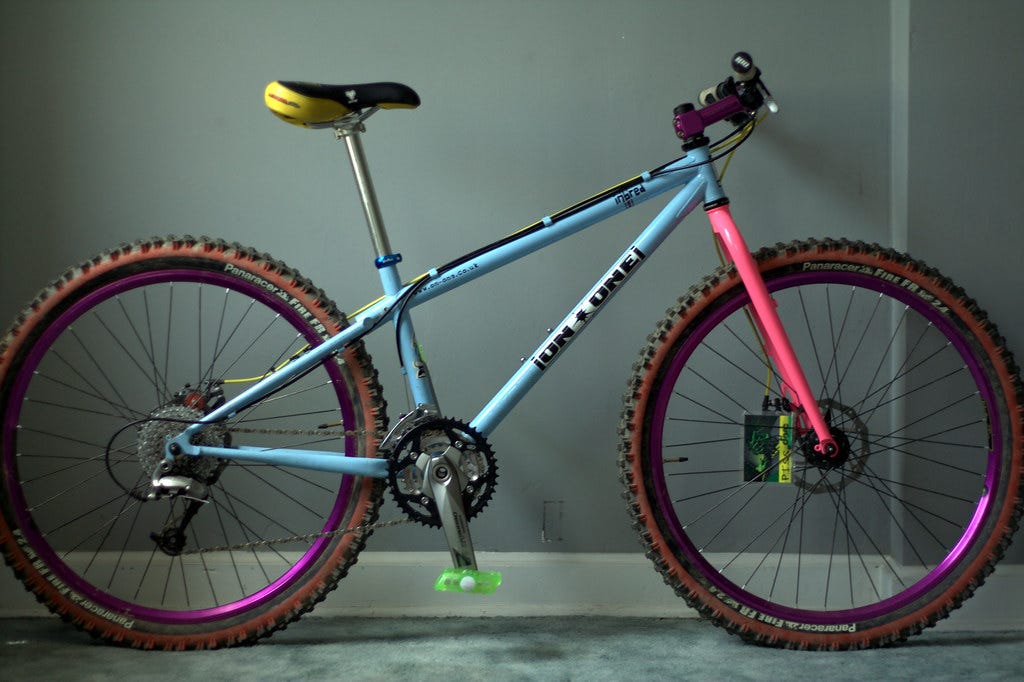
The first few rounds on beginner level trails went nicely. My nerves jangled a little too much to allow for rolling over roots and rocks at full speed, and at one point I thought that I was going to grind the brakes of the loaner bike into nubbin. But once the trails emerged from the woods into sun-splashed hillsides and meadows, with groomed dirt trails that meandered across the landscape, I found my flow and genuinely enjoyed it. By the time I found myself in the hills of southeastern Vermont, on a trail network with more rigorous obstacles, I decided to try a trail that was right on the edge of easy and moderate; at a cautious speed, with the self-agreement that if I ran into anything that made me feel extra nervous, I would dismount, walk my bike, and then pedal onward.
What I failed to account for, however, is a common mishap that mountain bikers refer to as “pedal strike;” the moment when your pedal makes contact with an object along the thin trail, like an extruding stone or stump. Less than five minutes into my fourth ever mountain bike ride, my left pedal struck something and what happened next was so fast and jolting that I’m still not quite sure what went down. Other than my body. I hit the ground hard, breaking the fall with both hands, absording most of the impact in my right arm and shoulder. I scraped my left elbow on something, drawing blood. By the next morning, I had a bruise on my lower stomach that required a trip to the ER.
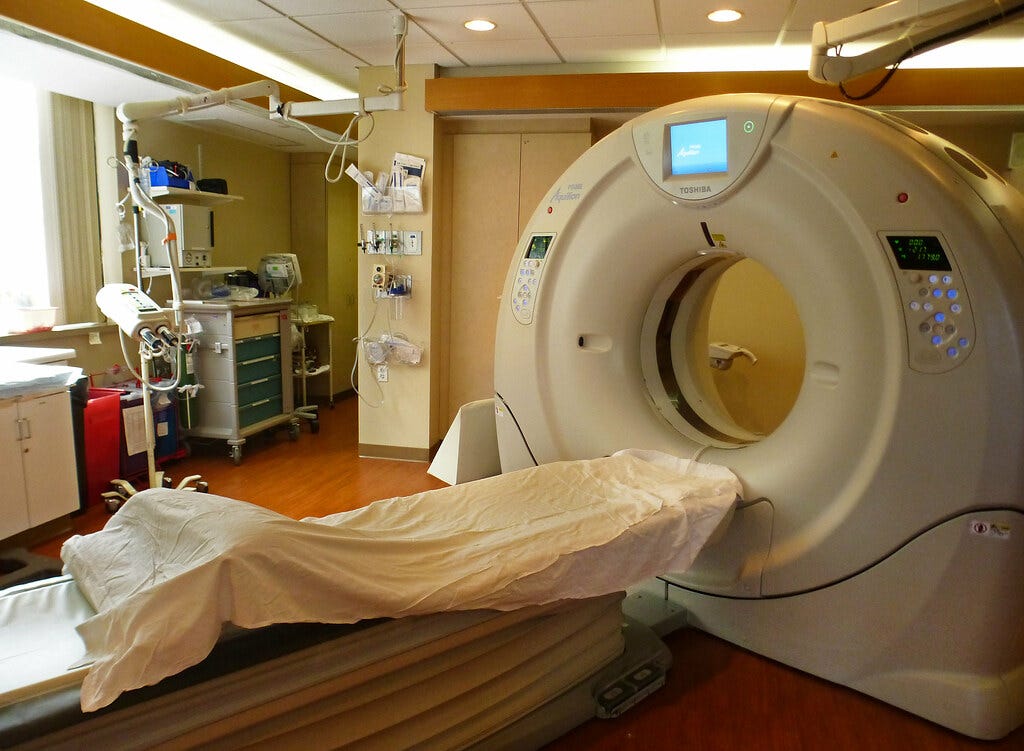
The reason why I went to a hospital to get the bruise checked out is because bruising in the vicinity of your internal organs can be a symptom of internal bleeding. Getting hit in the gut with a handlebar can cause this. As a hospital tech injected contrast dye into an IV in my left arm, telling me that I would soon feel a warming sensation in my midsection as they slid me into the CAT Scan machine, I tried to prepare my brain for the possibility that I might need surgery—if the scan results revealed a critical injury. Surprisingly, I wasn’t freaking out internally. Being in a place where I could get such care, if needed, helped me stay cool and collected. But there was also some level of disbelief at play too. I had spent less than 5 hours on a mountain bike in my entire life, all within the last few months. Now the doctors were making sure that I hadn’t banged up one of my guts too hard when I ate shit on that “easy” trail in Vermont.
When I got the results of the scan—all clear, with the bruising attributed to a light abdominal sprain—I decided that it was time for me to retire from mountain biking.
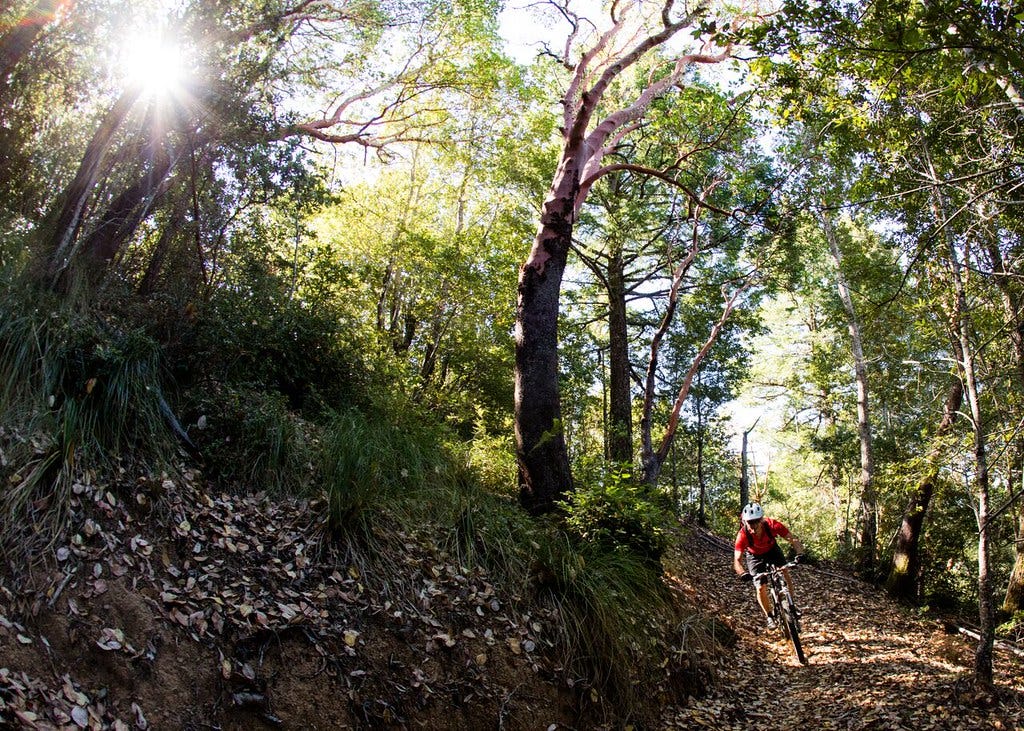
It was a quick, firm decision, but not without its disappointments. My brief foray with the sport had introduced me to people within the mountain biking scene who were gregarious and generous to an extent that you don’t often see in outdoor sports. My buddy Dan, a very experienced mountain biker, had gone above and beyond to ease my passage into the sport and demystify it for me. Pedalling around grassy trails for the first time was enjoyable enough that I actually wondered how far that path might lead. It took me deep into the bowels of Tufts Medical Center, for a scan of my literal bowels. When I emerged back into daylight in Boston, banged up but not seriously so, I felt that sense of mourning washed away by gratitude; for being able to walk away.
Maybe this has happened to you as well. Not a mountain bike crash and ER visit, but a new recreational hobby through which you flew a little too close to the sun. While the inherent dangers of mountain biking are steeper than average—broken bones, muscle strains, and even concussions are possibilities that come with the territory—challenges that come with experimental pursuits take on many forms. An old college friend in LA once told me that she gave up yoga after three months, because she found the other patrons at her studio to be insufferably judgmental and unpleasant to be around. A former co-worker I met through the Appalachian Mountain Club had a brief flirtation with marathoning, only to quit after two races where they logged remarkable times. It wasn’t the physical rigor of the sport that prompted them to retire, but the realization that training for future marathons would torpedo the balance of their lifestyle. They chose that balance over a sport they were already excelling at, and I found that cool.
Friends, family, and peers tend to be supportive when they see us enjoying something new. If you go out with a birding buddy and spot an ultra-rare Bewick’s wren on your first walk, you may find yourself fielding encouragement to spring for top-of-the-line binoculars or a plane ticket to a bird-watching festival on the Gulf Coast. Even when we run into early challenges while trying out a new recreational hobby, it can be very instinctual for onlookers and our inner voice to promote perseverence. It comes from a place of good intention, and in general, pushing through adversity tends to create better outcomes in life. As a New Englander—afflicted by Puritanism in ways that I’ll never fully understand—I am keenly aware that suffering can augment gratification.
The question that’s important to ask, however, is whether there’s room for that early suffering in the day-to-day landscape of your life. With recreational activities, there’s almost always going to be some trade-off of risks and rewards. Regarding mountain biking, I respect that many MTB fans find the thrills and shared joy of the sport to be more than worth the hazards that it presents, and I would never try to convince them otherwise. The same goes for folks who enjoy playing football, even with the recent studies on concussions linking the injury to the sport in deeply troubling ways. It’s an activity that is very much for someone, and for all I know, they’ve made a calculation that allows them to accept the physical exposure of the sport and play on in earnest.
If you find yourself at a crossroads after trying out a new recreational path, struggling with short term pains and feeling torn between soldiering onward or reatreating, ask yourself this: Am I up for more pain? The most important word in that question is “I.” Don’t think about how friends might respond with surprise or disappointment upon learning that you decided to bail on your new activity. Only you can know whether your life has enough buffering for the inevitable challenges and setbacks of sticking with it, and whether the catharsis of gaining experience and confidence is worth it.
I quit mountain biking after four short and mostly enjoyable rides because I don’t have room in my life for going to the hospital more often. The fact that my crash didn’t leave me with mobility-altering injuries now feels like a godsend, and if I had found myself in a cast or an ankle brace, I would have been deeply unhappy; cursing my decision to take a walk, or a glide, on the wild side. Maybe that’s the best case for retiring from a recreational activity that feels unsustainable or too risky for comfort.
Why ruin a good thing by clinging to it, when your mind and body say, “Let it go?”