
End of (snow) days
How we lost one of nature's gifts, and how we might reclaim it

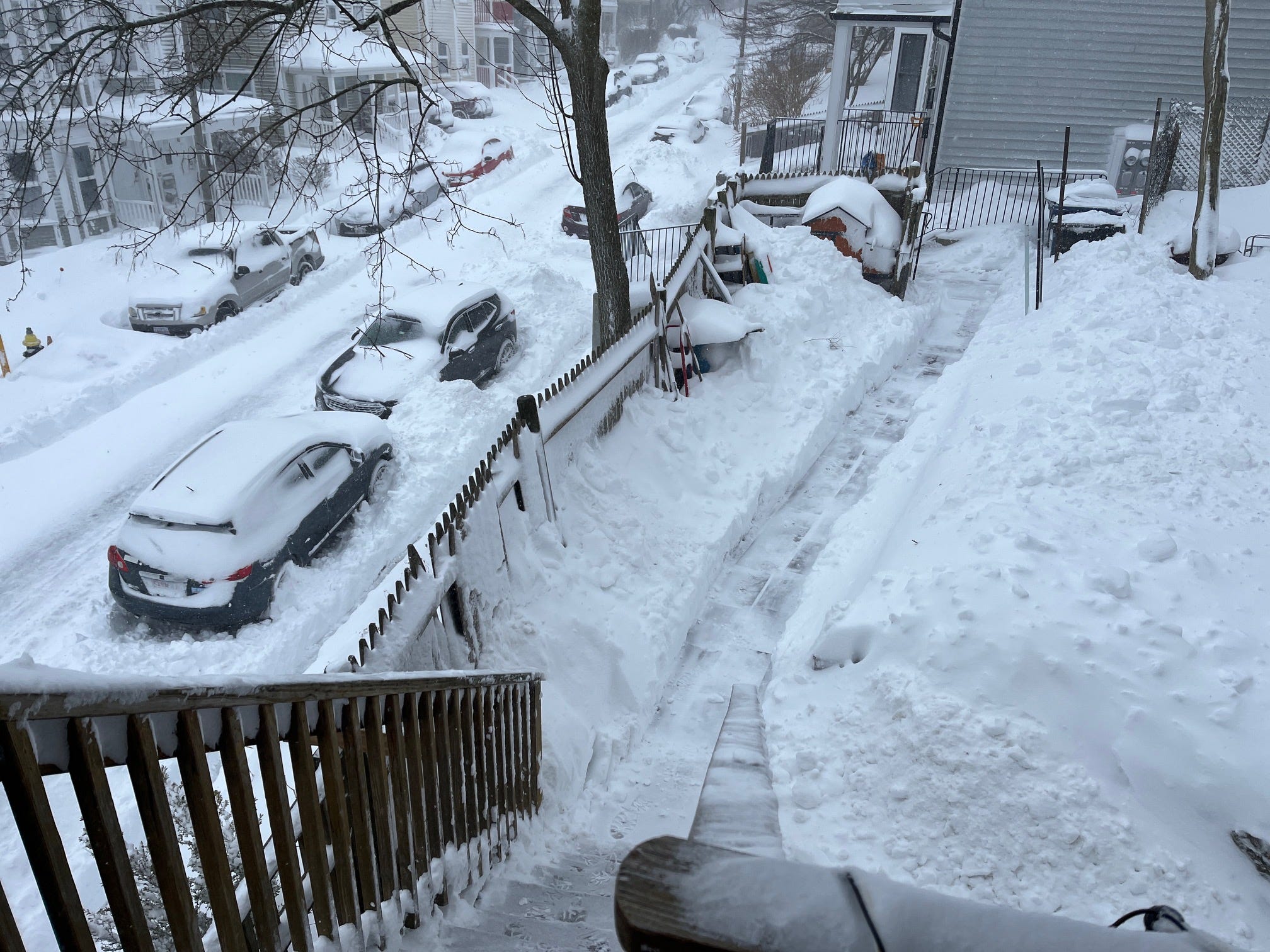
At this point, it’s no longer news that regular snowstorms in formerly blanketed winter locales are a thing of the past. “Winter” is now a soggier, clammier event in regions that have seen steady temperature increases in the last few decades, and we’re doing our best to adjust to this new reality. Nonetheless, there are still some occasions when low pressure systems lift moist air high enough to form clouds and unleash the fury of Old Man Winter on places like the Mid-Atlantic and New England. Those of us who live near the east coast between Baltimore and Boston are shoveling our way out from the powdery offerings of Winter Storm Hernando—which broke snowfall records set by the notorious blizzard of 1978 in northeastern cities like Providence and Fall River, Massachusetts. Governor Maura Healey actually went so far as to place a temporary travel ban on southeastern Mass., so that state and municipal workers could focus on clearing the roads and freeways without having to deal with vehicles sliding off them.
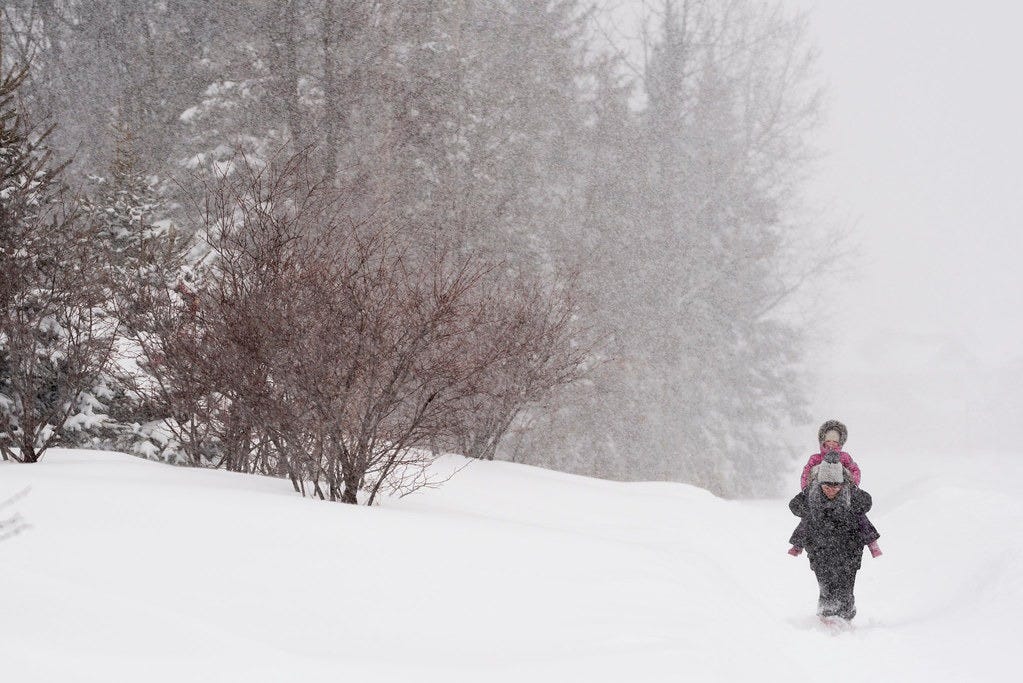
These humbling, snowbound events can trigger Proustian flashbacks for those of us who grew up at a time when monster blizzards meant extra time for being cozy and rambunctious; an age when Snow Days were a thing that millions of families, couples, and single adults got to enjoy a few times each winter. A storm, by definition, forces the world to slow down. While juggernaut blizzards can be dangerous—in the event that local power lines are knocked out—they are a sleepier kind of storm and they lack the destructive power of a hurricane. The hazards posed by a blizzard are more connected to activites that we might choose to do when the storm is unfolding, such as trying to drive somewhere, or shoveling heavy snow when you’ve got a history of back injuries. So, if we’re confronted by a storm and told to stay home from school or work, many of us do exactly that. We treat ourselves to a day doing whatever may feel instinctual during a storm; reading, watching movies, solving a puzzle, cooking a stew, trying a new yoga pose, grabbing some late morning delight, you name it. And I’m sure plenty of people along the eastern seaboard got to experience this on Monday.
But Snow Days—arguably one of most essential, nourishing force majeure events of the human experience—are in a recession that’s worsening. And the catalytic force behind this recession is not climatological. It’s an injury we’ve inflicted on ourselves.
In December of 2019, around 10 million people were logging into Zoom each day to host or join remote meetings. Less than half a year later, as ICUs kept filling up with intubated COVID-19 patients and governments ordered their citizens to stay at home until the first lull of the pandemic, 300 million of us were using Zoom daily. At the time, video call technology that was relatively simple and user-friendly provided actionable solutions for a catalysm. It allowed people to keep in touch with friends and family in distant locales (and, in the worst cases, to say goodbye to loved ones who were taking their last breaths in quarantined hospital rooms.) But remote video calls also allowed workers to hold onto their jobs at a time when gathering inside a workplace wasn’t feasible. Given how many of us lost work, this was a serious relief.
Still, speaking as somebody who’s been working remotely for a decade, I watched the normalization of Zoom and video calls with trepidation. I was thrilled for all the people who were finally getting a breather from driving or taking a bus to work each day, and I was happy that they could hold onto their livelihoods during the pandemic. But the question that haunted me was whether Zoom would keep on growing once the worst of the pandemic was over. Unsurprisingly, as the storm began fading, those who once commuted to their jobs weren’t too keen on being forced back into a workplace. Most businesses responded in three ways. Some told their employees to come back or find another job. Others allowed everyone to continue working remotely. And quite a few adopted “hybrid” systems in which workers would do their tasks in-person some days and at home on others. The second and third approaches were hailed as victories for workers. Part of me used to believe this too. But in retrospect, I think this was actually a loss. It was the dissolution of a boundary that made it somewhat easier to separate working and living. A boundary that had already crumbling for American workers.
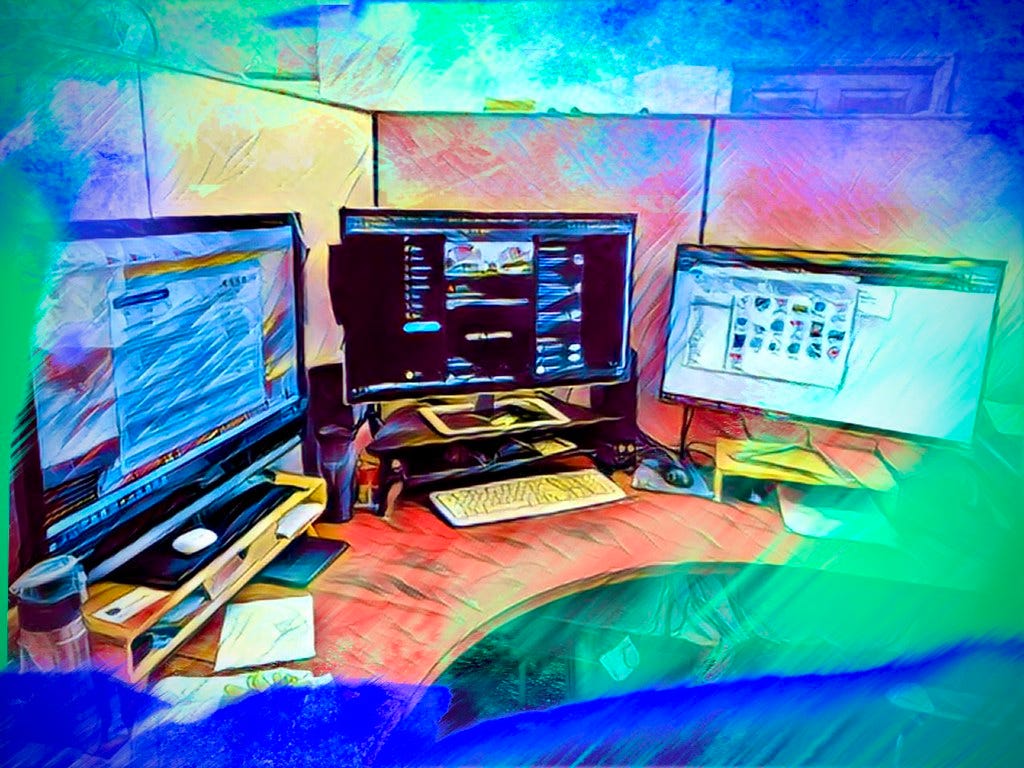
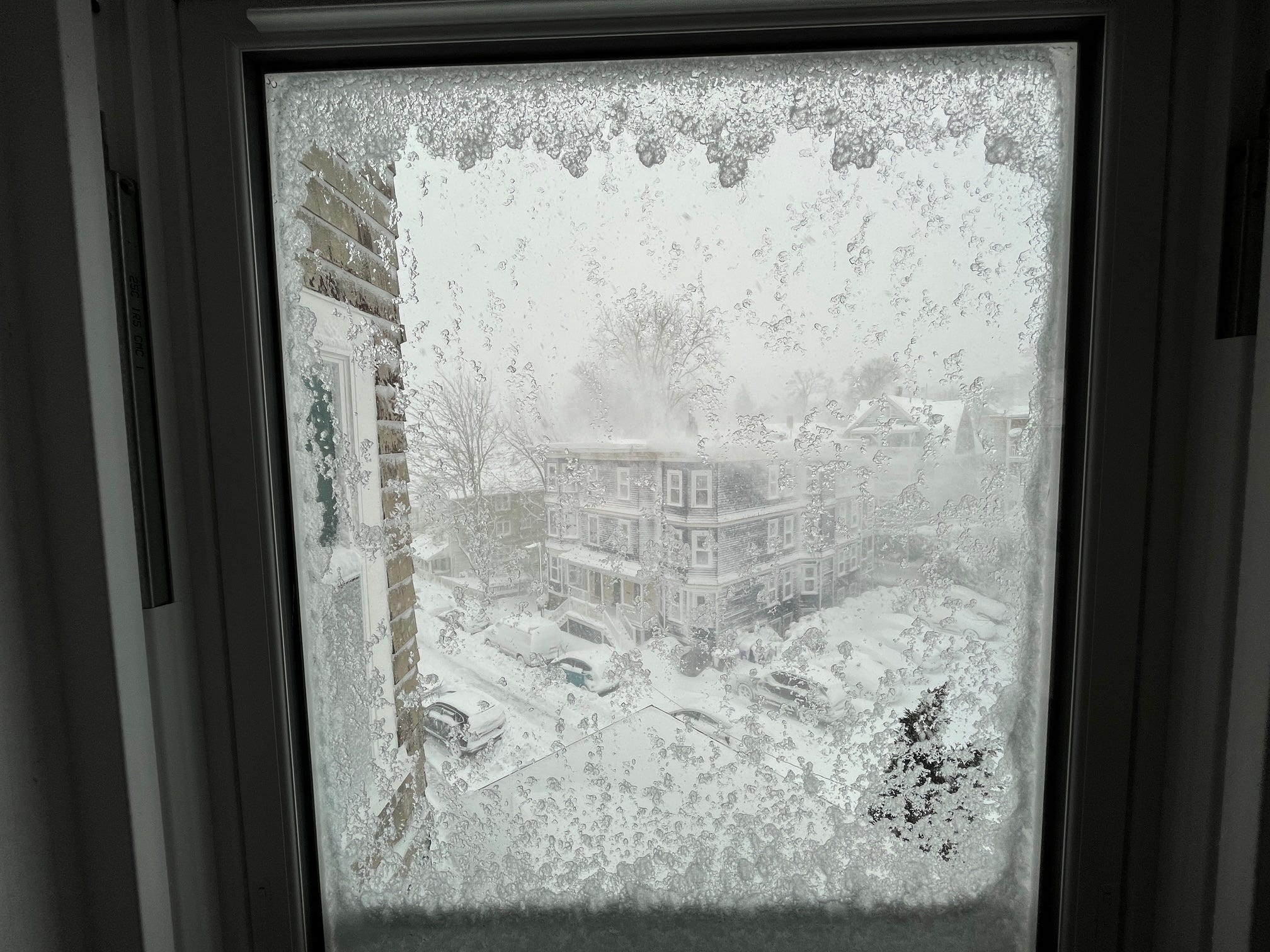
The growth of remote work, from a mid-pandemic crutch to a new normal, allows our employers to demand more from us; including special moments that we once had to ourselves, until recently. Most of the people I know in Boston had to spend the better part of their Winter Storm Hernando “Snow Day” logged onto whatever platform their employer uses for remote work. Any indulgences that they undertook between dawn and dusk were things they managed to squeeze in—as opposed to the pillars of their day. They lost more than just time. They lost the opportunity to revel in the beauty of a winter storm that people will probably be talking about for generations. Some of the kids whose schools closed for the day were partially spared, but others had to fire up laptops and participate in remote learning exercises, just as millions of students were doing when the pandemic was at its most infectious.
This is one of the things that I’ve feared, as a long-time remote worker. If you work for a variety of clients, on an irregular schedule, it’s somewhat easier to tell yourself, “I’m not going to look at emails today” when you’re feeling burnt out or when a major life event like a blizzard demands your attention. When you have a single employer, it’s a lot harder and riskier to brush directives and expectations aside, even just for a day.
None of this is good for us. It’s adding anxiety to our lives, it’s turning our homes into something less comforting, and it’s making people more estranged from the here and now—even during incredible, deeply humbling events like Winter Storm Hernando. It may sound fanciful, but I’m beginning to wonder if a flexible, work-free Snow Day is a right that should be guaranteed for all non-essential workers by the state. Something as basic and enshrined as the weekend (which was adopted as recently as the 1920s!)
Even those who get sniffy about the idea that people should be given more time for relaxation could probably appreciate the practical benefits of placing a hard limit on remote work during snow emergencies. Snow Days can be fun, but they also require their own forms of work, such as shoveling steps and walkways, or dealing with power outages or a window cracked by a falling tree branch. I spent over three hours outside between 8 AM and 5 PM on Monday, helping neighbors dig out their cars. I couldn’t have done that if I had been glued to a computer screen for eight hours! Getting time back isn’t just a victory for each of us. It’s a net gain for communities, because we can invest more of that time in each other. In the long run, I think it’s a win for businesses too. Employers benefit from having happier, healthier workers. But when you’re living in a cultural moment driven by short-term rapacity and the fiduciary duty that drives large businesses—rewarding shareholders, at any cost—you need the state to step in.
Again, it wasn’t that long ago when FDR legalized the 48-hour weekend by signing the Fair Labor Standards Act (FLSA) in 1938. And the instructive word there is “labor” because if we are going to get anything close to Snow Day protections, it’s going to happen through the power and organizing of unions. Given that the Democratic Party abandoned labor unions back in the 1970s—to court upper-middle class voters—and seeing how the party’s current leadership still can’t decide whether it might be a wise idea for the party to realign itself with unions, we’ve got a grueling climb ahead of us.
But here’s a pithy sprinkling of good news. In 2025, membership for American labor unions pretty much stayed the same; as opposed to declining once again, like we’ve seen during other recent years. According to a 2025 Pew Research Center poll, most Americans now see the disempowerment and membership decline of unions as bad for not just workers, but for America in general. Whether this might have anything to do with our president gleefully gutting what few labor protections remain in place is anyone’s guess. Probably just a coincidence—similar to how pro-union sentiment is widening as more businesses turn to generative AI to replace some workers and to overburden the ones who survive the layoffs. By all indicators, we are building toward some kind of realignment with labor in the U.S., and if this actually leads to anything resembling a sequel to the FLSA, we could bake a LOT of good stuff into that policy.
So between now and then, I will continue to make the case for adding legal Snow Day protections to the mix. Because no one should have to tune out the howl of wind as it rattles the window, to better focus on spreadsheets, CRM templates, and video feeds. It’s not often that nature gives us the opportunity to witness a storm that’s titanic yet comforting—massive enough to widen your eyes and your appetite at the same time. For centuries, society managed to keep functioning amidst the seasonal humblings of blizzards and Snow Days. We can afford to preserve this tradition for winters to come.
What’s interesting here isn’t the loss of snow - it’s how quickly people accept the downgrade without resistance. Not because they agree, but because there’s no clean moment where it feels like something was “taken.”
So instead of reacting, they adjust. And after a few years, the new version feels normal.
That pattern shows up in a lot of places, not just climate. Slow change rarely triggers action. It just resets expectations.
I’ve been thinking about this a lot recently in a different context - how environments quietly shift what people consider acceptable, without them ever noticing it happening.
Your piece made that mechanism very visible.
So true! Work is literally bleeding into important aspects of life. Making snowmen with your kids, doing the Sunday crossword or making some delicious soup to eat while watching the snow fall are such important parts of a happy healthy life. If you start a petition for mandatory snow days, I’ll be happy to sign it multiple times.