
It's bad out there. Let's go!
A case for stepping outside when it's nasty

Welcome to 2026, Moss People.
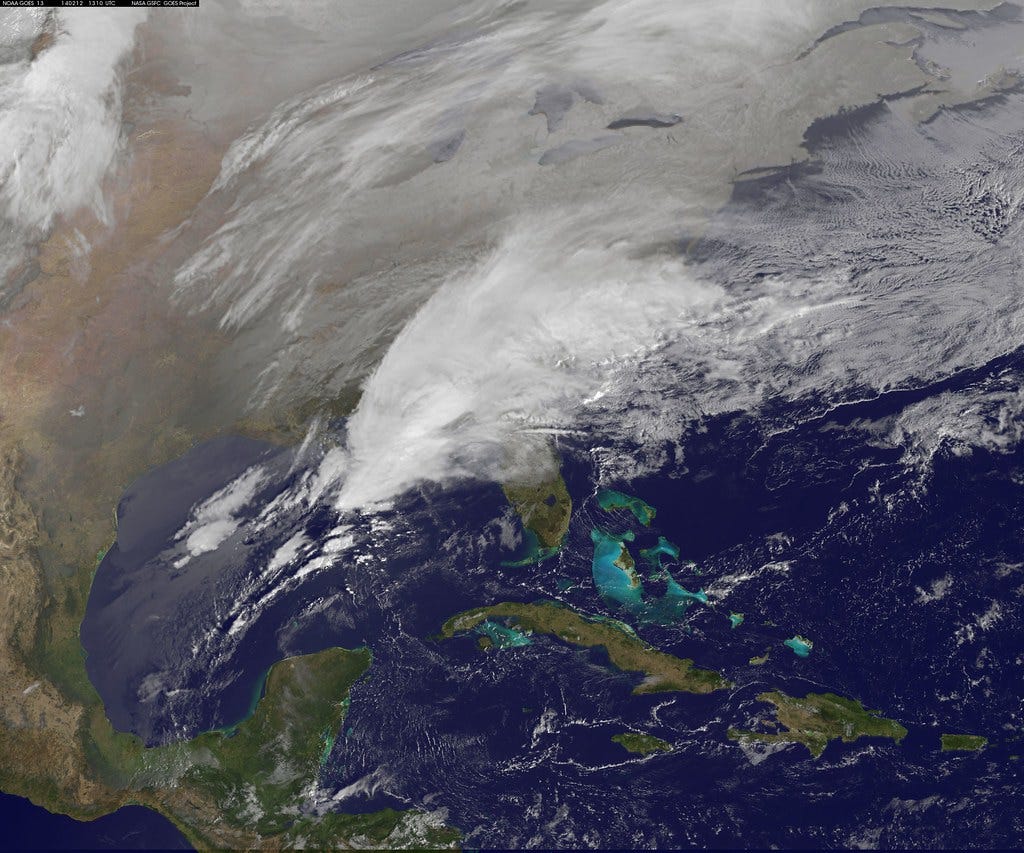
Hopefully most of you didn’t have to go to through the elemental tribulations that Boston experienced this week. I woke up to find the whole city in that awful limbo when warming air causes most of the snow on the ground to melt, only for the temperature to ping-pong below freezing again, just in time to harden all the meltage and transform the streets and sidewalks into a big, bumpy hockey rink. Like most American cities, Boston municipally plows and salts the streets, but the hard work of clearing the sidewalks is entrusted to property owners, which yields predictably bad and inconsistent results. So this week was one of the rare times when I found myself persuading friends and family to avoid going outside. Because ice can break bones.
However, there is still a great amount of wandering space between taking advantage of delightful weather outdoors and staying inside when the forecast is looking nastier and less alluring. And most days in winter tend to fall into that second category. The act of being outside is tougher on the body and mind—your skin gets chapped, the cold inevitably finds its way into your layers of wool and fleece, and if there’s rain or sleet in the air, the addition of moisture makes being outside even more untenable.
And this winter, I am encouraging you to go outside more often on days like these.
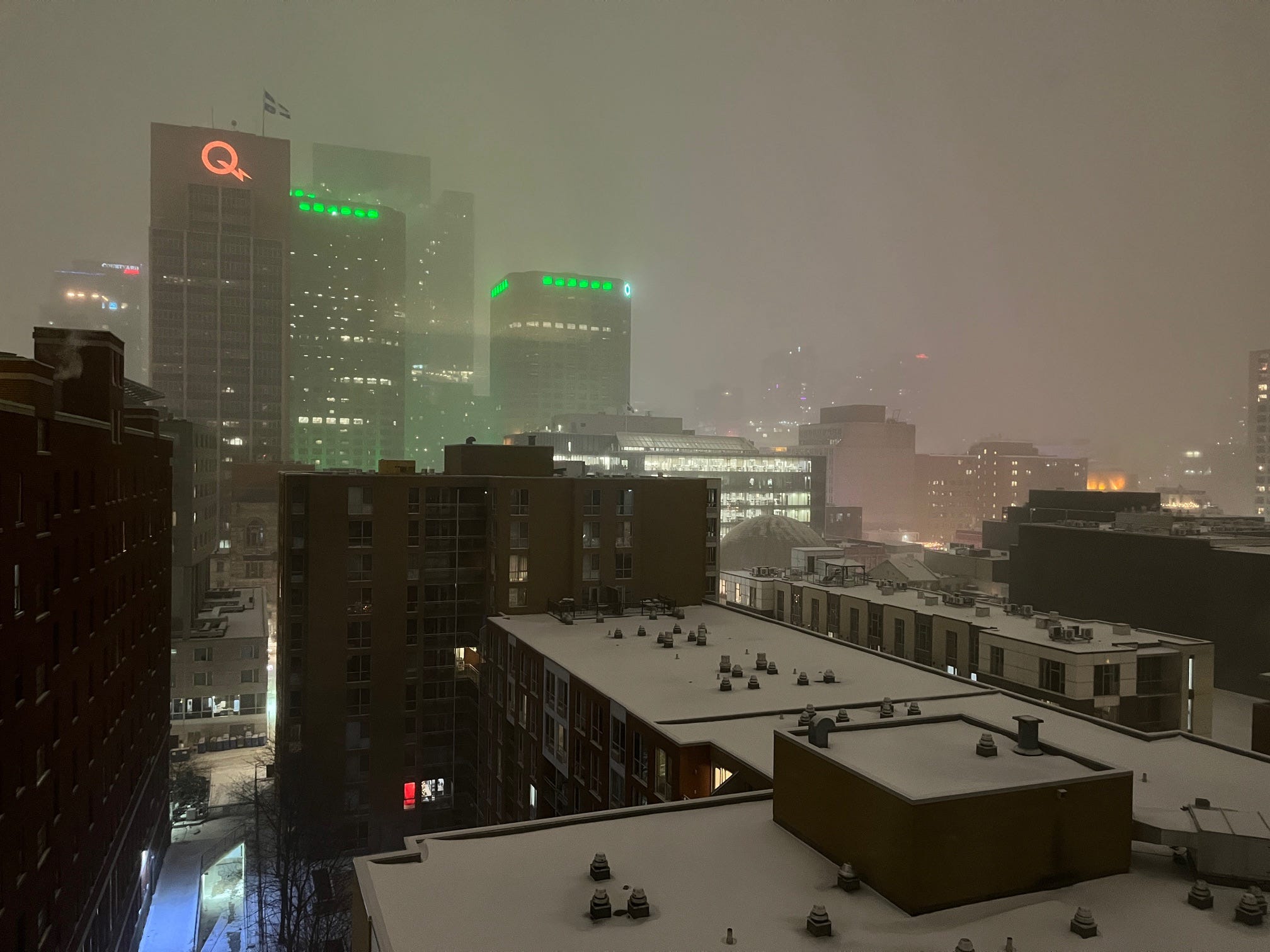
Consider an experience I had just before New Year’s Eve. My housemates and I drove up from Boston to Montreal for the big weekend. The roads were covered in slush for most of the journey, which made for slow going. By the time we finally turned on to René-Lévesque Boulevard and started unloading our bags, it was well after sundown and the sleet had hardened into fat snowflakes. Nonetheless, I was determined to go and try a Belgian trippel at the the Dieu Du Ciel microbrewery in Mile End. And when I learned that I would be the only one of us emerging from the hotel that night and venturing up to the brewpub by foot and bus, I braced for a grim solitary expedition.
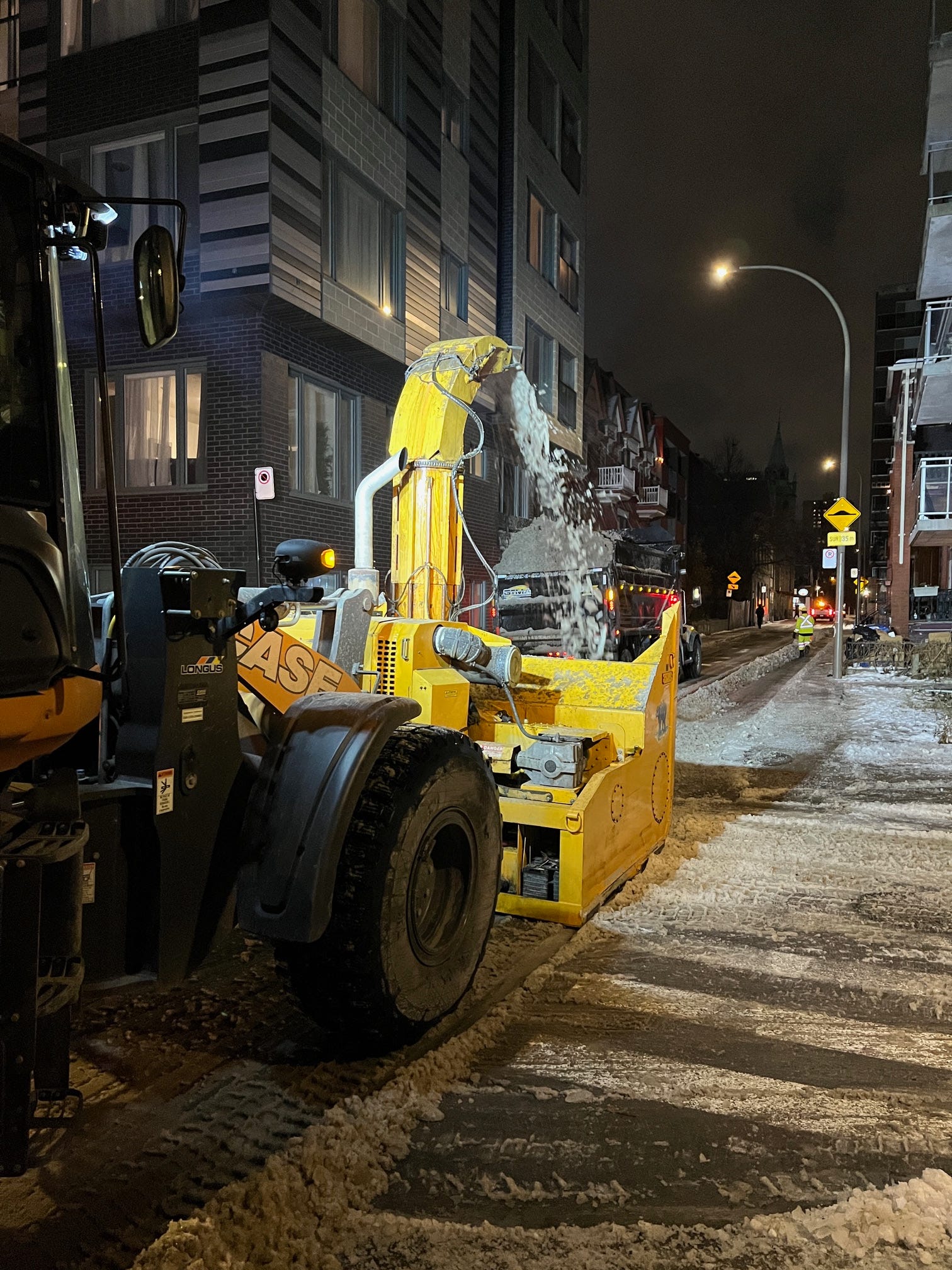
I had barely made it one block from the hotel when I saw something amidst the snow, sidewalk ice, and darkness that entranced me: In the same way that happening upon a stag in the forest would make your eyes widen and your breathing stop. I had veered left onto a residential street where a convoy of massive yellow snow removal machinery was slowly making its way up the road. A public works pickup truck with flashing lights led the way, like a lone horseman guiding an army into battle. Each of the hulking snow removal trucks was outfitted with different mechanical instruments, but all of them had gigantic wheels that were almost as tall as I am; which you would not want to slip and slide beneath from the sidewalk! So I stayed still and watched in amazement as Montreal’s nocturnal street stewards plowed and carved their way through the wintery roads. One of the huge trucks included a device that brought to mind a woodchipper—a duct from which freshly pulped snow and ice cascaded into the guts of the machine. And just like that, the shitty night was imbued with wonder.
When you’re able to bundle up and stay indoors during bad weather, it’s easy to lose sight of the fact that many of us still have to clomp out and go to work; on weekends, after dark, you name it. Back in 2017, I shared an apartment with a friend who had just started working as a municipal recycling coordinator. This meant that when a blizzard blanketed Boston and immobilized traffic, the two of us would run into each other in the kitchen with very different agendas before us. Mine basically looked like a Snow Day and his involved driving a snowplow around town. Yes, he got some pretty sweet overtime pay for his troubles, but he still had to spend several hours being outside and uncomfortable, to help keep the city semi-functionable during the snowstorm.
Going outside on a day when the current weather or even what’s approaching on the skyline seems to say “NOPE” raises your odds of witnessing what it takes to keep the world running. Or even what it takes to make the world beautiful. Last August, I found myself in San Antonio for work, and despite the stupefying humidity and triple digit temperatures, I decided to explore some of the city’s renowned River Walk; a 15-mile network of walking paths along the rivers that converge near the center of town. The brutal temperatures and dew point meant that I would only be walking a mile or two before retreating into an air conditioned space to recuperate, and the downtown River Walk portions—bustling and alive during the magic hour on summer evenings—were near-empty in many places. Most of San Antonio was taking shelter indoors. But as I admired some built cascades along one stretch of the waterside path, I spotted a city worker in a straw hat and protective clothing watering adjacent plants with a hose. I wondered how long he had been out here, tending the greenery and keeping them looking resplendent for the big crowds that would converge here during the sunset.
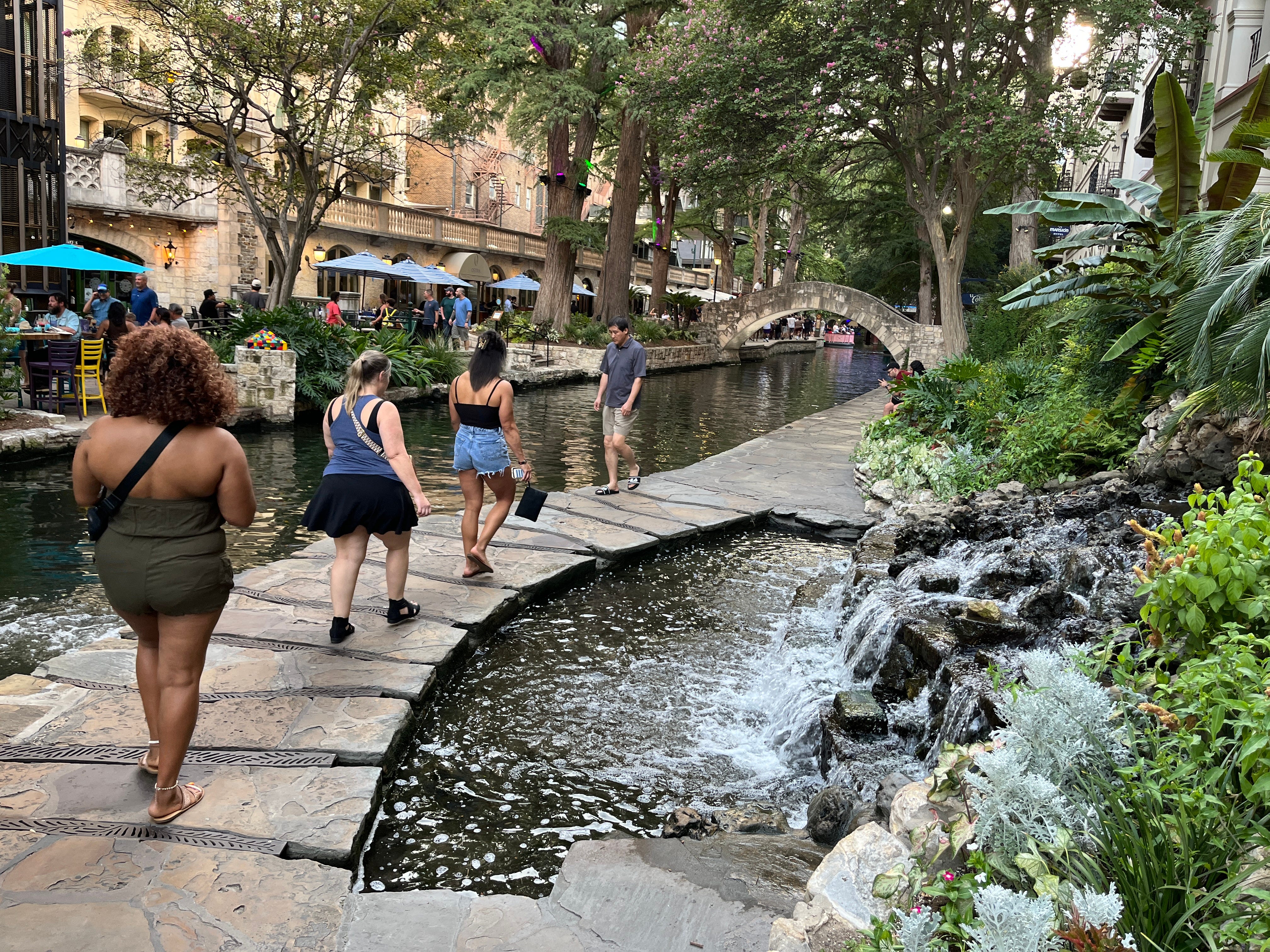
Somehow, returning to the River Walk later that day—joining the crowds as they held court on restaurant patios and beer gardens with misting fans—made the River Walk and its cultivated ecosystems feel less like a “feature” of San Antonio and more like a little world unto itself. And this is what being outside in terrible weather can subtly illuminate; the reality that the world we live in requires tremendous care. From us.
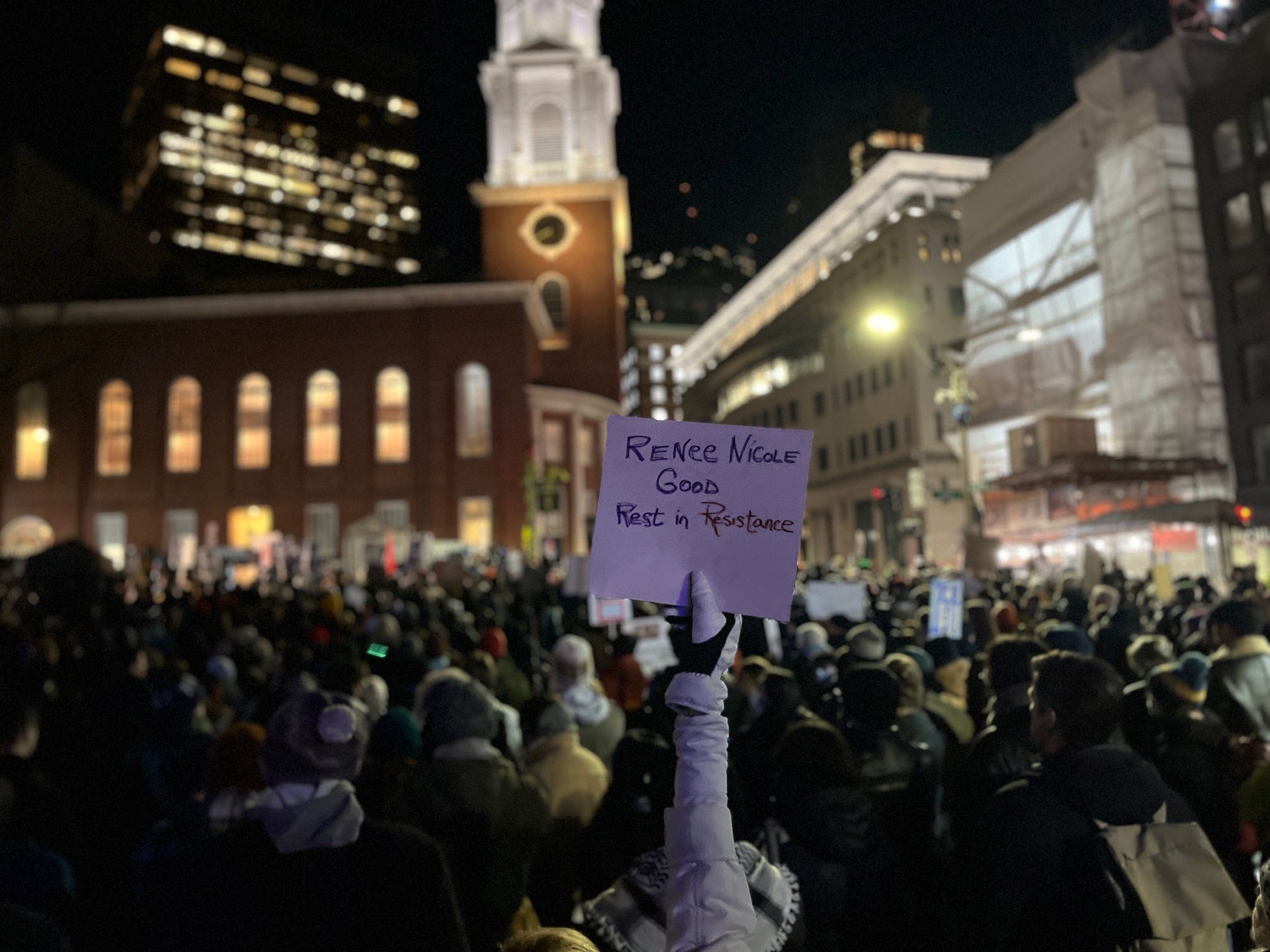
Over the last few days in particular, stepping out into that world has felt unappealing to me. Not just because of all the ice that glazed Boston for 48 hours, but due to the headwinds traveling east and the horrifying news they carried. 2025 was the deadliest year of activity for Immigration and Customs Enforcement (ICE) since its founding in 2003. As reported by NPR, 32 people died in ICE custody last year, after being sent to overcrowded detention centers where food and hygiene supplies are scarce, where medical treatment is withheld, and where physical and sexual abuse have been documented. It was only a matter of time before this structural violence and devaluing of human life was turned against more U.S. citizens, and that’s what happened this past Wednesday when Jonathan Ross, an ICE officer, shot Minneapolis resident Renée Nicole Good in the face three times while she attempted to drive away from the scene of an ICE raid that she had just witnessed. Good was the mother of six year-old child. Her partner, in the passenger seat of the car at the time, witnessed her execution.
You can read every book and listen to every account of fascism to better understand how people have fallen in line with this self-destructive way of thinking throughout history, and sometimes an act of cruelty will still leave you at a loss for words. That’s how I’ve felt over the last year, with every new report of the horrors being inflicted on people by ICE, and the utterly despicable and sickening ways in which Stephen Miller, Kristi Noem, JD Vance, and Donald Trump denigrate the lives of these people in their appraisals of the cruelty; self-pitying rationalizations of torture and murder. Already, the killing of Renée Nicole Good seems to have shocked America’s consciousness in a way that I haven’t seen or felt since the murder of George Floyd by a Minneapolis cop in 2020. And that’s why, in spite of the foreboding climate and its heightened sense of vulnerability, I felt the need to show up to a spontaneous protest in Boston last night.
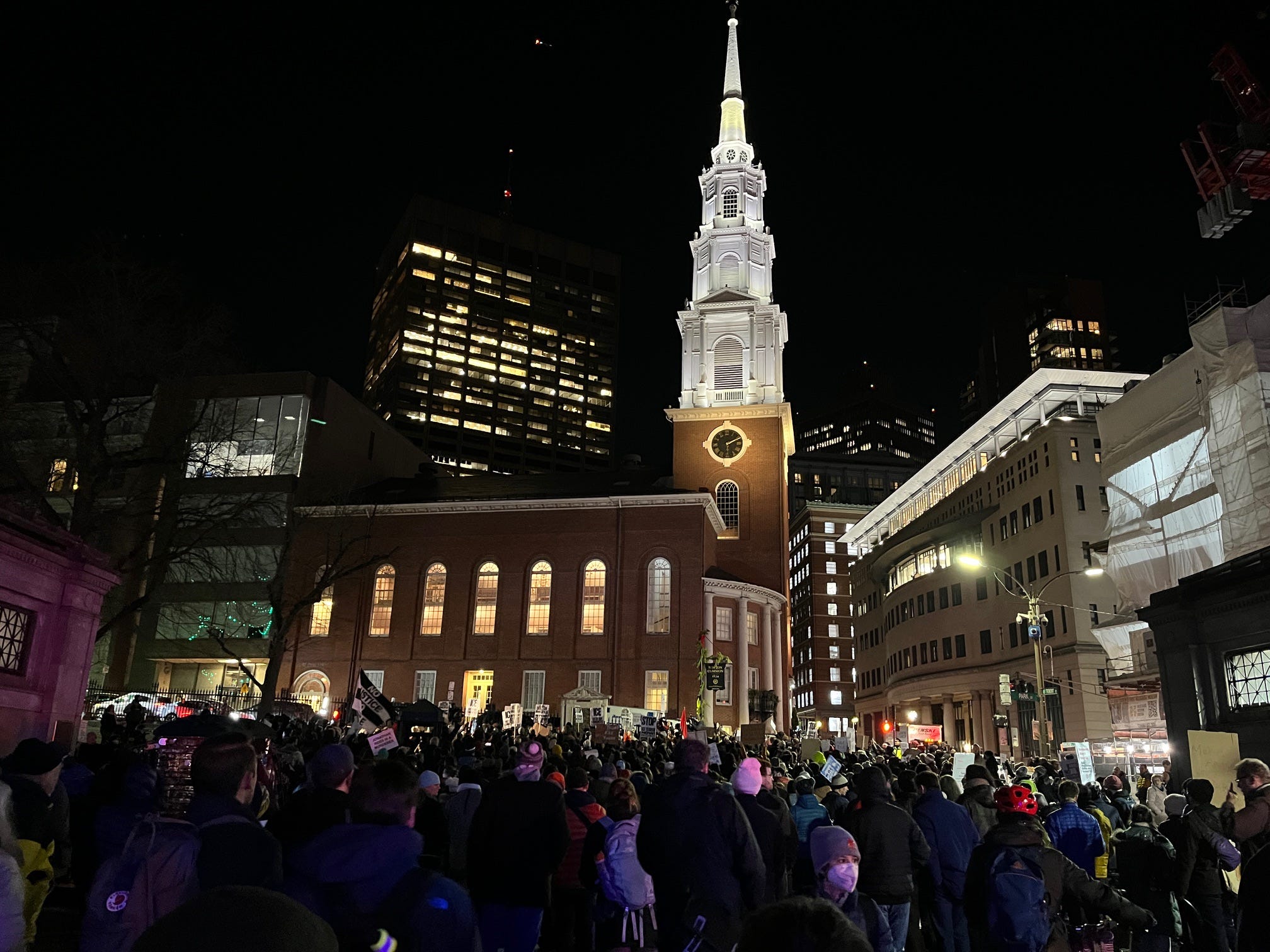
This emergency gathering of kinder and outraged souls—just like the others that went down in cities across the U.S. last night—will almost certainly be the first of bigger and louder collective actions, in protest of ICE and the sadism of the Trump administration. The crowd that amassed outside the Park Street subway station last night was small compared to the legions that turned out for the No Kings protests; probably between 200 and 300 people, by my estimate. Even considering the eleventh hour nature of the event, I was initially somewhat disappointed that more Bostonians hadn’t shown up.
But as I stood there in the dark, listening to all of the speeches from local community organizers who’ve been dealing with ICE directly and feeling my ungloved fingers get cold and clammy, I realized that this gathering was something different than a protest. It was an affirmation that many of us will keep going out into the world—even when everything happening outside inspires sheltering in place. What I saw and heard out on the Common last night, just as I had witnessed on Montreal’s snowy streets and along San Antonio’s sun-baked River Walk, was a commitment to being out there and fighting for the things that make our world beautiful. In 2026, let’s do this more often.
WELL SAID, thank you for boosting my moral and honoring a wonderful American.
Happy Trails await if we all do our part. Fred
♥️♥️♥️