
It's greening time!
The return of spring, and an old idea from The New Yorker

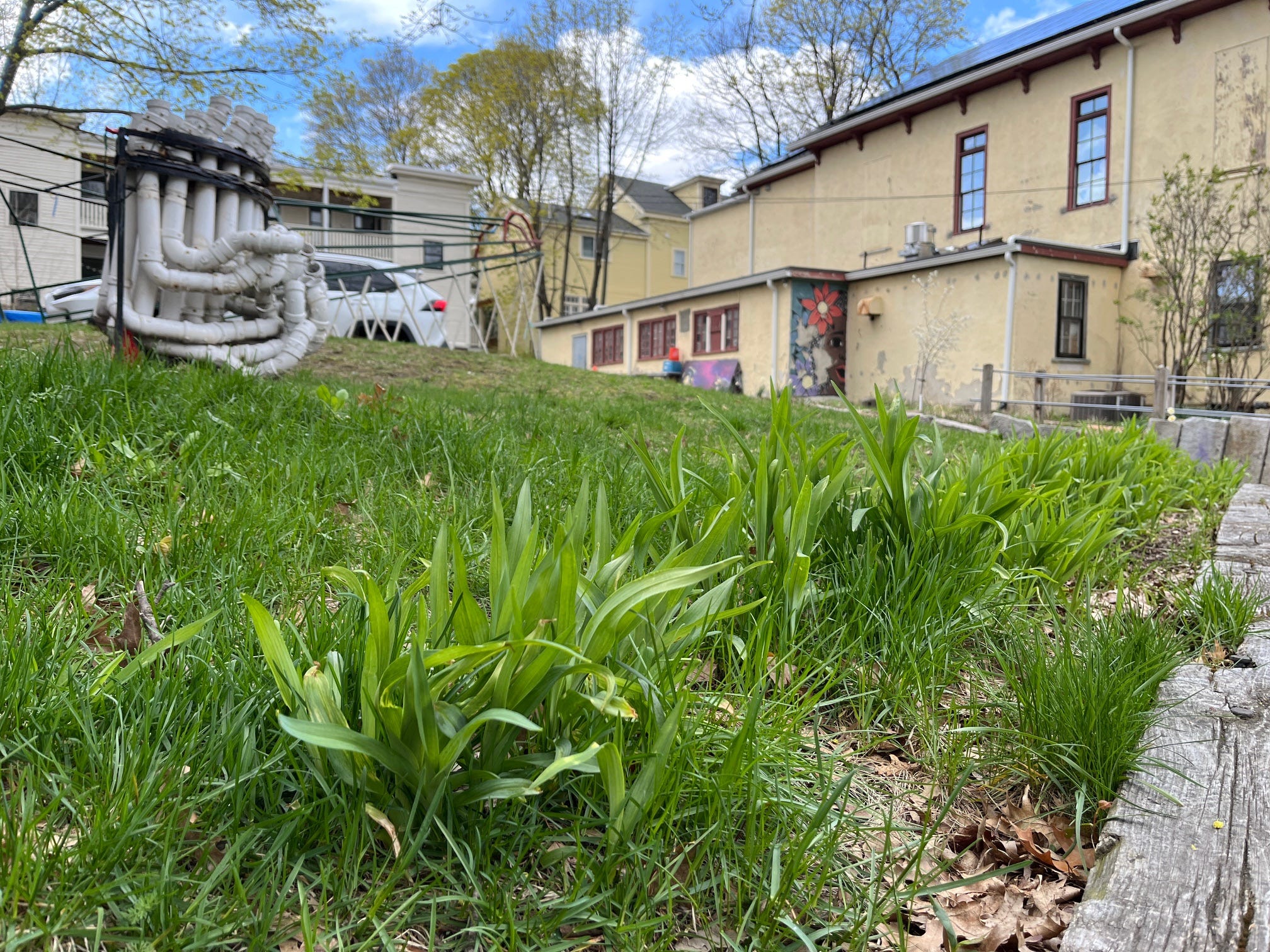
I don’t know about the rest of you, but last week, I was really starting to get worried about spring in the northeast. The trees were still skeletal and barren, and the ground brought to mind the contents of an ashtray, except for some one-off flowers here and there. Maybe it’s a reflection of the times we live in, when a global economic collapse or World War III seems more feasible each week. After all, spring happens on different regional timelines each year. But as I drove to Southern Maine last Thursday for work, I couldn’t help but wonder, What if spring never arrived this year? What would that even be like? Living in a primarily brown and gray world that grew hotter each week?
Thankfully, in the 24 hours between my arrival in the Pine Tree State and my return to Massachusetts, the big event that many of us have been waiting for finally came. The greening. You know it by sight. The emergence of electric green grass on the ground lights up the landscape. It’s complimented by the sudden explosion of buds on all the tree branches, as if the understory and overstory have coordinated their schedules. In the grand scheme of the landscape, the sudden materialization of the green elements is a “small” event, but the psychological effect can be downright luminous. As I drove south on I-95, heading back to Boston, I could feel the nearby glow of the new grass from the freeway, and that’s not something one will be able to say in May—when the novelty of the grass has burned off—or in August, after the higher temperatures have turned much of that grass into yellowy straw. In the same way that being on the street in New Orleans and unexpectedly witnessing a jazz funeral might inspire you to chuck your plans and spend the rest of your day clubbing, I decided to make the most of the 2026 greening by making a side-trip to an environment where I could really admire it.
Mass Audubon’s Ipswich River Wildlife Sanctuary, a 1,955-acre expanse of marshes, meadows, and drumlins, is one of those places that looms enormous and aquamarine on maps, while occupying a much smaller and more specific place in my memory. As a kid, I logged some miles here with my parents and my sister, and we were particularly bowled over by a unique feature of the reservation called The Rockery. It’s a jumble of boulders and stones, assembled in the early 19th Century like a primordial LEGO set. It features multiple caves that you can walk through and winding stone stairs that lead to little decks and lookouts atop the rockery. It’s the sort of feature that feels tailored to parents who are trying to instill some appreciation of nature in their children, and I remembered its dank recesses and ingenious construction so vividly that I wanted to see what revisiting The Rockery felt like during the greening (and less than six months from my 38th birthday.) But this time, instead of hiking to The Rockery from the main visitor parking lot, which is located very close to the rocks, I opted for a longer and far more scenic alternative route, from a sleepy residential street in the town of Topsfield.
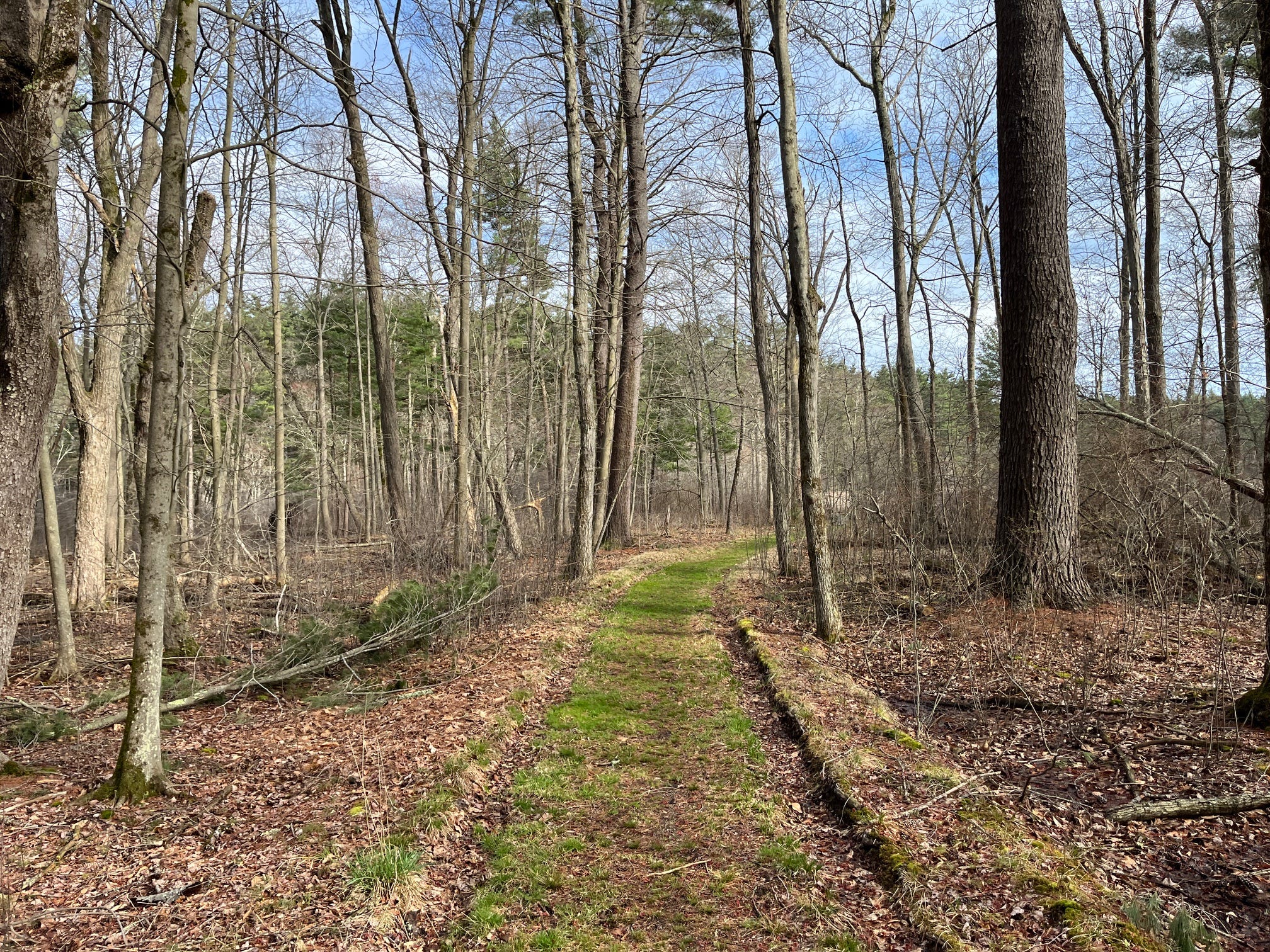
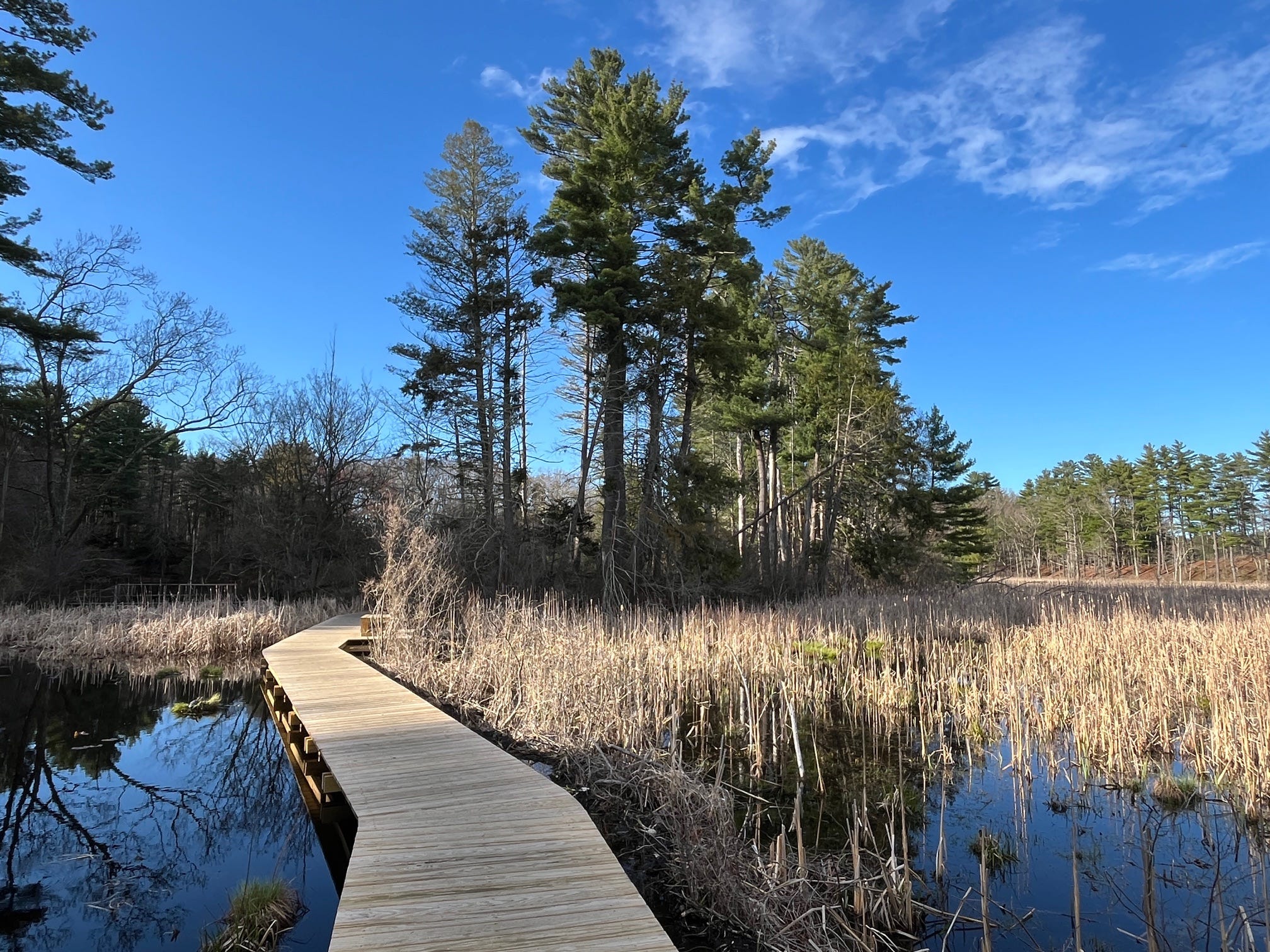
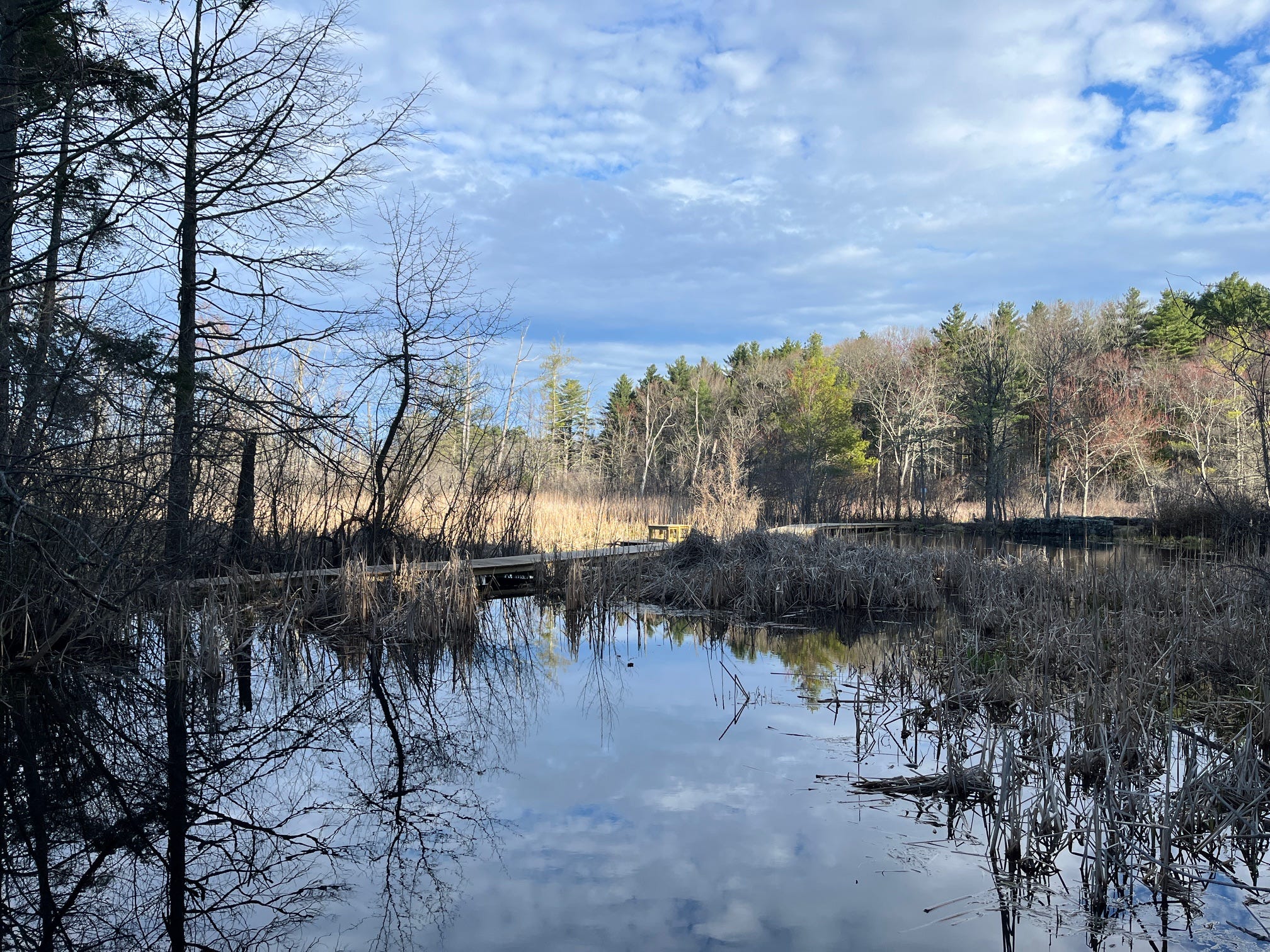
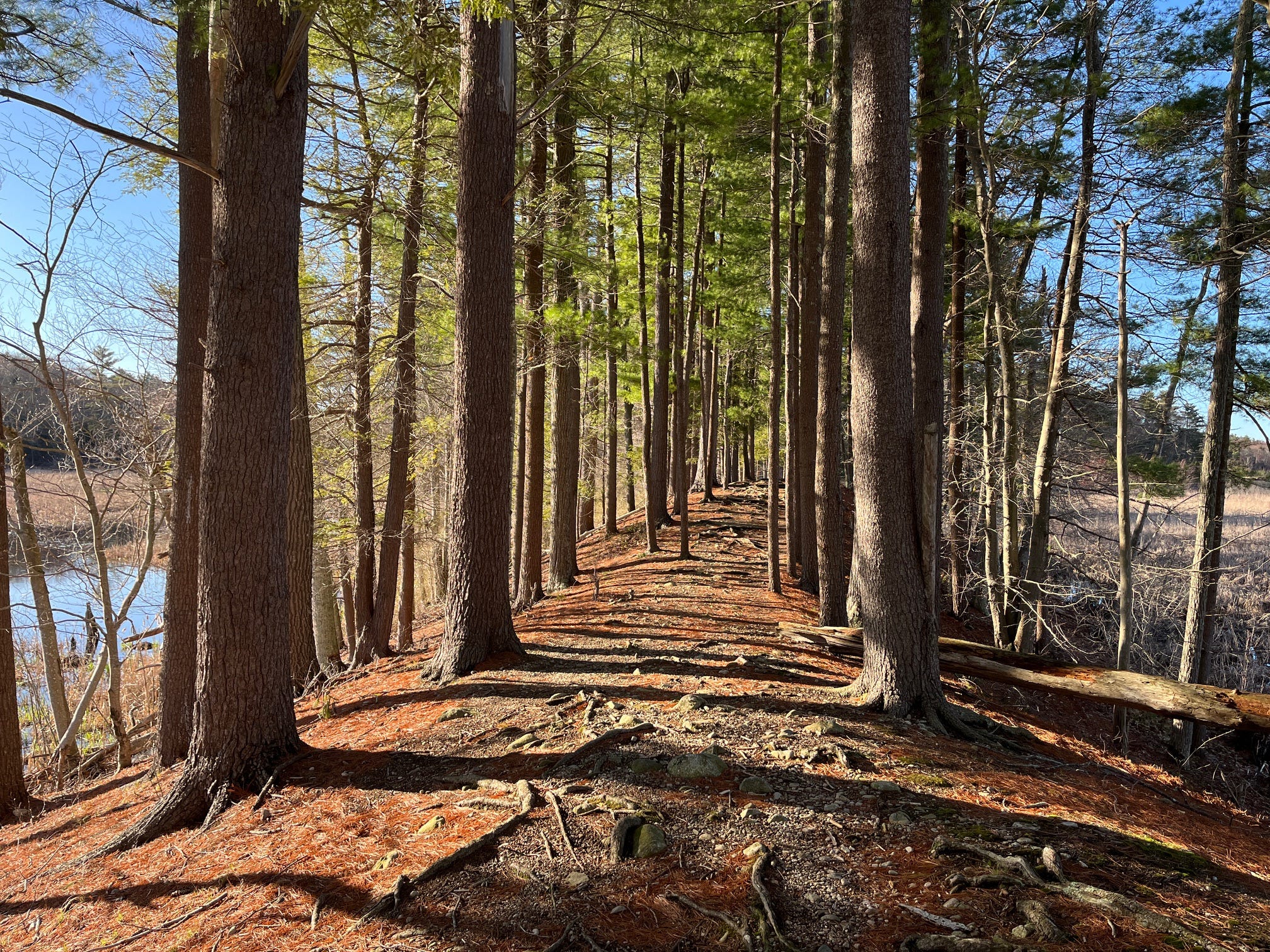
It was late afternoon on a Friday, which made it possible to park in the lot at Steward Elementary School, nestled in the pine woods on the north edge of the Ipswich River Wildlife Sanctuary. A few paces from here, up Perkins Row, a gate on the right marks the beginnings of a gentle trail through the trees, which I spent a good 15 minutes following. The abundant chirping overhead hinted at what was ahead, in the heart of the marshlands. But I was so taken by the green resonance of the ground and how it imbued the forest with energy that the birds barely registered. Transitioning into the refuge this way felt like a recalibration of my consciousness; making my eyes and ears more perceptive to signs of life that were popping up around me. And as I crossed a series of wooden bog bridges and boardwalks onto Averill’s Island—a wooded piece of land completely surrounded by floatsam and jetsam—I managed to glimpse a pair of tiny turtles sunning themselves on a rock beside the bridge. The texture and color of their shells, and their stoic posture, felt in concert with everything surrounding us.
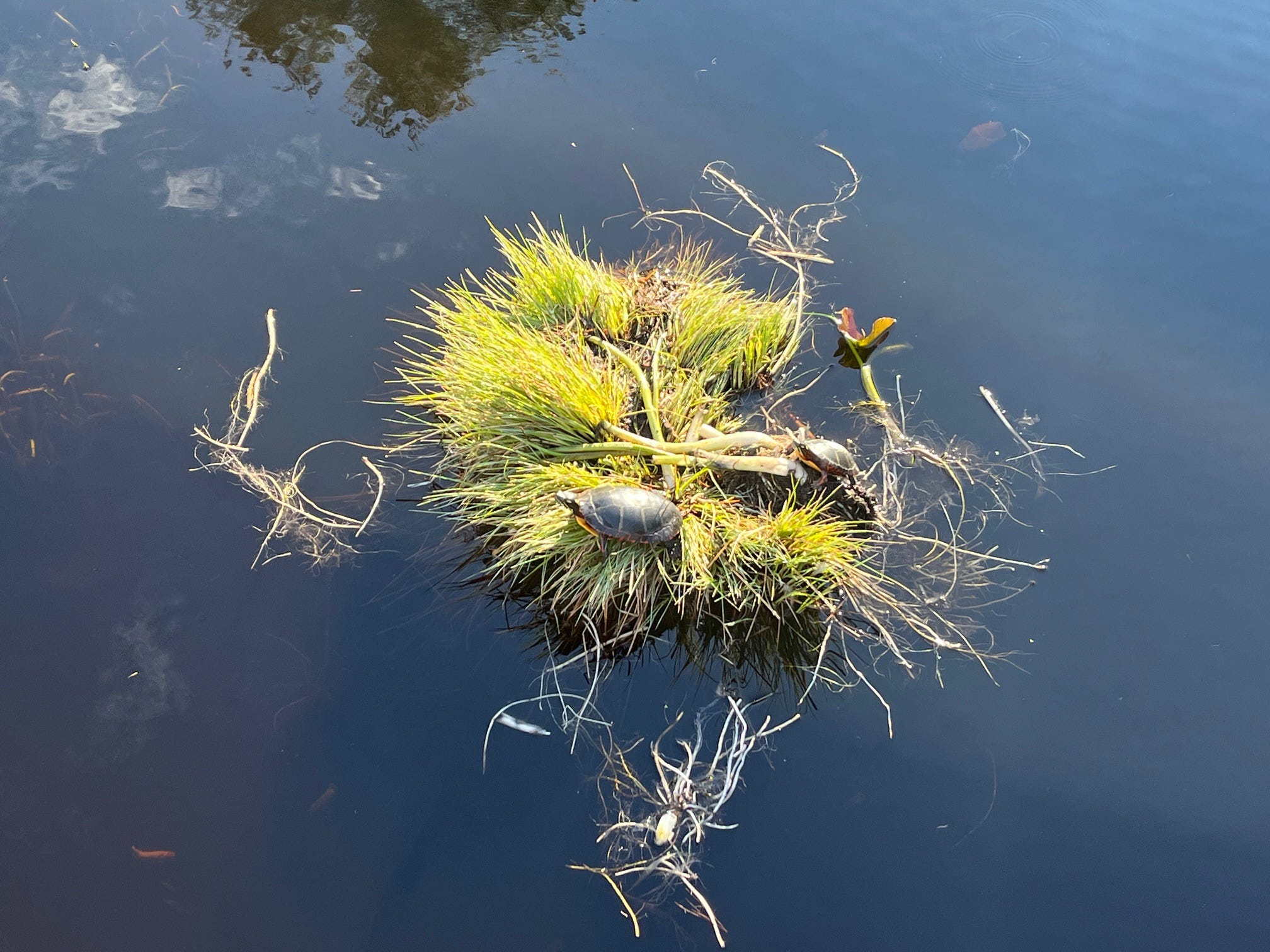
Still, as much as I enjoy briefly letting go of everything by being outside, and thereby getting outside of my head, it’s only so long before a forgotten ember of information starts glowing again. As I gazed lovingly at the turtles and thought about their place in this localized natural world, I remembered another context with which a great deal of Americans got to know the word “greening;” a context that’s also worth revisiting.
Maybe this is borrowed nostalgia speaking, but the 1970s were a unique time when you could smoke on a plane, walk into a sex club in Times Square, or write an essay for The New Yorker and quickly land a publisher’s deal to turn that essay into a book. (This still happens for writers occasionally, but way less often than it used to.) And at the start of the decade, a Yale Law School professor named Charles A. Reich wrote a piece called “The Greening of America,” which read more like a manifesto. Harnessing the countercultural movements of the 1960s, the ongoing horrors of the Vietnam War, and the discontents of the Nixon presidency, Reich envisioned a sweeping change in the American consciousness; a “greening” of the barren individualism and corporate logic of America, from which a more collective, human-centered society would grow.
“There is a revolution under way,” Reich’s New Yorker essay began. “It is not like revolutions of the past. It has originated with the individual and with culture, and if it succeeds it will change the political structure only as its final act. It will not require violence to succeed, and it cannot be successfully resisted by violence. It is now spreading with amazing rapidity, and already our laws, institutions, and social structures are changing in consequence. Its ultimate creation could be a higher reason, a more human community, and a new and liberated individual. This is the revolution of the new generation.”
Having spent a great deal of time with students at Yale, who were among those on the frontlines of the counterculture movement—and being a gay man himself, a few years away from coming out—Reich was better equipped than most to see the roots of this possible revolution of American thinking and culture. When he turned the essay into the 1970 book, The Greening of America, he expanded on his thesis by identifying the three layers of consciousness that would soon change. The first two levels concern the lopsided economic system in the U.S., and how the average American sees themselves being part of that system…or outside of it. Today, that certainly feels prescient, given the number of Americans who have found themselves downsized and marginalized by corporations over the last several decades (and the great many who could soon join them, as the same companies turn to generative AI to automate more of their labor.)
The third layer—Consciousness III, as Reich calls it—is somewhat murkier, and also the most elemental. It’s the crossroads where an individual establishes a spiritual harmony with their natural environment. This, according to Reich, is where a release from the scarcity-minded thinking of consumerism may finally happen. “Once a person reaches Consciousness III, there is no returning to a lower consciousness,” Reich wrote. The implication here is a numbers game. As more Americans go, so goes their culture. In the early 1970s, after The Greening of America was published, the question of whether millions of peaceful and individual revolutions could change the course of things was the subject of debate in magazines and on talk shows. There were optimists, and also plenty of critics; some of whom dismissed the third chapter of Reich’s vision as naive.
I find myself somewhat on the fence. Or rather, on top of a floating log, which I had to gingerly creep across shortly after reaching the end of Averill’s Island and getting back onto a waterlogged piece of the Ipswich River Wildlife Sanctuary mainland. The vision that Reich laid out helped seed the ground for the environmentalist movements that emerged from the 1970s. Millions of Americans underwent a change of consiousness, so far as their relationship to the natural world was concerned. But all these atomized revolutions failed to generate something bigger and more sweeping. After all, the 70s were followed by Ronald Reagan’s presidency—a broadly supported steroid injection for American individualism, corporate greed, and structural poverty. In a way, we are living in the wreckage of Reich’ vision today. At least, that’s what a pessimist might say.
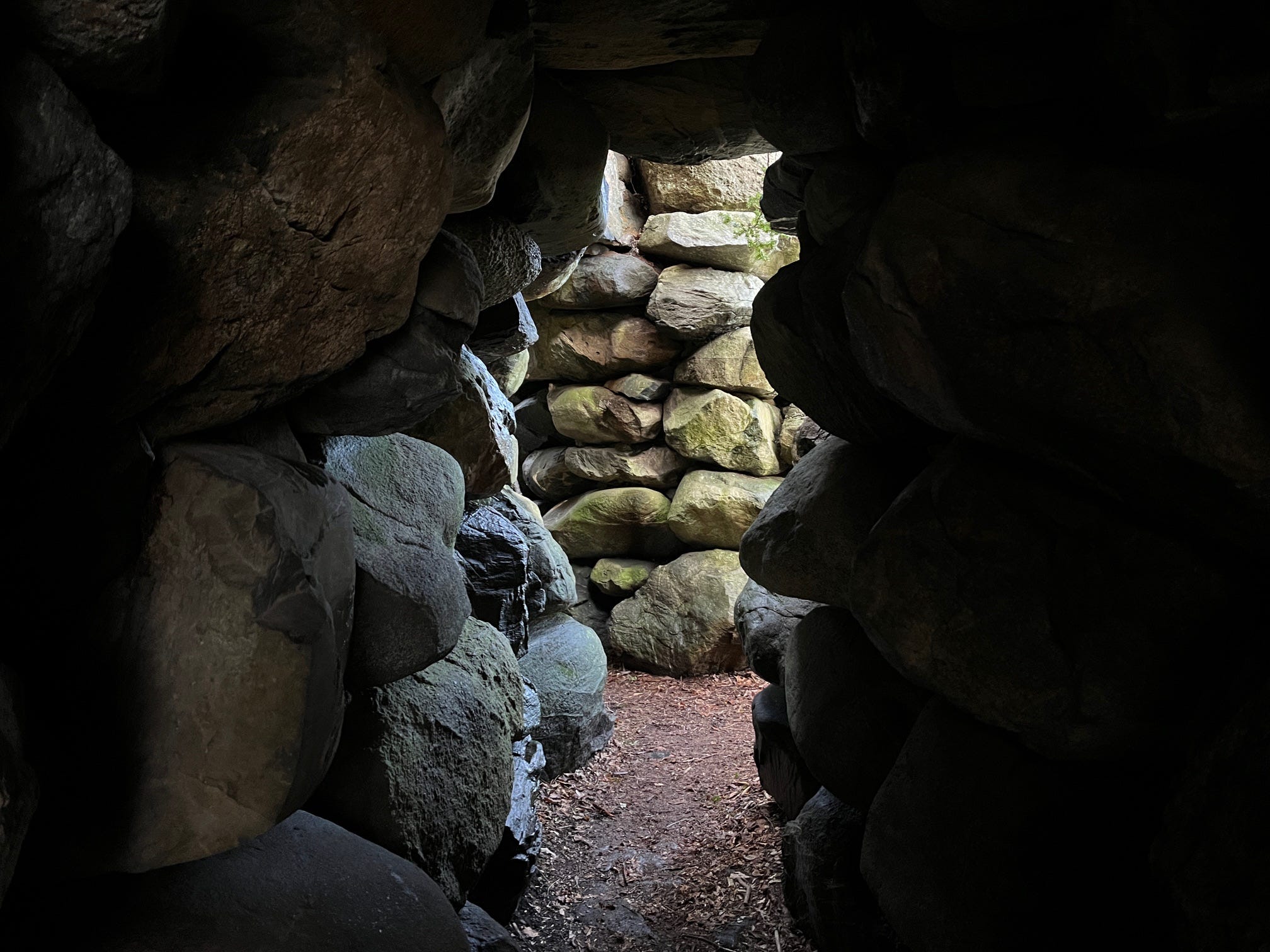
But as I made the final push to The Rockery, over a floating boardwalk where each of my footsteps sent panicky birds shooting out of the nearby tall grasses, I felt my own thoughts about the greening of America wandering down a more hopeful road. The Rockery itself seemed to encourage them. Here was this beautiful oddity that people came together to build; schlepping heavy stones, fitting them into place, and seeing how The Rockery would compliment the natural elements of the Ipswich River basin, especially as age left The Rockery mossier and muskier. And some level of underlying curiosity and affection must have preceded this landscape project. Similar to how the Occupy Wall Street protests caused millions of Americans to become more mindful of widening wealth inequality—despite the lack of tangible outcomes produced by the movement—I think it’s possible that continued exposure to the magic of the wetlands and woods on the river set the stage for a shared idea like The Rockery to be realized.
I suppose that’s where we are today, as a country; long-primed and overdue for the “greening” that Charles A. Reich foresaw during another challenging chapter of our recent history. The question of when this happens and what it looks like remains as unknowable as the arrival of spring’s grasses and flowers. And of course, there’s no inevitability that undergirds this greening or its outcome. Nonetheless, I do believe that something is coming. And unlike this spring, it may arrive sooner than we think.
CLICK HERE for a map of my Ipswich River Wildlife Sanctuary walk
PS: Speaking of watery spaces outdoors and spring rituals, those of you who live in or near Massachusetts might enjoy this recent piece that I wrote for The Boston Globe’s Travel section on spectating venues for spring herring runs! Grab some coffee and an extra chunky donut, plunk down on a bench, and cheer the fish on as they swim hard upstream to get it on (externally) in the lakes and ponds around the Commonwealth.
I made a quick narrated video of me walking through the part of the Rockery you pictured above, which to me looked like the beginning of a tunnel. I watch it whenever I need to laugh. I thought I was entering some supernatural cavernous realm, and then boop! I'm right back out, and my husband casually strolls by. I sound so relieved that it cracks me up.