
Leaves of Philadelphia (and other cities)
It's time to start planning some urban leaf peeping!

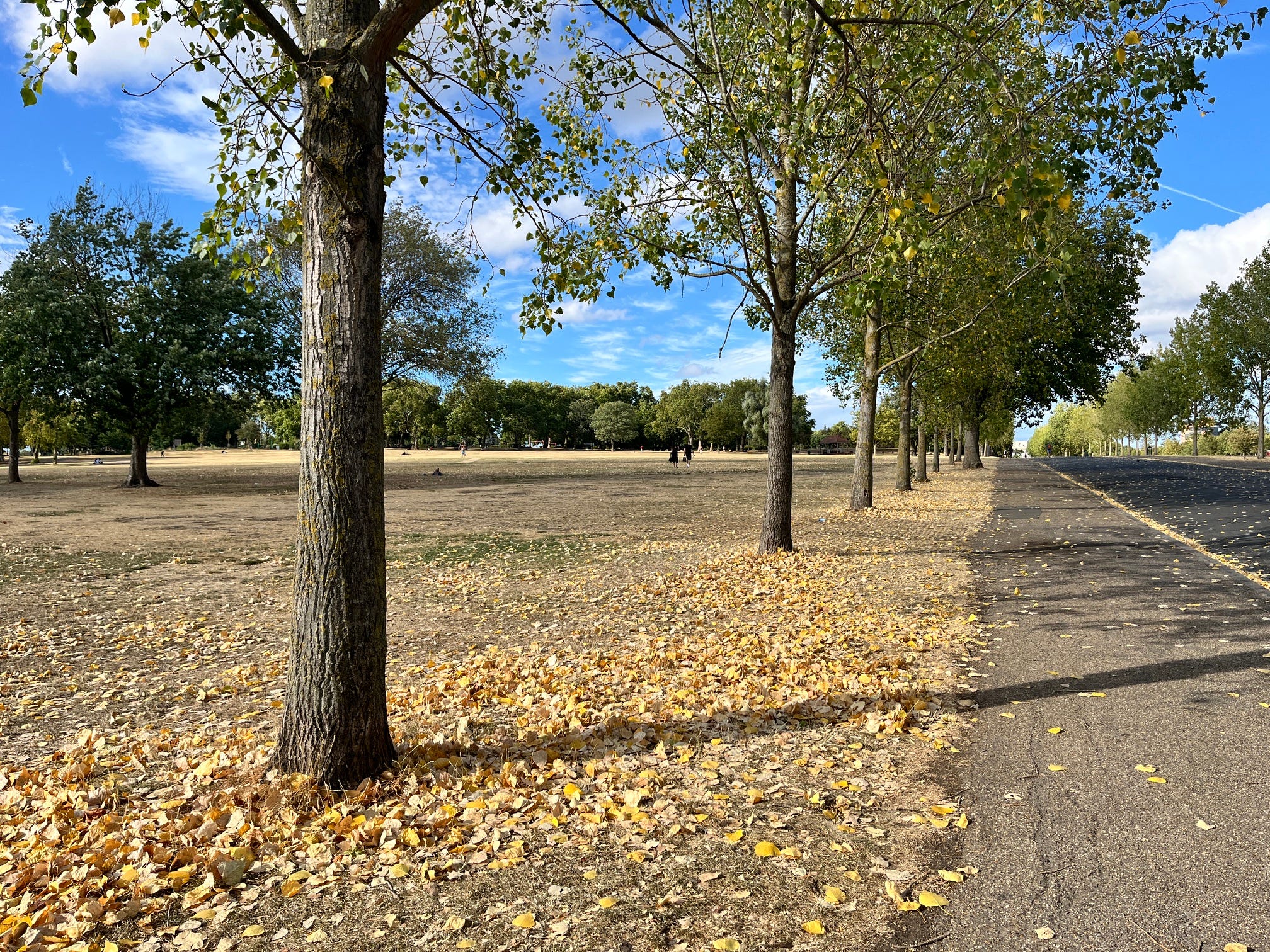
If you live in the northeast, this coming week will feature the last 8 PM sunsets until late spring of 2027. I know. It’s a real kick in the teeth for many of us, and all the more reason to pack in as many evenings in parks or on docks with good grub, booze, and company for the next few weeks. But accepting the slow approach of fall doesn’t have to be a moment of grim resignation. There are things to look forward to, especially if you live in a region that experiences sticky, sweltering summers. There’s the borderline erogenous sensation of slipping on a pair of jeans again, those re-kindled cravings for thick stews and savory pies, and of course, there’s the colorful turning of the leaves.
If grabbing your camera and staring at sugar maples, red oaks, and yellow birches is an activity that you must enjoy in traditional fall destinations like rural Vermont or the Berkshires, you will want to get cracking on those motel reservations now. (Trust me, I spent last fall researching an upcoming book about fall foliage, and shit was already fully booked by late August!) But for those of you who wish to avoid standing in long lines for cider donuts or idling in queues of cars at popular roadside overlooks, I want to suggest an alternative, possibly even contrarian approach to the leaf peeping trip.
Go to the city.
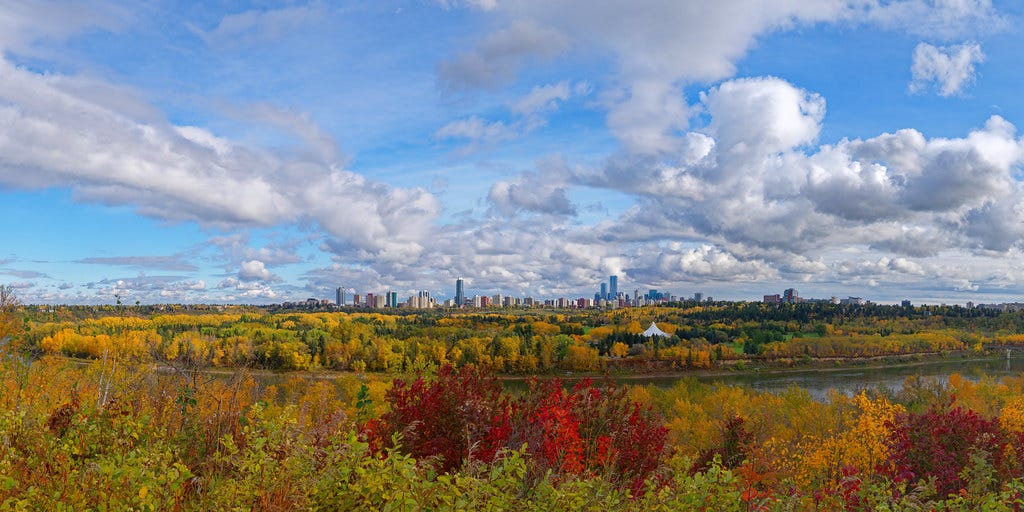
The secret of fall foliage in rustling regions is that it’s not just contained to storied locales where people compete for Instagram photos of dirt roads flanked by barns and cow pastures. Any place with dense groves of deciduous trees is going to offer leaf peeping opportunities, along with the added bonus of more options for food, lodging, and entertainment. Sure, the ambience won’t be quite the same as being sequestered away in the Catskills or the Champlain Valley, but spending a weekend crunching along the leaf-covered paths in city parks and conservation lands can be a magical and transportive experience in its own right. And these days, with far more people coming to recognize the beauty of cityscapes, the venues for urban foliage chasing have expanded considerably—not just trails, but social walking events too.
So, to ease our passage into late summer and early fall and to put some ideas for autumnal adventuring in your head, I’d like to tell you about five stellar American cities for leaf peeping; cities where the flexibility and cost of a leaf peeping trip event could actually be a lot less expensive than hitting the usual scenic byways and trails:
Walk Around Philadelphia - Philadelphia, PA - September 5-28. Those of you who have been reading Mind The Moss since early 2024 know that I’m a huge fan of what artist and community organizer J.J. Tiziou has cultivated down in Philly. Each fall and winter, groups of urban ramblers get together and walk the perimeter of Philly over multiple weekends. Only, the route is different every year, because decisions about which paths and streets to follow are self-negotiated by the group—illustrating the environmental, civic and personal nature of borders, and the reality that many of us are redrawing these lines. My first Walk Around Philadelphia hike took us through the woodlands on the Schuylkill River past wind chime gardens, industrial ruins, breezy cemeteries, and at one point, a decommissioned railroad bridge that we debated crossing. Tiziou, our host, set a tone that was gregarious, inquisitive, and supportive.
Unsurprisingly, several of the Walk Around Philadelphia segments fill up quickly. (You need to pre-register.) So this year, Tiziou and his co-organizers are offering a total of 22 walking events; two perimeter journeys that will start from opposite directions and cross paths in the middle. CLICK HERE to register for a Walk Around Philadelphia.
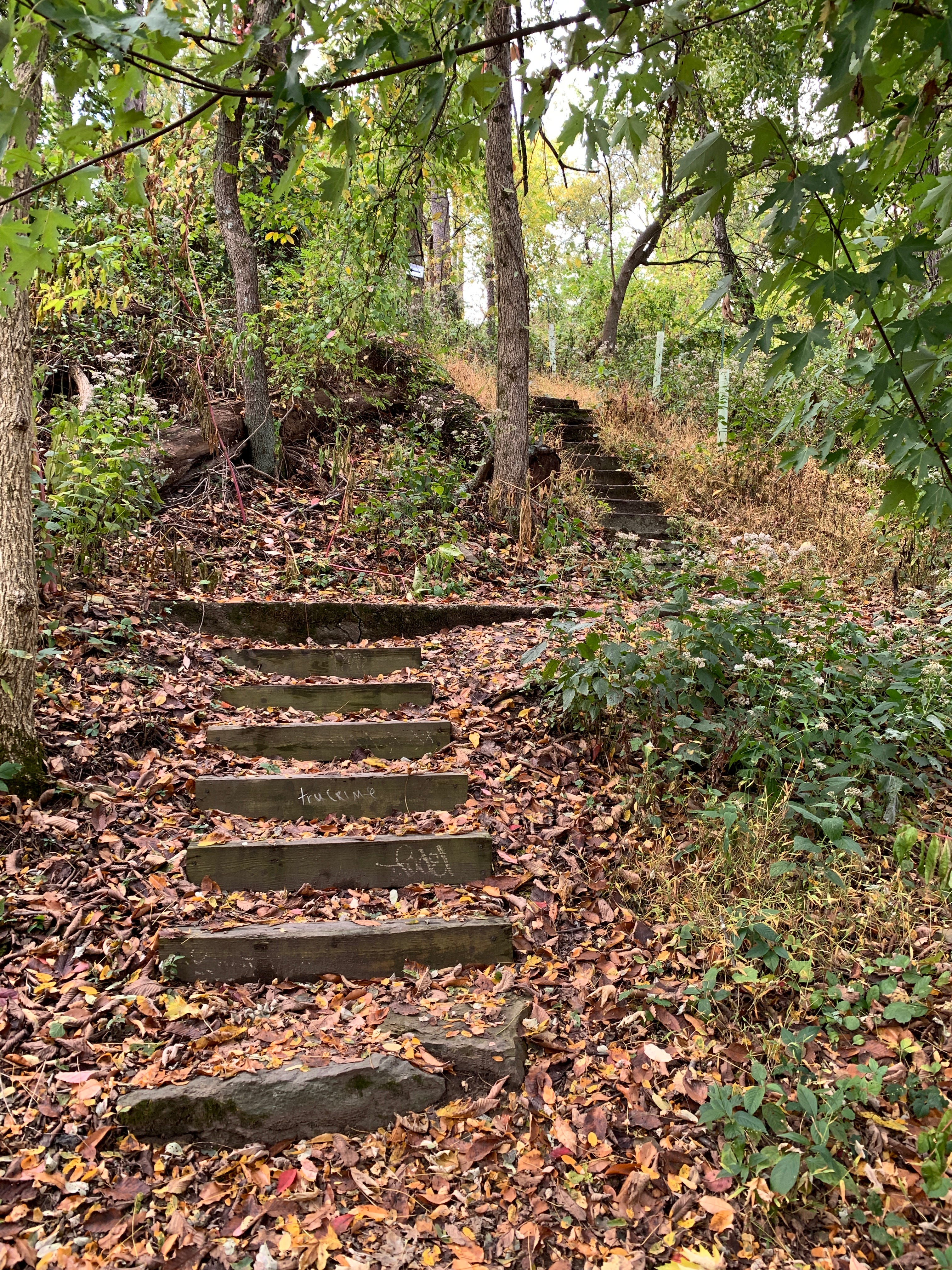
StepTrek - Pittsburgh, PA - October 3. I swear that I’m not playing favorites when it comes to states. It just happens that Pennsylvania is home to immense deciduous tree canopies and unique group experiences involving urban fall foliage. In Pittsburgh, the mountain-like hills that surround the city contain more than 700 staircases. They were built during the steel mill years, to make it slightly less taxing for workers to commute to the city center from their hillside homes. Today, those steps are both a recreational resource and in some cases, the only way for residents in the hills to get to and from their houses. Preserving the steps is a joint effort between community organizations and the City of Pittsburgh (which adopted a passive approach to step management when the city lost a huge share of its population and tax base as the mills declined). One of those organizations is the South Side Slopes Neighborhood Association and each fall, they host an extremely cool fundraising event called StepTrek; a community hike up and down a curated hiking route of steps, with banger views of Pittsburgh.
Having attended StepTrek in 2023, I can attest that the vistas are just half the scenic reward for all that climbing and descending. The steps of Pittsburgh often tunnel through dense trees and vegetation, giving them a strong Lost World: Jurassic Park vibe that’s actually sort of true to history. Pittsburgh’s wooded hills contain ruins of older neighborhoods, lost to time and demolished. (Be sure not to wander into the brush alongside the steps, unless you want to risk stepping on a rusty nail or falling into an open mine shaft obscured by branches!) Click here to learn about StepTrek; registration should be opening soon. Their event t-shirts are also worth purchasing.
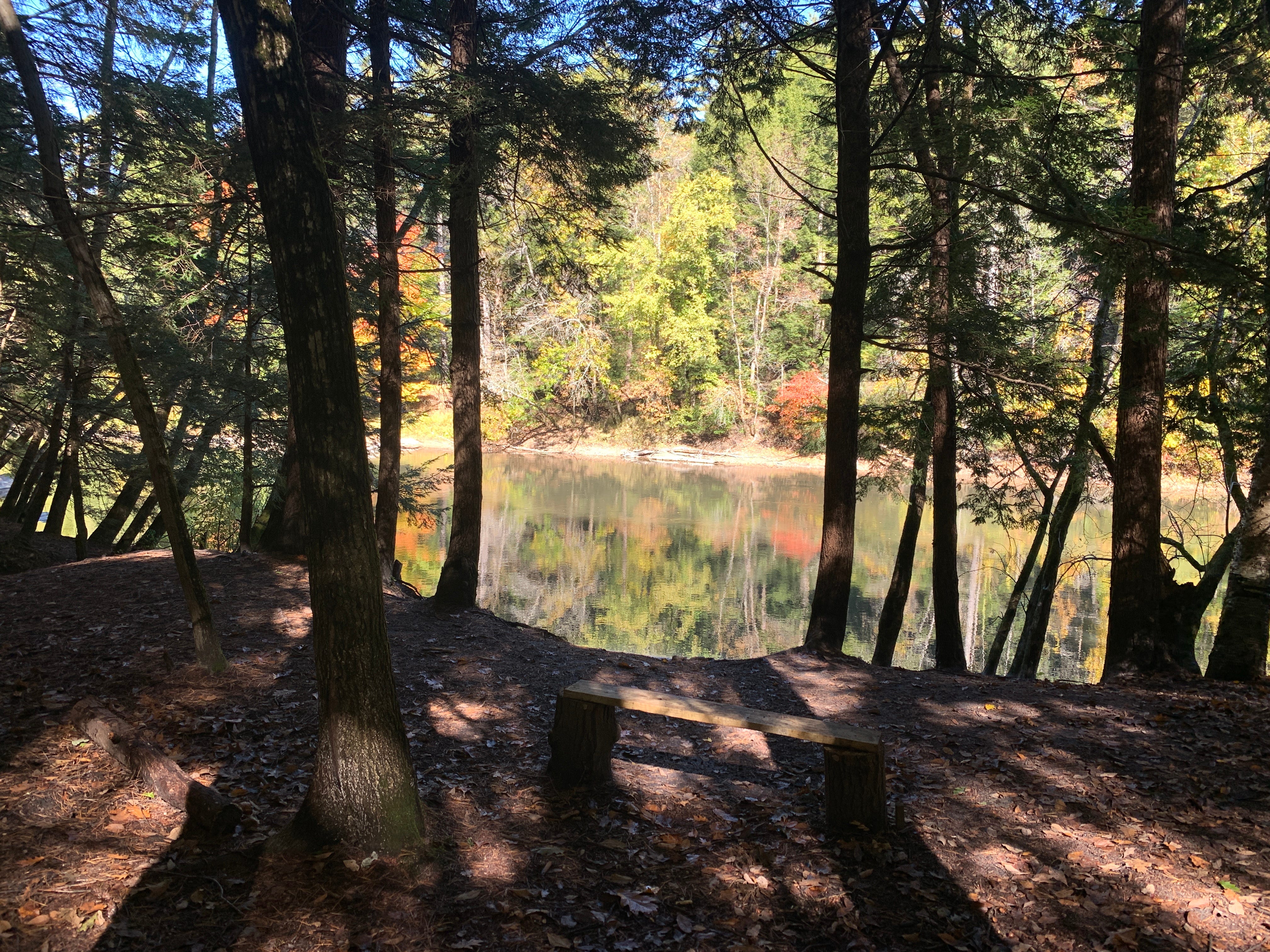
Portland Trails - Portland, Maine - Seasonal. Maine’s outdoor recreation culture is so deeply rooted that it extends from the mountains and the coastline into Pine Tree State cities as well. A few years ago, I spent a sumptuous weekend enjoying one of the most eye-popping outcomes of that culture—the labyrinthine Portland Trails network, which features over 100 miles of rustling pathways squiggling all over Maine’s largest city. Planned and cared for by the local organization Portland Trails, it’s the urban trail network equivalent of a Las Vegas buffet. You want maples and birches? Check! Rock formations and wooden boardwalks snaking through the trees? Done! Wanna throw a waterfall or two into the mix? Easy! And would you like to include a stop or two at a local Belgian beer brewery or a seafood joint? Good news: you can cram that in too!
The Portland Trails are open year-round and activated throughout the year by locals and visitors alike. But fall might be the most enchanting time to wander these trails; discovering how their rustic twists and turns connect the places where Portlanders live, work, and spend their money. Every city should have this. Click here for a map.
America’s First National Park City - Chattanooga, Tennessee - Seasonal. Of all the cities included on this leaf peeping roundup, Chattanooga is the only one that I’ve yet to explore. But it’s making the cut nonetheless because in 2025, it was named the first “National Park City” in the United States. What is a National Park City? In short, it’s an urban area in which planners have successfully connected thousands of residents with nature and doubled down on plans to establish more green spaces, trails, and facilities to expand the connections. It’s a concept I’ve occasionally dreamt about without really putting a name to it; a city so rife with greenery and explorable environments that you could compare a weekend there to a National Park visit. And while the National Park City foundation is not an NPS-affiliated project—it was started in the U.K. in 2013—I feel like it’s only a matter of time before the NPS takes a look at what’s happening in cities and wonders, “Do we want to get in on this?” Chattanooga is a prime specimen, added to the official National Park Cities roster in the wake of London and Adelaide.
From what I’ve gauged, Chattanooga’s leaf peeping grandeur includes the Tennessee River, which wraps around the city’s downtown core, and the Appalachian Mountain foothills that surround the place. You can take in the canopies on a walk, a paddle, or from the open mouth of a cave. This story by Mary Beth Skylis for Outside offers some neat ideas for where to get started with a National Park City experience.
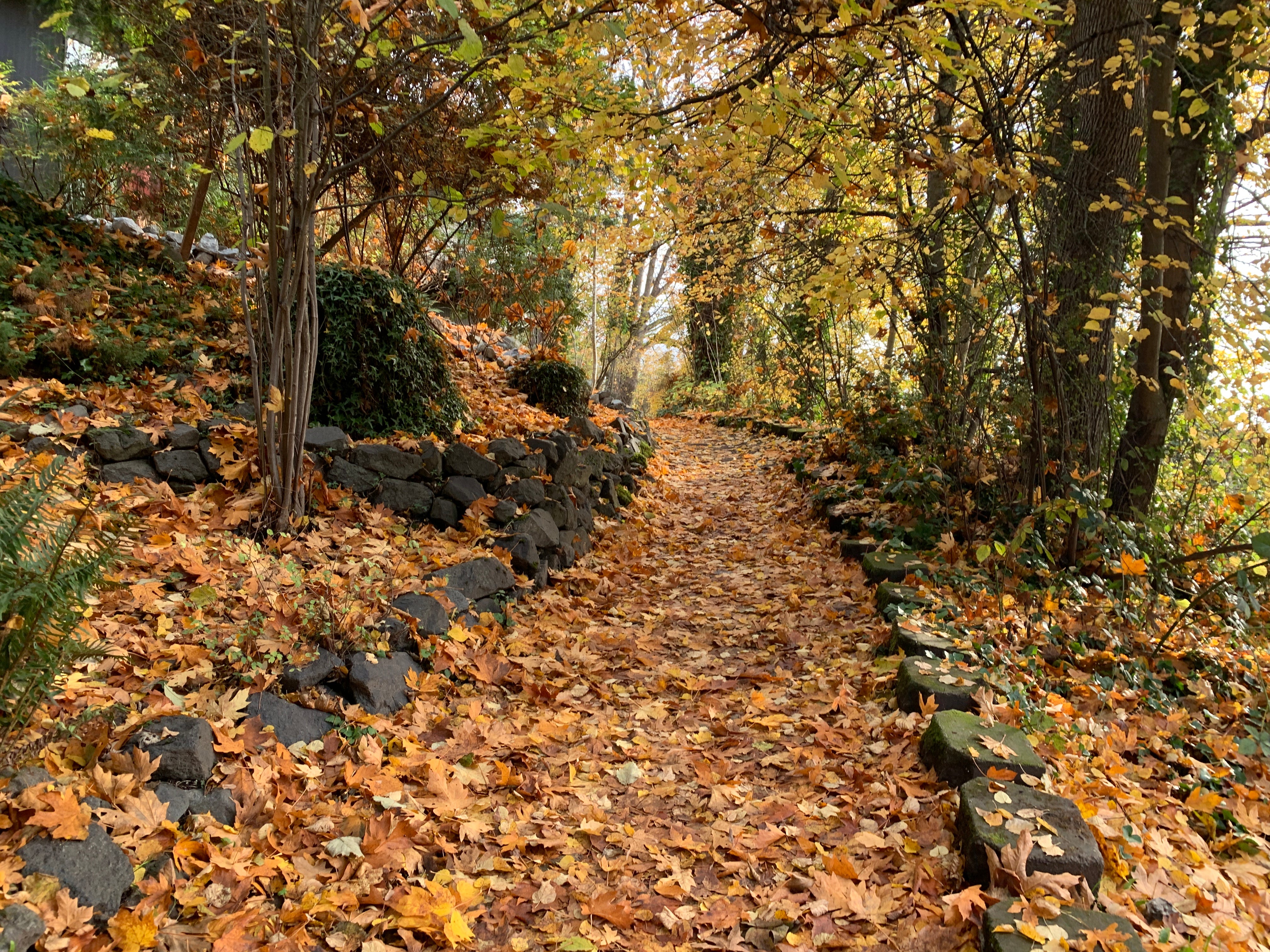
The Olmsted 120 and the Seattle Super Saunter - Seattle, Washington - Seasonal. Last year, I committed the cardinal New England sin and missed at least half of our fall foliage season. Why? Because I was in other regions of the U.S. doing research for that fall foliage travel guidebook, and one of the more underrecognized places where you can gawk at falling yellowy leaves is the Pacific Northwest. It’s not all pine trees and Douglas firs! Seattle, in particular, is home to tons of Vine and Bigleaf maples and Gingko trees that become luminous in late September and October. The Olmsted 50 and 70 trails—curated urban hiking routes through Olmstedian parks that form a 75 mile circle around Seattle—opened my eyes to how beautiful and abundant fall foliage can be in the Evergreen State’s most populous city; especially in its parks.
But more recently, another way of taking in Seattle’s autumn ambience has popped onto my radar. In 2025, a prolific Washington walker named Holden Minor Ringer started an event called the Seattle Super Saunter—a community hike that runs the entire north-to-south length of Seattle, clocking in at around 24 miles. It was such a hit that Ringer didn’t just re-stage the Super Saunter this past spring. He also created new sauntering routes and events, such as the Eastside Escapade and the Subdued Saunter. All of these routes exist on his website in the form of maps and directions that can be used for self-guiding. But in the event that more events are announced for this fall—if you’re in Seattle or heading there—consider getting in on the party! You can visit the Seattle Super Saunter page and sign up for emails by clicking here.