
Parks of the future
The long journey from a landfill to a green place

As a habit, people tend to bristle at changes that don’t pay out immediate dividends. In Boston, where I’m based, and a number of other American cities, the installation of bike lanes and dedicated bus lanes on streets—to reduce the number of vehicles and traffic accidents on the roads and to improve the local air quality—has been met with fierce backlash from residents and commuters who only see the inconveniences of the transition. When new housing is proposed, in cities and towns where there’s a critical shortage of housing, a lot of the opposition (though certainly not all of it) is fueled by the prospect of having to deal with the sound of construction, the presence of trucks, and the influx of new residents who will also need to use local resources. The horror!
This aversion to accepting short term “pain” for lasting rewards is chronically human, and these days, it seems to be holding us back from making changes that would yield a lot more health and happiness. This week, as I was driving up to Montreal for work and thinking about this rut that we seem stuck in, my thoughts wandered in the other direction. I tried to think of long game investments that cities, states, and nations are more open to embracing. The answer hit me like that first blast of springtime aromas—fresh mud, flowers, and grass—that lots of us experience sometime in April. Parks!
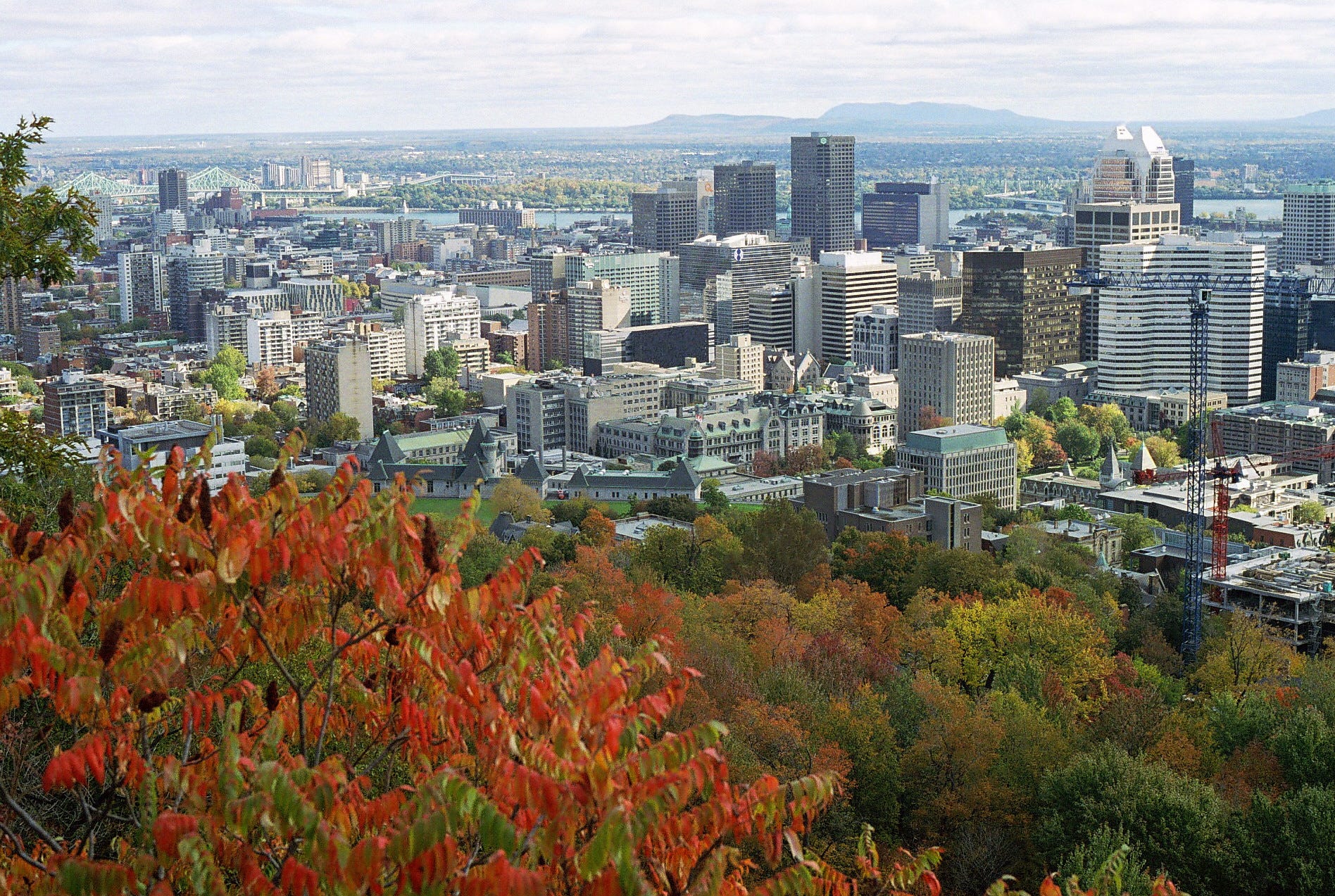
In a way, public parks are one of humankind’s greatest deceptions. While a handful of them are naturally occurring green spaces, preserved in their scraggly glory, most city and town parks are works of architecture. The woods, waters, rocks, and floral displays are installed and allowed years to grow and weather. The promise of their maturation and the escalating beauty of the parkland is usually enough to get residents on board with the breaking and seeding of the ground. As I chewed on this, waiting in a line of cars at a Vermont-Canada border crossing, I remember something in Montreal that I had read about years ago. Something BIG, in the literal sense. And I realized that I was on my way to a perfect city for seeing how patient we can be, when parks take shape.
Maybe you’ve had the curious experience of visiting a park that looks like a mound of bright green gumdrops, where the grass is abundant but the little trees have barely made it beyond their sapling stage. Then, you learn that this sun-soaked park used to be a town landfill. Transforming a trash disposal site into something more ecologically responsible isn’t a new idea. For Mind The Moss, I’ve sometimes visited parks like this, such as Berlin’s Volkspark Hasenheide, where people threw illegal raves in the woods during the early years of the pandemic. But in north central Montreal, in a residential neighborhood called Saint-Michel, a landfill greenification on a massive scale is now underway. And while the space has years to go, on its long journey from a dump site to a rustly green space, you can walk there today and see how far the land has come.
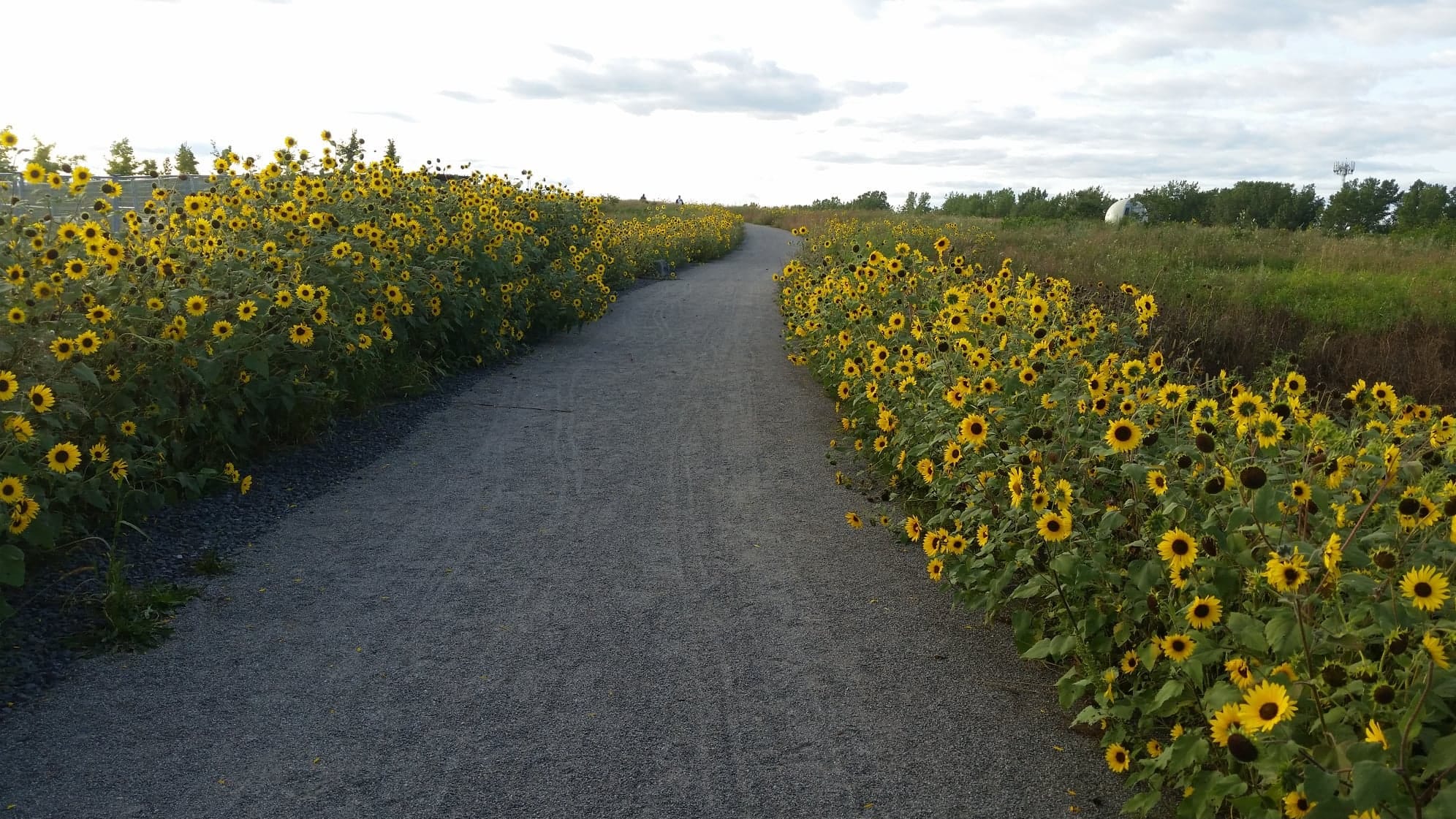
Frédéric-Back Park, named for the late Québécois animator behind an Oscar-winning short called The Man Who Planted Trees, was once a 474-acre limestone quarry. It was so thoroughly scraped out during the early 20th Century that by the time it shut down in 1963, the sprawling pit was over 230 feet deep and the city had to decide what to do with this gigantic hole in Montreal’s cityscape. By 1988, the quarry was being used as a landfill for garbage, construction debris, and even some of the snow plowed from streets during the winter. In less than a decade, 40 million tons of waste had already accumulated in the old quarry, and the city was trying to leverage some benefits from the odorous mass—like setting up an onsite power plant that could capture some of the biogases wafting out of the landfill and convert them into electricity. Somewhere up or down the chain of city planning, another idea was hatched. Why not convert the landfill into a public park, on the same epic scale as Parc Mont Royal or Jean-Drapeau?
From inception, this was no light undertaking. Mont Royal, Montreal’s woodsy crown jewel, weighs in at nearly 700 acres. It connects city neighborhoods and it has its own namesake mountain, which Frederick Law Olmsted identified as the natural heart of the park when he started designing it back in 1874. It’s worth noting the Olmstedian origins of Mont Royal, because it took a century for the park to become the thriving green space that many of us know today. Frédéric-Back Park—the old quarry turned landfill turned public park—has an even longer and steeper road ahead of it. Filling the space with soil, woodchips, compost, and sand was only the beginning. Over the last several years, 525 trees and 17,800 bushes, perennials, and herbaceous species have been planted here. But beneath it all, there’s still over 40 million tons of waste decomposing at a near-glacial pace and producing all kinds of troublesome gases.
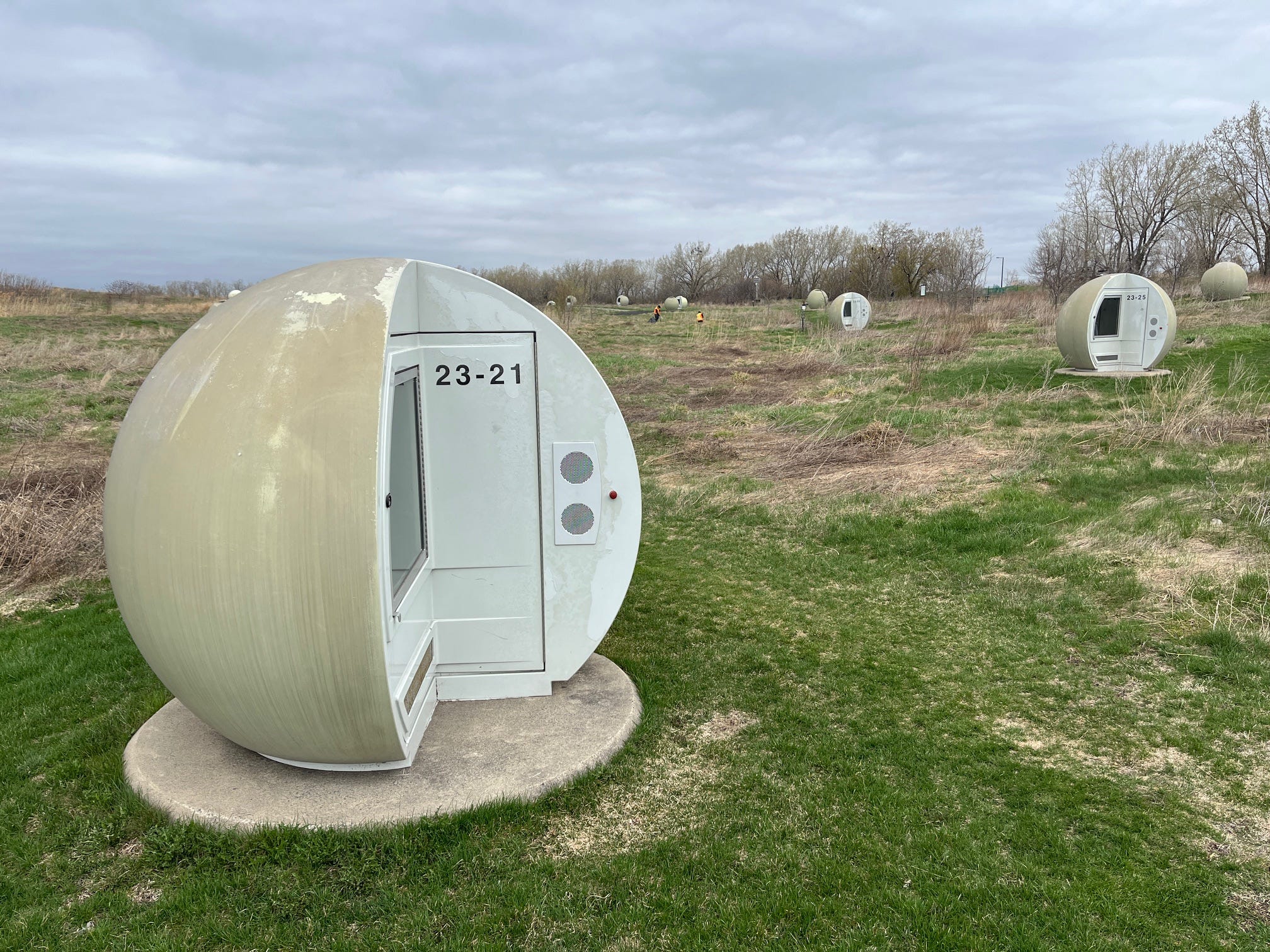
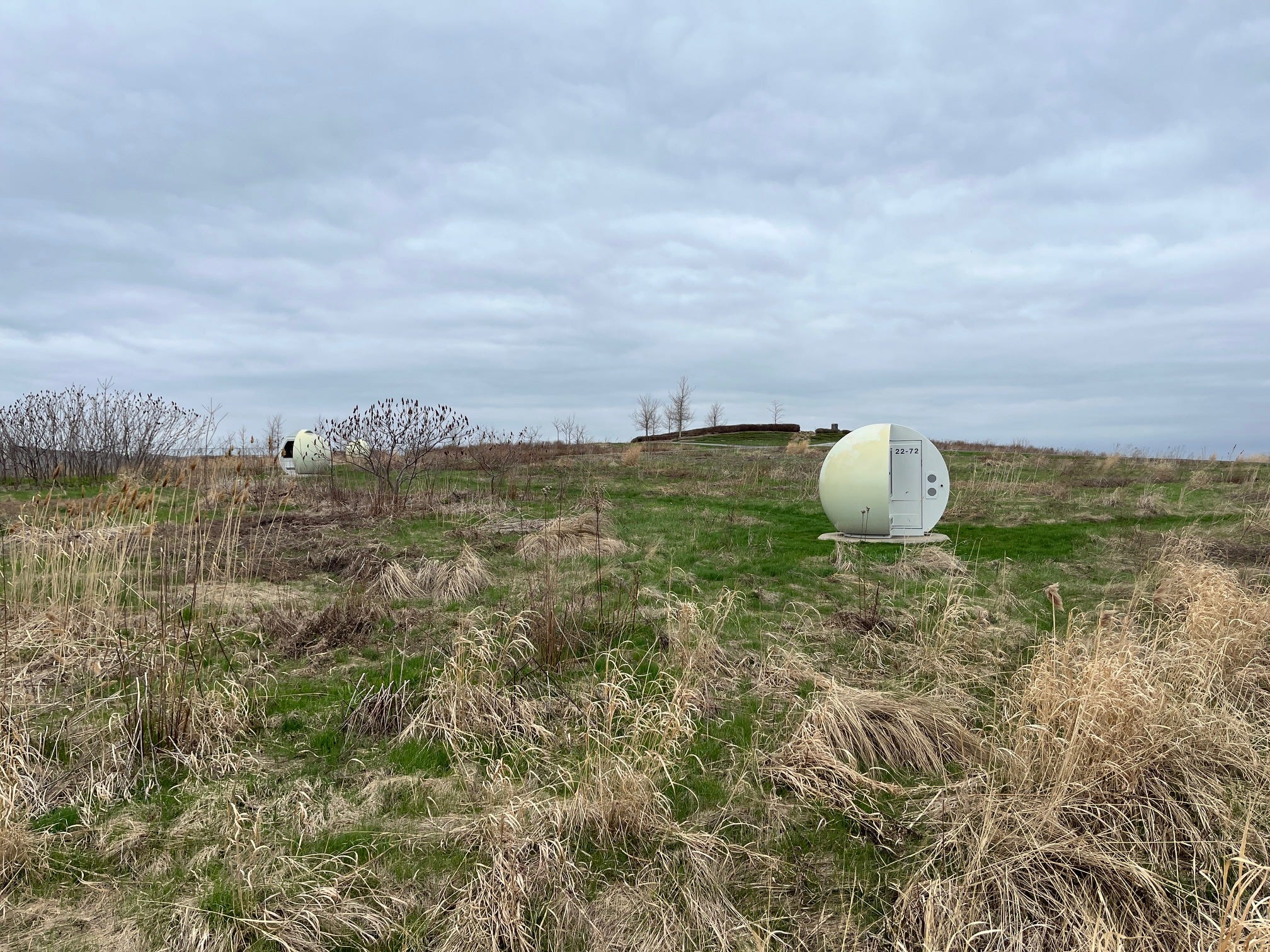
The latter explained one of the most peculiar things that I noticed just after I entered Frédéric-Back Park from Rue Paul-Botet. Across the rolling plains of the park, more brown than green in early spring, I gazed at hundreds of white pods planted in the ground. Each was the size of a smartcar, and the number of pods scattered across the park gave the space an otherworldly energy. I felt as though I had stumbled across a piece of land being surreptitiously used by the alien colonists in The X-Files. Through a glass window on the nearest pod, I saw a valved pipe, which immediately suggested that these strange objects had an important utility, given how many there were. The pipes, I would soon learn, are connected to gas capturing wells that collect Methane and other fumes that continune to emerge from all the garbage! As to why each of the well casings is spherical, there may have been some intention to giving Frédéric-Back Park a distinictly extraterrestrial vibe. A barely-adolescent park with nearly 500 acres of space is going to look somewhat lunar to begin with. It’s a unique landscape that can feel both fertile and barren. The vivid color of the grass and flowers hints at greater things to come, but the lack of shade trees—especially in a northeastern city like Montreal—is a departure from the parks or conservation lands that many know.
And yet, the inherent weirdness of a young park and its limited natural amenities don’t seem to dampen public enthusiasm for these projects. Somehow, in this context, more of us are able to connect the dots between making substantial near term investments for our health and happiness, getting some strange early results, and one day, ending up in a much better place. Perhaps the indignity of living near an enormous landfill is bad enough that any proposed environment change is seen as an improvement, warts and all. Or maybe being able to walk in the rehabilitated space, even as the trees and plants remain in their infancy, is enough of a reward to stave off misgivings about the price tag of the project or the development timeline. By nature, millions of us crave more spaces where we can amble freely, without worrying about getting clipped by a car or being told that we have to buy something. New parks, including those derived from landfills and other sites of ecological desecration, are one way of addressing this need. Maybe this makes us predisposed to support something like Frédéric-Back Park.
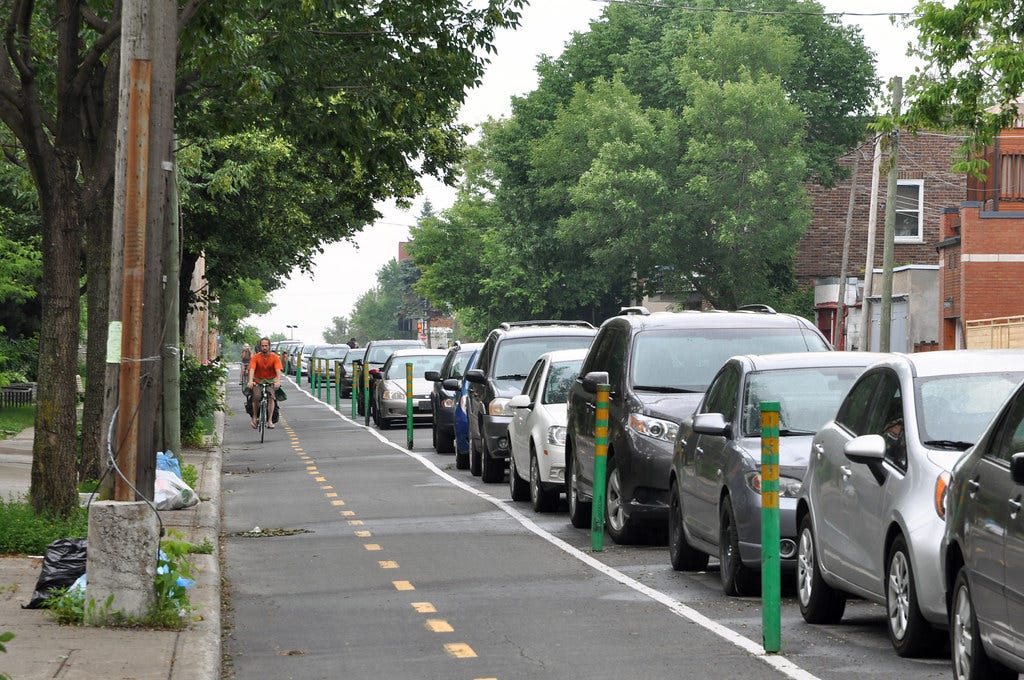
Still, you have to wonder what life might be like if we applied this open-minded, long game thinking to other facets of daily living. Once again, Montreal offers a glimpse of what this can look like. The bike lanes there, for which is the city is globally renowned, are as much a foundational part of the city as the streets. They’re used throughout the year by cyclists, and the city even plows them. It would be easy to assume that when the lanes were proposed during the 1970s and 80s, Montrealers were somehow more open to the project due to the European influence throughout Quebec. But in fact, the bike lanes ran into much of the same opposition that rages in American cities today! The thought of having to share more of the roads with bikes was anathema to drivers. This is what happens in pretty much every city and town that tries to install bike lanes.
The difference in Montreal, however, was how generations of city leaders responded to the backlash. They refused to abandon the project, recognizing its long term perks for mobility and health. There were setbacks, delays, and other hurdles. But in the end, Montreal got its labyrinthine, protected bike lanes, and the city is better off for them; just as the development of green spaces like Frédéric-Back Park can be an upgrade for our surroundings. And as other place-making projects run into reactionary skepticism, I have to wonder if more mayors and governors in the U.S. might choose to take that second page from Montreal’s book; keeping their eyes on the prize, not retreating in the face of harsh pushback, and accepting that this may cost them another term but will benefit their constituents in the long haul. One can dream. But it would be nice.
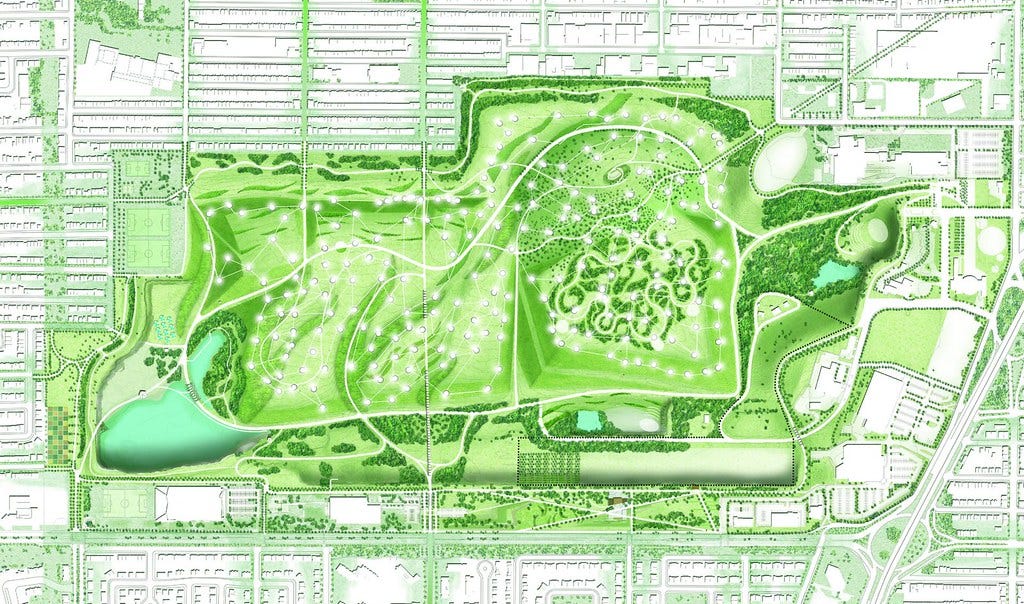
CLICK HERE for a map of Frédéric-Back Park
When you're in Chicago next time, take the Orange Line to Halsted and check out Palmisano Park in Bridgeport neighborhood. Created from a reclaimed quarry, it's artificial hill has superb views of downtown. A wetland thrives on descending terraces with water flowing into the quarry pond. Thoughtful design went into plantings of native prairie species to support urban wildlife. Across the street is a Chicago park, McGuane Park, with tennis and basketball courts, a swimming pool and recreational spaces. It's a well loved space shared by neighborhood residents who come from all over and mingle easily.