
Take your car to the woods in the city
An ominous visit to the Arbor Hills of Plano, Texas

As a New Englander, I made it all the way to my late thirties before I joined the crowds briefly fleeing the ice each February. But as a budget traveler, I didn’t head for Miami or any place where hotels are surge-priced at $300/night. Most recently, I sprang for a flatter, more parched locale that’s roasting by summer, but balmier during the winter months. Dallas is the city that my friend George relocated to from Seattle a few years ago, drawn there by a new job opportunity and intrigued by the chance to familiarize himself with a very different corner of America—which has been growing quite rapidly.
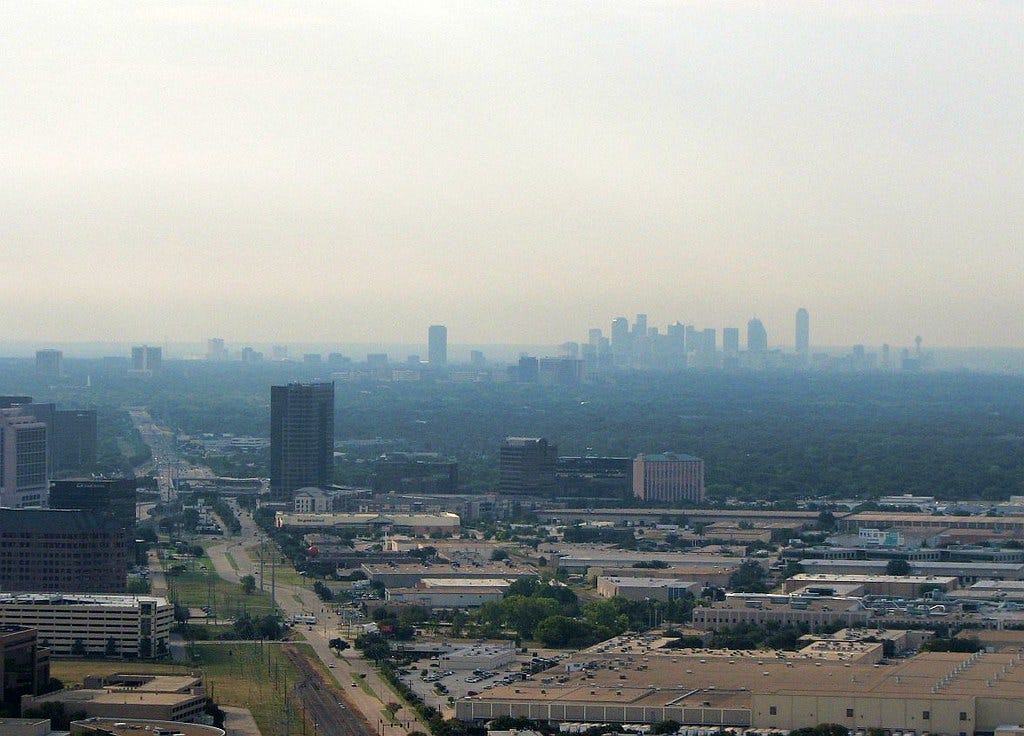
New York remains the fastest-expanding city in America, which isn’t surprising when you consider that it’s pretty much the only major city in the U.S. that’s not daunted by the prospect of building upward. (Propose anything taller than three stories here in Boston and you will be inundated with angry phone calls and emails on the ruinous impact of shadows.) But nipping at NYC’s heels in second and third place are Houston and Dallas. And instead of reaching for the heavens, the growth of both Texas cities is horizontal; the sprawl we typically see in regions with a large amount of level-ish land waiting to be developed for residential or commercial use. Since sprawl means having a vaster geospatial footprint, the main mode of moving around cities like Dallas is cars.
In 2021, the U.S. Census Bureau reported that less than 10% of the people living in the Dallas-Forth Worth metro area got around on the public buses and trains run by DART (Dallas Area Rapid Transit) in the year 2019. And that was before most public transit agencies experienced a sharp drop-off in ridership during the pandemic; a gut punch that they haven’t fully recovered from. Some of this anemic buy-in for public transit in Dallas can be blamed on the limitations of DART; the modest roster of places where the train or bus can take you. But those shortcomings reflect a choice on the part of Dallas-Fort Worth leaders and by extension, DFW voters. This consensus—that shared transportation is something to be shrunken and avoided—is written in the landscape.
This is not unique to Dallas or Texas. It is a trans-regional mindset which has stunted mobility in plenty of other American cities from one coast to another, as millions of us give up on the idea that having fewer cars on the roads is good for public health and happiness. And for me, few things have illustrated the logical outcome of this mindset quite so grimly as a walk that George and I took at one of the few nature preserves in Plano; the suburb on the north side of Dallas where Frito-Lay and JCPenney are based.
I first heard about Arbor Hills—without quite realizing it—back in 2025, while reading a two-part essay from the journalist Hamilton Nolan on the expansion of conservative Christian mega-churches and 16-lane super highways around Dallas. The kicker of the first part is a scorcher. “Weary after a long day at church, I drove to Plano’s one nature preserve,” Nolan writes. “But I had to turn around and leave. The parking lot was full.”
There’s a 50/50 chance that Nolan was alluding to the 200 acres of upland forests and prairies that make up Arbor Hills, which is one of two Plano nature preserves offering wooded trails for walkers and runners (the other one is the more expansive Oak Point Park.) George and I ventured up there early on an overcast Sunday morning, enticed by the prospect of being surrounded by trees. This is not exactly an easy experience to have in Dallas. The scale of local development means that even at the few larger scale green spaces like White Rock Lake reservoir, there’s always infrastructure visible nearby. Parking there had proved to be a challenge for us on prior visits; a clear case of not just demand exceeding supply, but the means knocking the end out of reach.
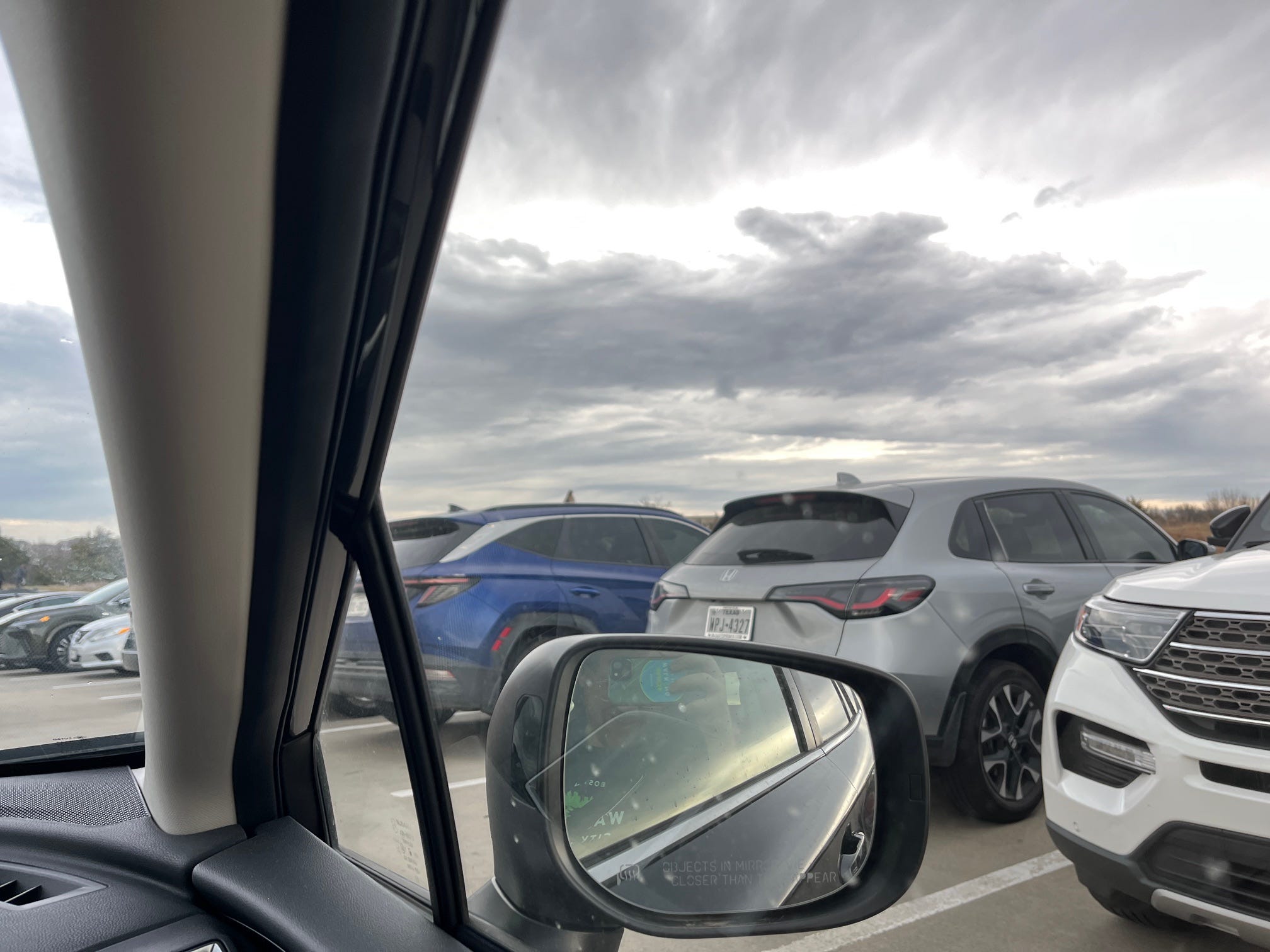
So we braced ourselves for disappointment as we pulled into the crescent-shaped lot at Arbor Hills, already bustling and full of gleaming metal at 9:40 AM. We circled the parking area like a shark, looking for an opening that we could claim. Maddeningly, a couple of the vacant spaces that we did find had been rendered unusable by big-ass SUVs or trucks spilling over from the neighboring parking spaces. There’s something deeply emasculating about gearing up for some time outdoors, only to find yourself crawling at 5 miles-per-hour between rows of vehicles, hoping and praying that one of them will be merciful enough to leave soon. Luckily, our third pass was successful, as we saw a family piling into their Honda CR-V. We didn’t have a fourth pass in us.
Again, I don’t want to leave you with the impression that I’m indulging some sort of prejudiced resentment toward Texas (given that I’m from New England, which is not exactly known for being charitable to southern states, I think this bears repeating.) If you have ever gone hiking in Amercia, then you’ve probably experienced a version of trailhead gridlock. In the backcountry, this is inconvenient—the reality that parking capacity in conserved lands can’t be easily expanded. But in suburbs of major metro areas, where far more of us actually live, this is a more elemental problem. Frederick Law Olmsted, who basically created the public park as we know it, saw parks and city-adjacent conservation lands like Arbor Hills as spaces in which anyone who needed a breather from the stressors of the Industrial Age could find it. But when the only way to reach the closest green space is driving there and finding a place to park your car, the barrier of entry rises considerably. Both of these things are indirect admission fees, paid in money and time. And the result is fewer folks visiting or knowing about parks.
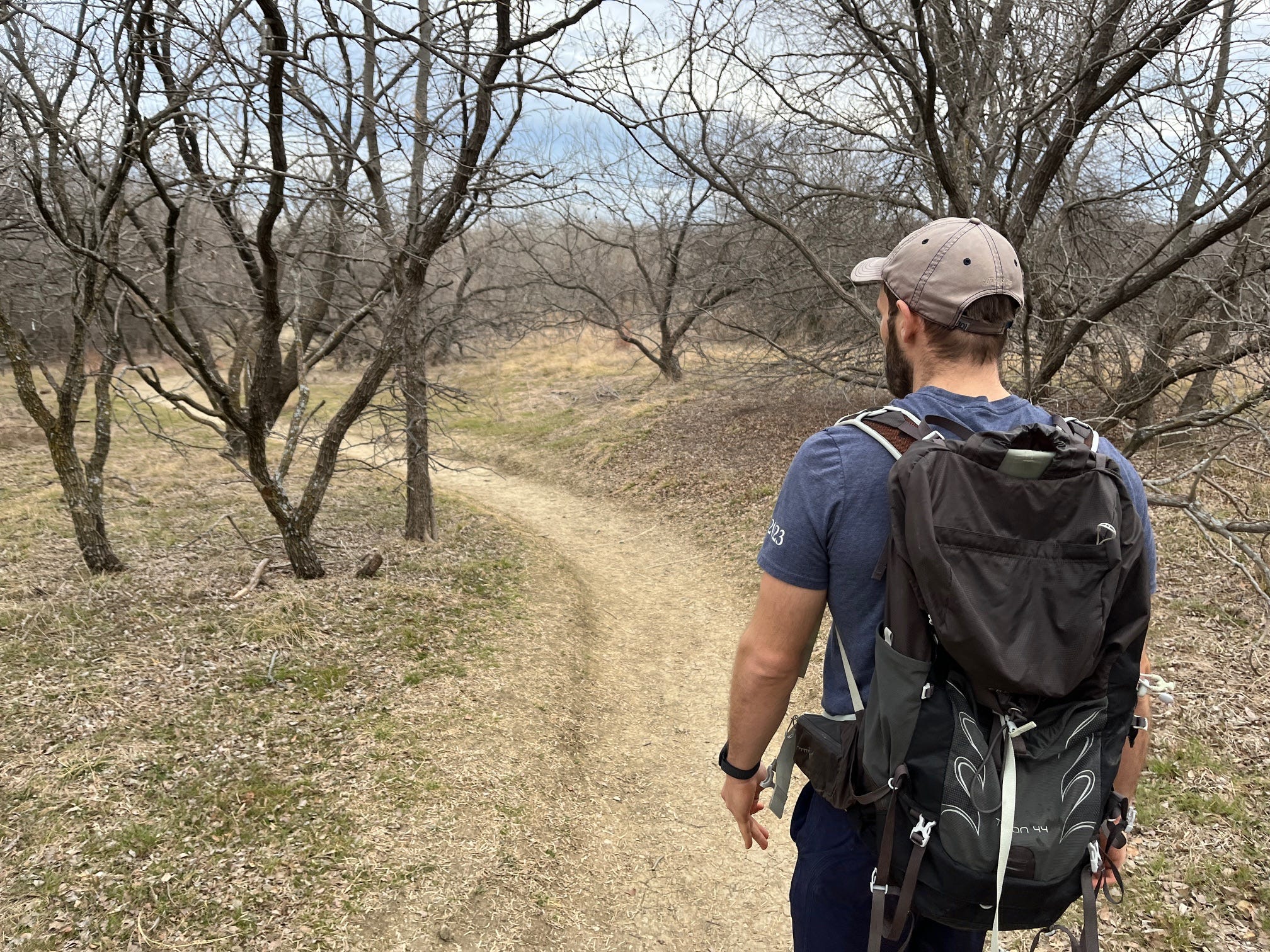
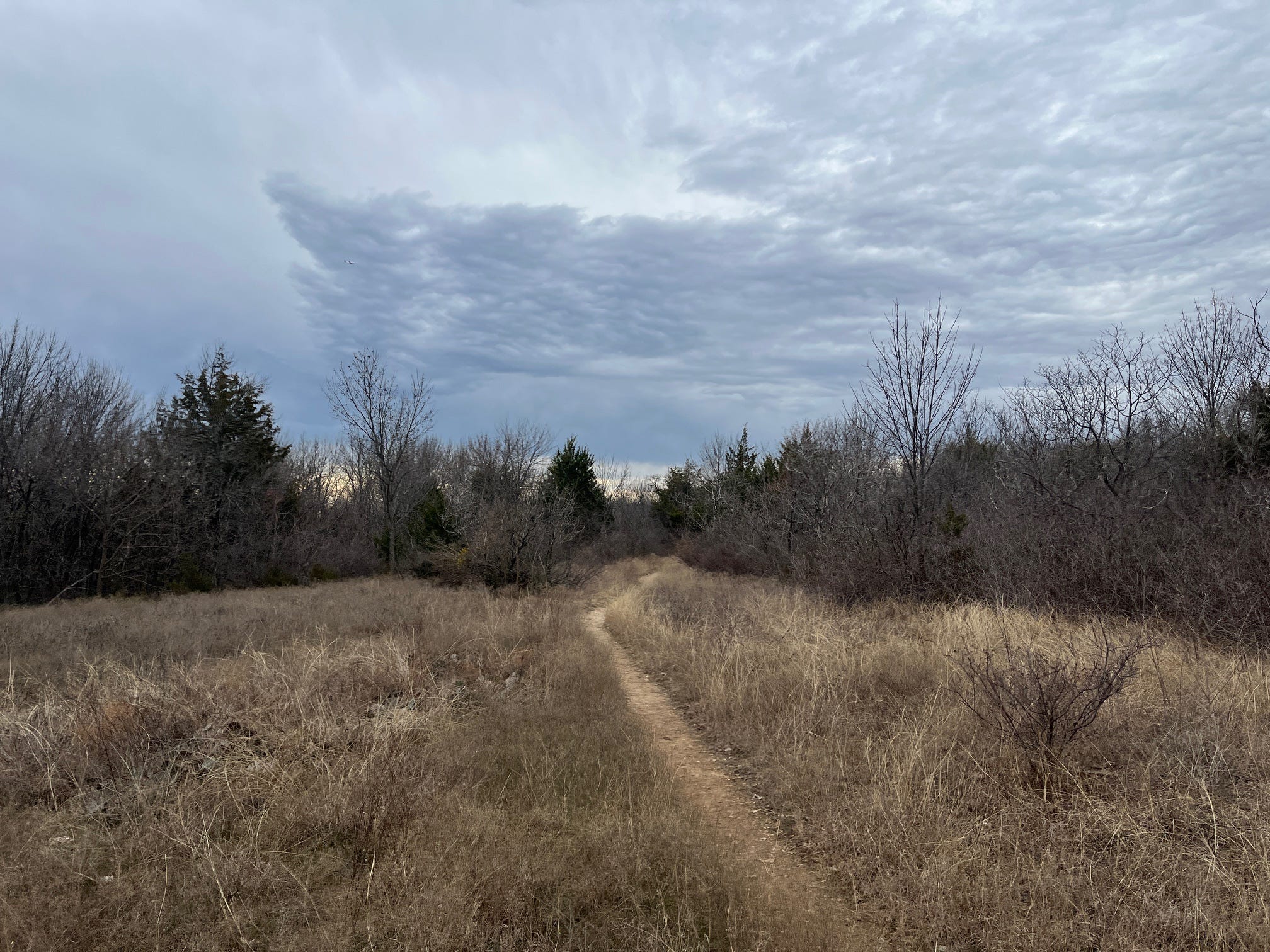
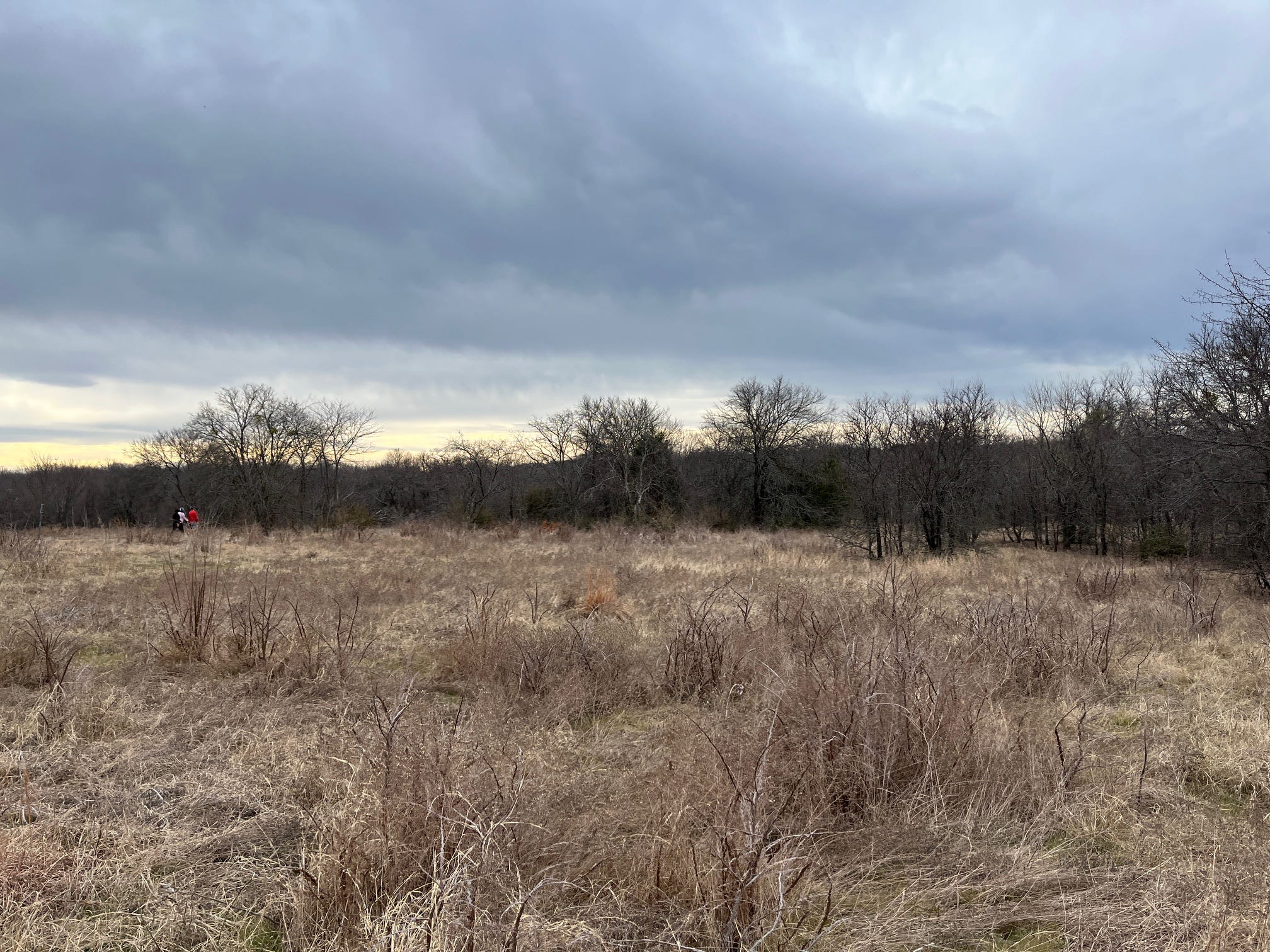
Maybe that’s why I had never heard whisperings of Arbor Hills on previous visits to Dallas, or why it took so long for George and I to scope it out, drive up to Plano, and take a look. The paved pathway that winds through the preserve’s grasslands and its twisted woods, with trees that looked almost blackened in their leafless state, was the main artery for hikers, runners, and families with strollers. The more raggedy dirt trails that tunneled through the dark branches and waterless gulches were strangely empty, and we decided to take advantage of their quietude. For the first time since I touched down at DFW airport—or maybe for my first time ever in the Dallas-Fort Worth area—-I felt like I was communing with something primordial. Something that had taken root in this region centuries before American Airlines and Texas Instruments went public.
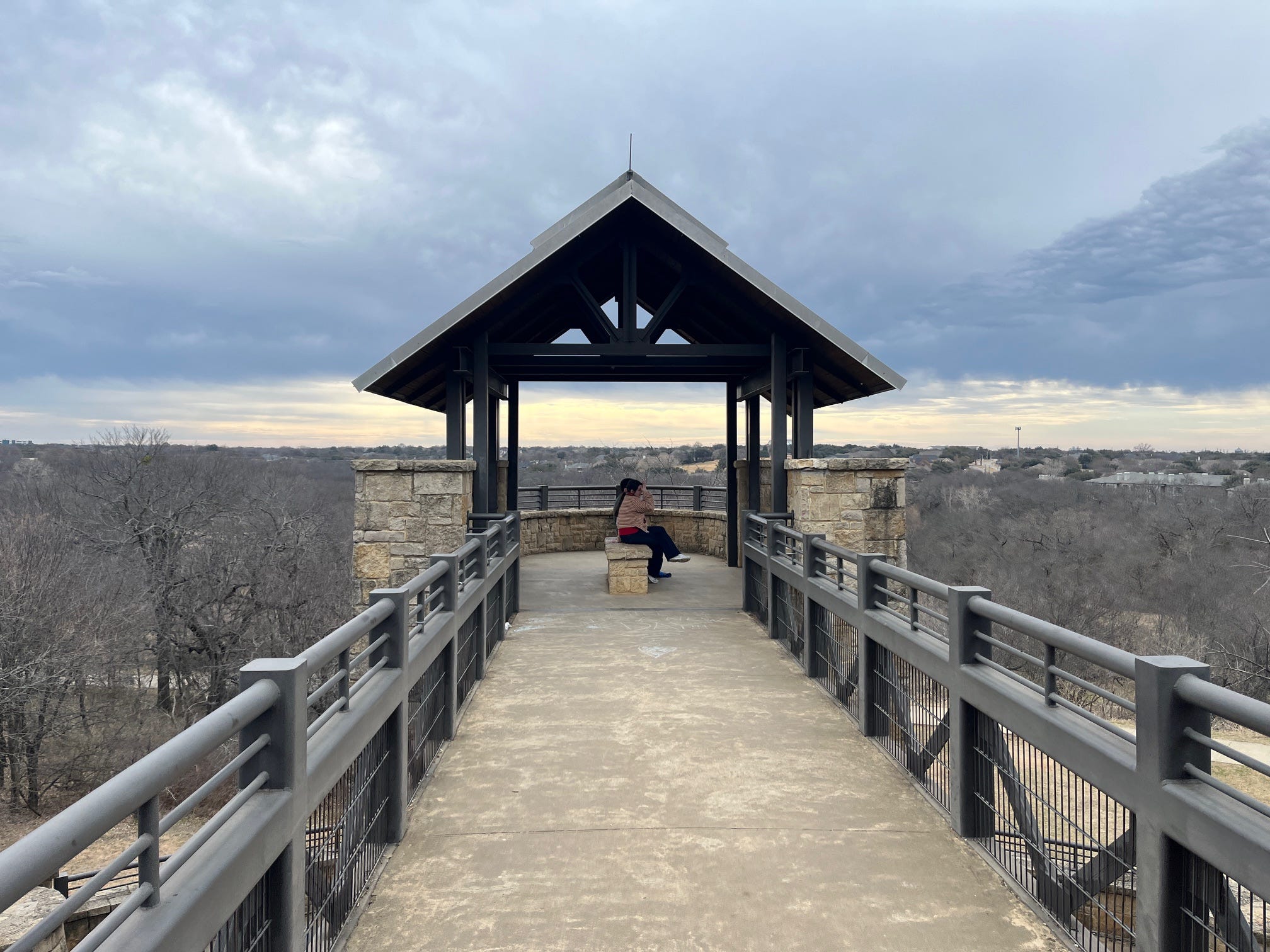
This was pure, raw Texan wildness; something you would have to drive beyond the city limits to experience, were it not for the conservation of the Arbor Hills. Near the top of an especially tall and exposed hill, we arrived at a wooden bridge that connected the trail to an observation tower, where several visitors were drinking in the grandeur of the park. The view was layered, like sections of an onion. The first layer, surrounding us on all sides, was shaggy and rustic. But beyond there, wrapping around Arbor Hills, was a vaster sea of pavement and steel, stretching as far as we could see. It felt like an inversion of a typical mountain view, as you gaze out from the wilderness toward the glimmers of society beyond the trees. From Arbor Hills, that sprawl of pavement and steel felt like the real wilderness—dangerous, unforgiving, and difficult to get through.
That is my nightmare. A future in which we ask parks and green spaces to offer things that the broader landscape of our cities and towns should offer. Many of these places will need to get bigger soon; to accommodate more housing, as prices skyrocket! But the direction of growth is overlooked. Building farther and farther outward, instead of upward, can contribute to public perception that personal vehicles are the best way to move around town. It’s a misguided perception that lacks historic insight. (Hell, it used to be possible to ride trolleys from the city center to the bushiest burbs, which I wrote about a few years back.) And I suspect that’s one of the reasons why we still can’t quit car-centered planning, even as the costs and risks of driving everywhere keep adding up. Relying on a publicly operated train or bus to get across town might mean a little more effort than jumping into your sedan and hitting the road. But the conveniences that seem to come with driving are paid for indirectly, in far too many ways to count.
If George and I hadn’t been able to park the car at Arbor Hills—if we had been forced to abandon our hike—I hope the disappointment would have inspired introspection. As another friend once said to me, “You’re never caught in traffic. You are the traffic.” That reality doesn’t seem to have permeated the Arbor Hills vicinity though. A late 2025 story for the Quorum Report by journalist James Russell found voters in the northern Dallas suburbs, including Plano, on the verge of clawing back their shares of public funding for DART; on the divergent premise that DART’s trains and buses are under-used and bringing in crime and vagrancy from Dallas. The alternative, if Plano chooses to pull out of DART funding, could be lower-cost rideshare services from a company called Via, which already operates nearby in Arlington and Denton. By early February, Plano and DART leaders were engaged in a series of compromise talks. The outcome is still undertermined. But as I read the latest coverge from North Texas’s NPR station, KERA News, the headline image caught my eye. It captured a group of Plano residents who had turned up at Plano City Hall with signs, in support of DART funding. Two of the signs read, “KEEP TRANSIT PUBLIC.” It somehow left me feeling inspired and gutted in the same moment. This is where we are—on the razor’s edge of witnessing one of the most vital public utilities privatized in more American cities and burbs, generating more traffic and fewer opportunities for people who live there.
But even in Plano, overwhelmed by cars, some of those people were venturing out to fight back; stubbornly dragging the clear and healthier alternative back into the light.
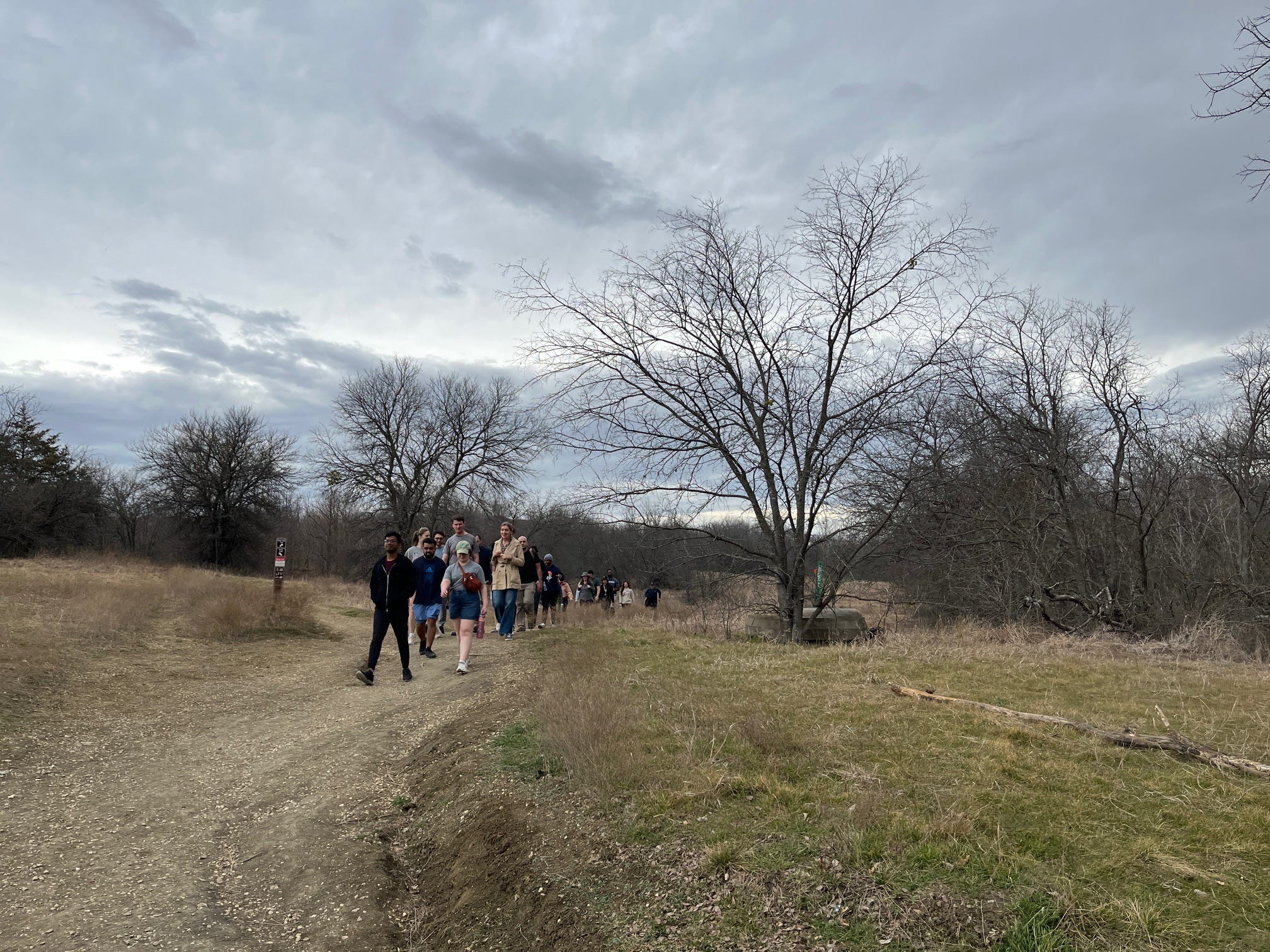
So many of you responded enthusiastically to the recent Mind The Moss story on the block party-like shoveling that took place on my street during Winter Storm Fern that I decided to pitch a similar story to The Boston Globe, which gave me the green light to revisit the moment. You can read the Globe story right here.
Also, on the matter of appreciation, it’s been almost two months since I kicked off the newest incarnation of Mind The Moss, removing the paywall for all new Moss stories and digging deeper into the intersections of the outdoors, culture, and politics. That so many of you have continued to support the newsletter as paid subscribers means a lot to me. This financial support is what makes it possible for me to devote time to researching and writing a new Mind The Moss story every week; especially stories that involve field reporting. To be able to sit down each month, poring over the ideas on my story calendar (yes, that’s a real thing that I cobble together) and thinking, “Maybe I could go there and look into this,” has been the creative equivalent of nitrous oxide—making some of the most widely-read Moss stories possible. Thank you to all of you who have made this happen. And for anyone who wants to add some logs to the Mind The Moss woodstove for 2026, you can do so today with a monthly or annual paid subscription, which also includes the hundreds of stories and trip ideas nestled in the Moss archive.
Our Jersey City bike advocacy organization, Bike JC, has been organizing shoveling parties to shovel out the bike lanes. The city has failed to do it. Lots of people in Jersey City ride bikes for a living such as delivery cyclists. And plenty of people get their kids to school on various forms of cargo bikes or bikes with child seats. Now that we’ve shamed to the city into doing what they were supposed to do they have actually started clearing the bike lanes that we couldn’t get to.