The Loneliness Of The Local Summer
How to cope when your people are on vacation

On a recent muggy afternoon, I realized that I hadn’t hung out with anybody outside of my household for nearly two weeks. This is a strange thing to grasp in the middle of summer, a season that we tend to associate with gregarious scenes; such as being gathered around a grill laughing and clinking glasses, or setting up blankets, a shade canopy, and other basecamp essentials at the beach. One of my favorite aspects of living in a dense urban area is how easily you can walk out of your home and into a community to which you belong. But in normally thrumming cities or towns, summer can pack a subtle punch. One day, you’re in the company of friends and colleagues, and the next, you discover that they’ve all gone on vacation….and you’re still there.
There are a lot of reasons why people choose to get the hell out of Dodge for large chunks of the summer, or sometimes the entire season. Some do it because they can. Others are seeking relief from the punishing humidity and heat felt in many areas in the US—conditions that can actually bring on symptoms that we normally associate with midwinter seasonal depression. Summer is also the season when a lot of people find it easiest to take time away from their jobs, and this means that summer is a time when you’re more likely to get weekend invitations from friends with cottages, boats, or timeshares. Put all of these factors together, and it’s no surprise that the beginning of fall (a season that seems to be universally beloved) can often feel like a community resurrection. Everyone is coming home, and that’s where they’ll be for several months.
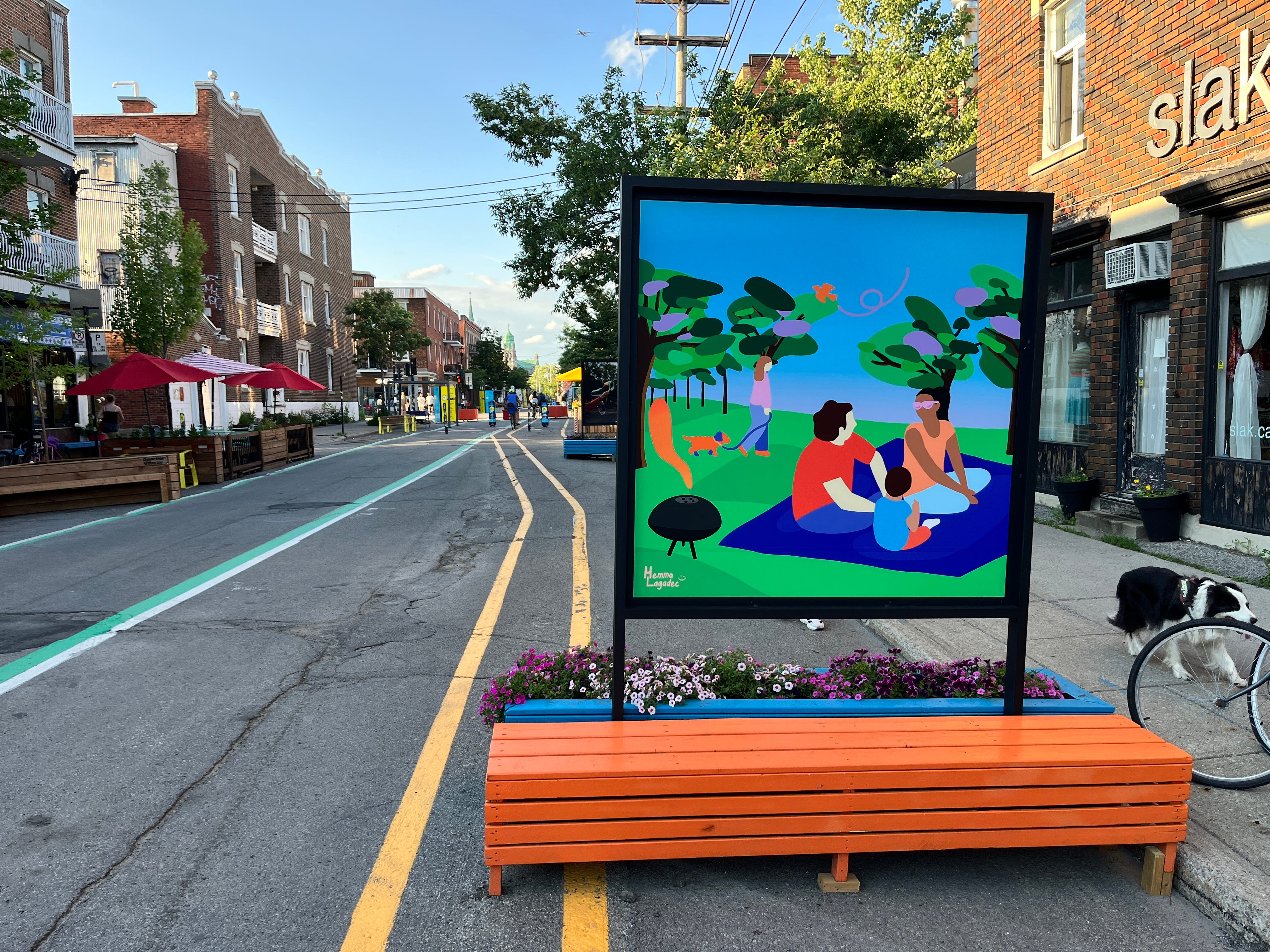
I’m no stranger to hitting the road, and work has taken me to a few distant locales this summer, such as Scotland (which I’ll be able to share more about soon) and Montreal (which you can read about here.) I also got to spend a few days with my family up in Maine. But for the most part, Summer 2026—like the last few summers—has been a local affair for me. It has also been a river of feelings. Anyone who’s spent the better part of July or August in Boston or any city will know that life quiets down during that two month window. The traffic on the roads scales back, it’s easier to nab a table at a restaurant without a reservation, and you can almost always find a vacant park bench for sitting down with a smutty paperback thriller. It can even feel like the city or town itself is on vacation as well; finally able to slow down, breathe, and chill the fuck out.
The calming effect of being local at a moment like this is most welcome, because the loneliness of the local summer can also be hard to bear. The company of friends is an essential good that we start to miss, no matter how life has been going lately. Being able to call or text someone and say “Let’s go for a walk?” or “Wanna grab a drink?” is very easy to take for granted until the usual recipients of your invitations are suddenly hundreds of miles away for the foreseeable future. Sure, you could still share a phone call from your respective places or send each other postcards. (The latter is something I’ve really come to enjoy, as I get into my late thirties.) But vacation tends to be a time when many of us temporarily detach from the roots and obligations of home, and this can make the prospect of “disturbing” someone’s time away feel daunting; to me, at least. So, what can you do when you’re feeling isolated and the summer isn’t over yet?
This is where someone more relentlessly optimistic might say, “Just go out to a bar or a local event and talk with people! Maybe you’ll make new friends!” While I do believe these are gambles worth taking, the reality is that we’re living in an age where a lot of people have become far less inclined to connect, or to stay connected. Smartphones, apps, and online culture are making us more anxious and less empathetic—reflected recently in this WIRED story by Jason Parham about people “ghosting” their long-term partners. I had to take a brooding walk after finishing that story, struggling to imagine the shock and trauma inflicted upon all those people whose exes had simply cut them off with no explanation, after several months or even years together. While there are a handful of scenarios in which I can understand this (say, a situation in which abuse is happening), the people interviewed in Parham’s tragic story seemed mostly intent on avoiding the emotional vulnerability of being human with someone in a hard moment.
As I kept walking, the dark stupor of the magazine article started to lift when I reached the Southwest Corridor—the paved greenway that slices through Boston from Forest Hills to Back Bay, which is reliably whooshing with commuters on bikes most Monday evenings. But on this particular Monday night in July, I was the sole walker on the first segment of path. For the next few minutes, the only thing that broke the quietude was the clunking of a subway train navigating the adjacent track. And then, a little later, I heard a guy say, “No, no. You gotta roll it like this, or you’ll just spill the shit all over!” The voice belonged to a man in his late twenties, a dead ringer for Carrot Top before his plastic surgery era, showing a friend how to craft a perfect joint. They were sitting on a small concrete foundation along the path, which contained an electrical box. Two BMX-style bikes were resting on the grass near them. Were these friends enjoying a smoke after busting some stomach-tightening moves? Or did they need a few vapors of courage before pedalling off on their latest adventure? I smiled and kept walking.
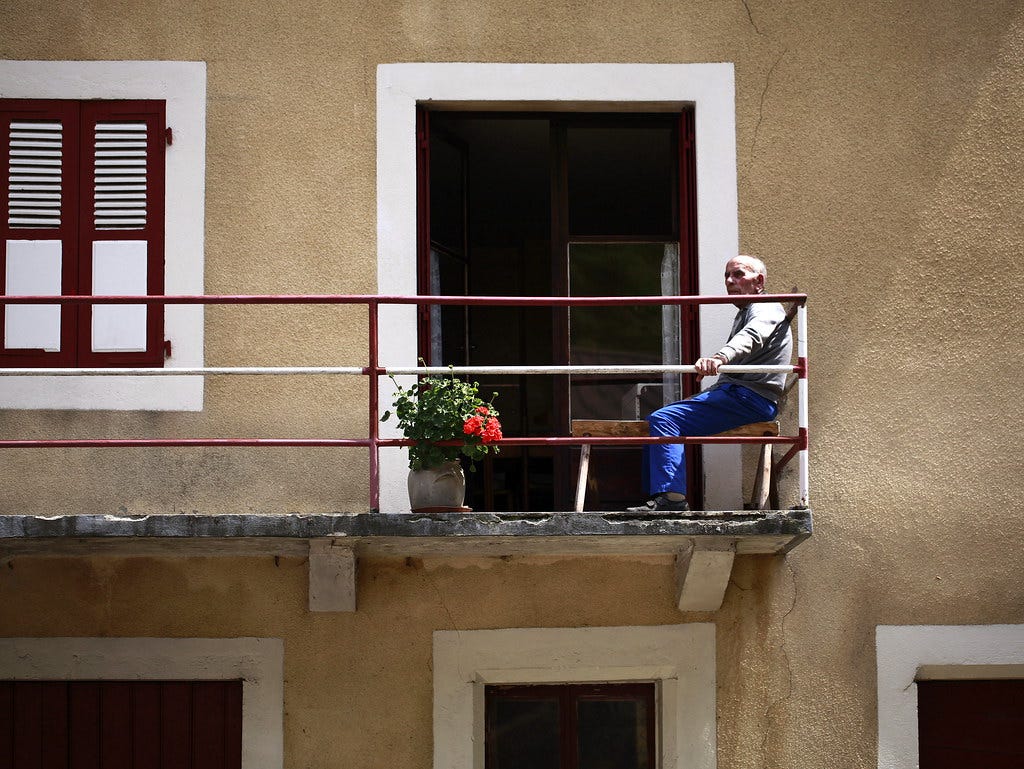
What was supposed to be a short, head-clearing walk after reading a very depressing magazine story turned into an impromptu odyssey; through the neighborhood and past windows into the lives of other people who were having a local summer (during that week, at least.) Through a literal window on Paul Gore Street, I heard a clattering of pans and detected the aroma of some dish containing multiple kinds of seafood. It might have been a San Francico-style cioppino, whipped together with whatever was on sale at the fish counter that day. But the cacophony of all that cooking ware being tossed about made me wonder if the cook was struggling to get a main course ready before guests arrived, or if they were just the type of person who slams stuff around; whether it’s a saucepan full of broth or a pair of 40-pound dumbbells at the gym. The next stop was Hyde Square, a commerical hub at the north end of Jamaica Plain, and the outdoor patio of Brendan Behan Pub—a local institution with the trappings of an ancient bar and the substance of a strong beer list—was moderately busy. This made it easier to eavesdrop and pick up soundbites as I passed. My favorite was either “You do look kind of like Gary Busey sometimes,” or “What do you mean it was leaking?”
As plenty of us have experienced when taking improvised neighborhood jaunts, mine took me to the localized hub of the universe—Jamaica Pond, where you’ll always find people assembled on the benches and lawns beside the water, if they’re not walking or running laps around it. This was the ultimate buffet of gatherings to witness and listen to. Each turn of the path around the pond presented a new group of specimens to observe and wonder about. But I also saw plenty of people taking advantage of the pond by themselves, just like me. Most of them were in some sort of motion but one guy was parked on a bench and reading a well-loved copy of David Grann’s Lost City Of Z. I suspected this wasn’t the man’s first time sitting by the pond at dusk, following the agonizing footsteps of Percy Fawcett’s expedition parties as they trudged into the Amazon rainforest while swatting away insects and sweating from the humidity (or the latest diseases they had contracted.) Once, I had also read that book by Jamaica Pond.
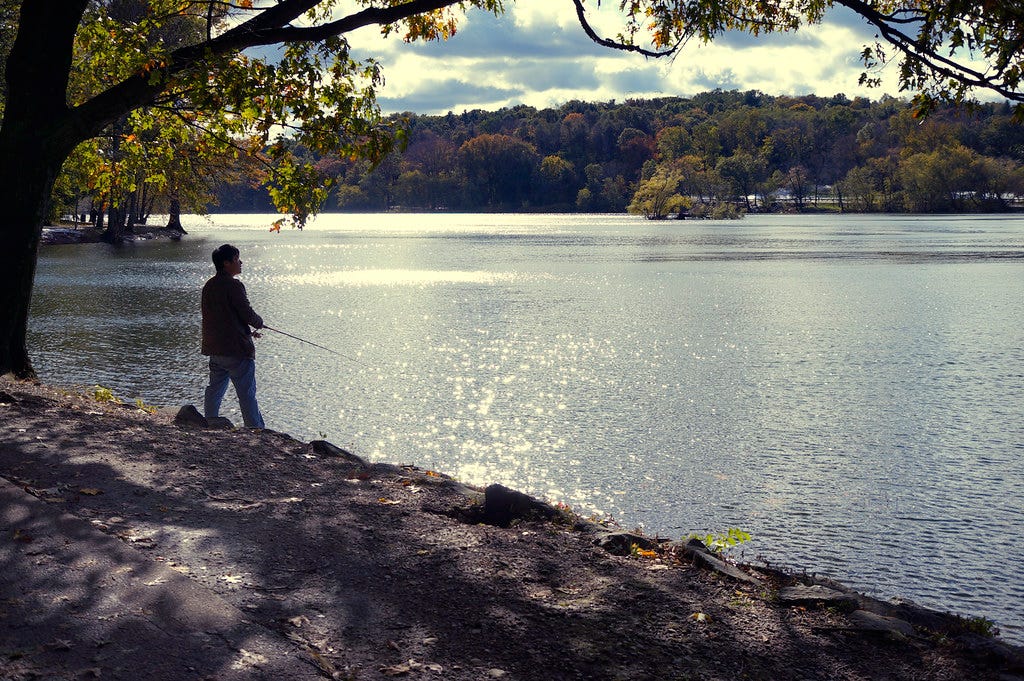
Like I said, this voyeuristic odyssey across my neighborhood was not intentional from the beginning. It just sort of happened. But there have been lots of other times when a planned foot journey like this alleviated the loneliness of the local summer. Some of these walks actually yielded fun conversations with strangers—a welcome bonus! But I think the ultimate tonic of being out in the world at a time like this, even without any direct engagement with others, is being reminded that you are not alone in dealing with the quieter, understated version of your home turf. Sure, seeing groups of people laughing and enjoying each other might make you pine for your absent friends a bit harder, but it could also spark your curiosity. Half the fun of people-watching is the process of filling in the blanks of what’s in front of you; imagining the backstories, or what will happen next. Once in a while, a natural opportunity to offer a voluntary quip or a question emerges. Sometimes you make the first move, and other times they do.
But again, that’s the loftiest of outcomes. I think that one of the reasons why we’re in a period that former US Surgeon General Vivek Murthy described as “an epidemic of loneliness” is that we are losing the instinct to seek out human company when we’ve spent too much time with ourselves. And what walking and observing the local lives unfolding around you reveals is that “company” has several denominations. Spending time with friends and family is one version, but just being present around others has its own nourishing qualities. This is actually the main reason why I have to leave the apartment every morning to do any real work. It’s why I’m currently posted up at one of those Capital One Cafes finishing this newsletter. The more time I spend at home, with my housemates at their jobs and the place dead quiet, the more my brain starts to atrophy. If I ever land a big book deal, you’re much more likely to find me writing the first draft at a Panera Bread than at some fancy writer’s retreat cabin in the woods of New Hampshire. Solitude can be cathartic and healing in its own right. But as a lot of us have come to learn, being among people can imbue life with magic and intrigue.
Seriously: If you’re feeling the loneliness of the local summer and you’re waiting for your community to come back, try walking to a place in your vicinity where people tend to gather. If nothing else, I guarantee you’ll find something else to think about.