
To squelch or not to squelch?
The ethical dilemma of hiking during Mud Season

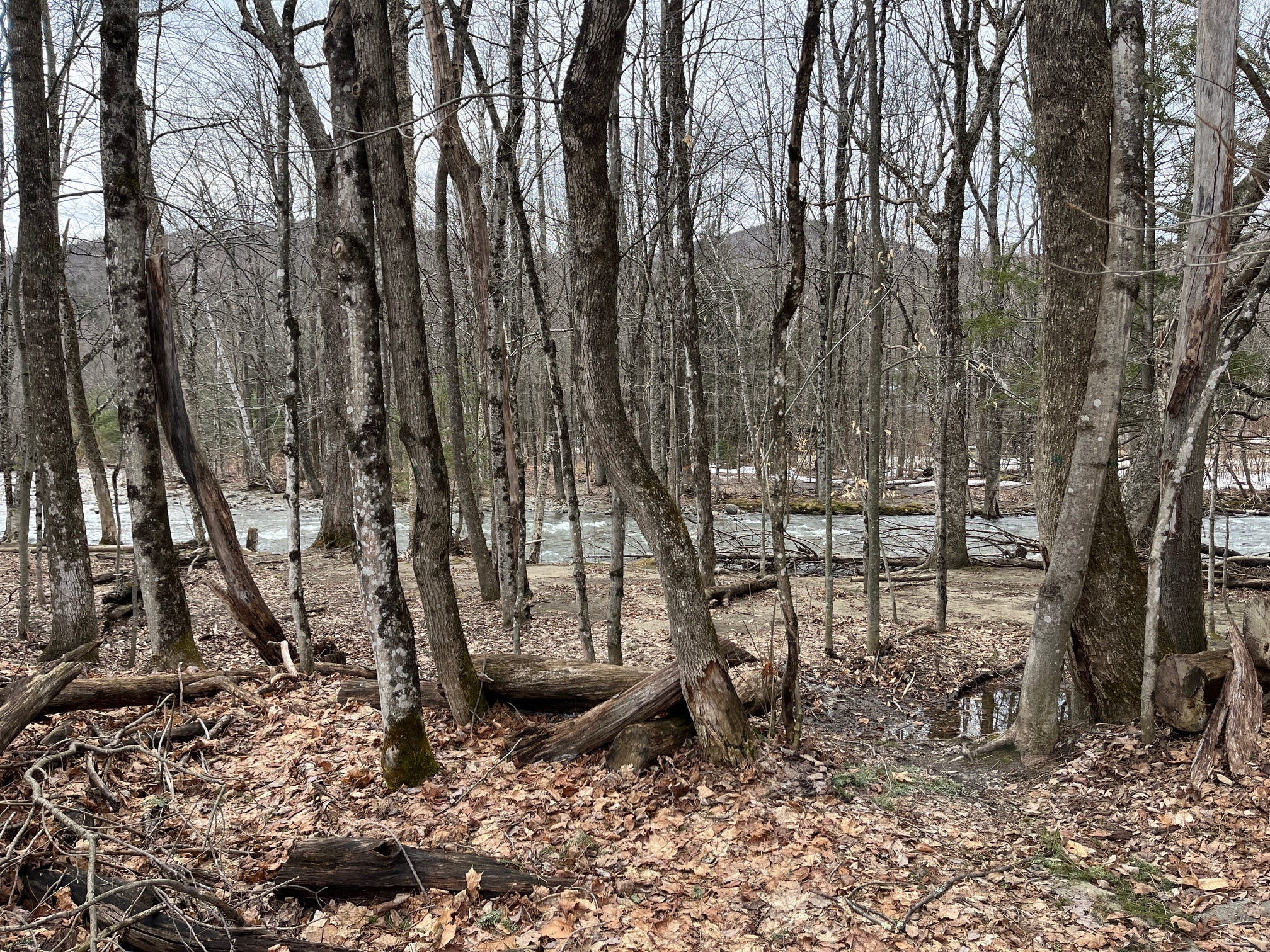
One of the essential struggles of being human is realizing that you might be doing something bad. Maybe it was a one time fuck-up, or maybe you’ve been unwittingly transgressing for years. Whatever the case, once that possibility sinks in, you have to decide what to do with it. Two weeks ago, I experienced this while doing something I love—going for a late day hike amidst the gloppy glory of Mud Season in Vermont.
”Mud Season” is how spring is often described in the highlands. Prodigious snowmelt from the mountains mixes with warm rain, transforming the earth into a musky stew worthy of an existentialist Herzog documentary. Over the last five years, I’ve written about the scenic and olfactory bliss of Mud Season several times. Getting to witness the landscape thawing after the lonesome darkness of winter is special and cathartic. Getting to squelch through that landscape in waterproof boots is even better. That’s what I had driven up to Vermont to do. I had managed to nab a fire sale priced hotel room in Stowe (pro tip: New England ski towns in spring are usually killer deals) and my plan was to spend the day splashing my way down muddy trails to big, thundering cascades like Bingham Falls and Moss Glen Falls. But in the haste of planning this last minute road trip, I forgot something about Mud Season in the Green Mountain State.
For all its mucky beauty, Mud Season is a vulnerable moment for backcountry trails made of packed dirt. The wet ground is softer than usual and too much foot traffic on any dirt trail has the potential to reshape it in a bad way. The intermittent warmth and cold of spring, plus the perpetual dampness, dissuades enough hikers from hitting the trails that Mud Season damage is usually limited. But that could always change. A viral Instagram reel about a world class waterfall could send an early surge of hikers to the cascade when the access trail is at peak moistness. Vermont, more so than the other New England states, seems to have taken this possibility quite seriously. And so, as a precaution, the state closes many of its hiking trails during April and May to allow for the ground to dry up and firm up for the heavier summer and fall crowds. This isn’t a problem for most visitors, but for those of us who experience primal, full-body desire to get out and slosh around during Mud Season, showing up in Vermont with boots and a daypack, only to find a TRAIL CLOSED sign—as I did—is a disarming experience.
There was the obvious sting of dejection. I was not going to spend a Saturday staring at rip-roaring plumes of whitewater, as I had planned. But on a much deeper level, I felt something that hadn’t registered on prior spring hikes. I had come to Vermont to do an activity that the Vermont government did not want people doing. And despite the fact that I had enjoyed the same activity in New Hampshire and Maine—hiking in Mud Season, on spongy trails that remained open to the public—part of me couldn’t help wondering if I had been engaging in something unethical, by clomping up and down all these spongy trails and then encouraging my friends to try the same thing.
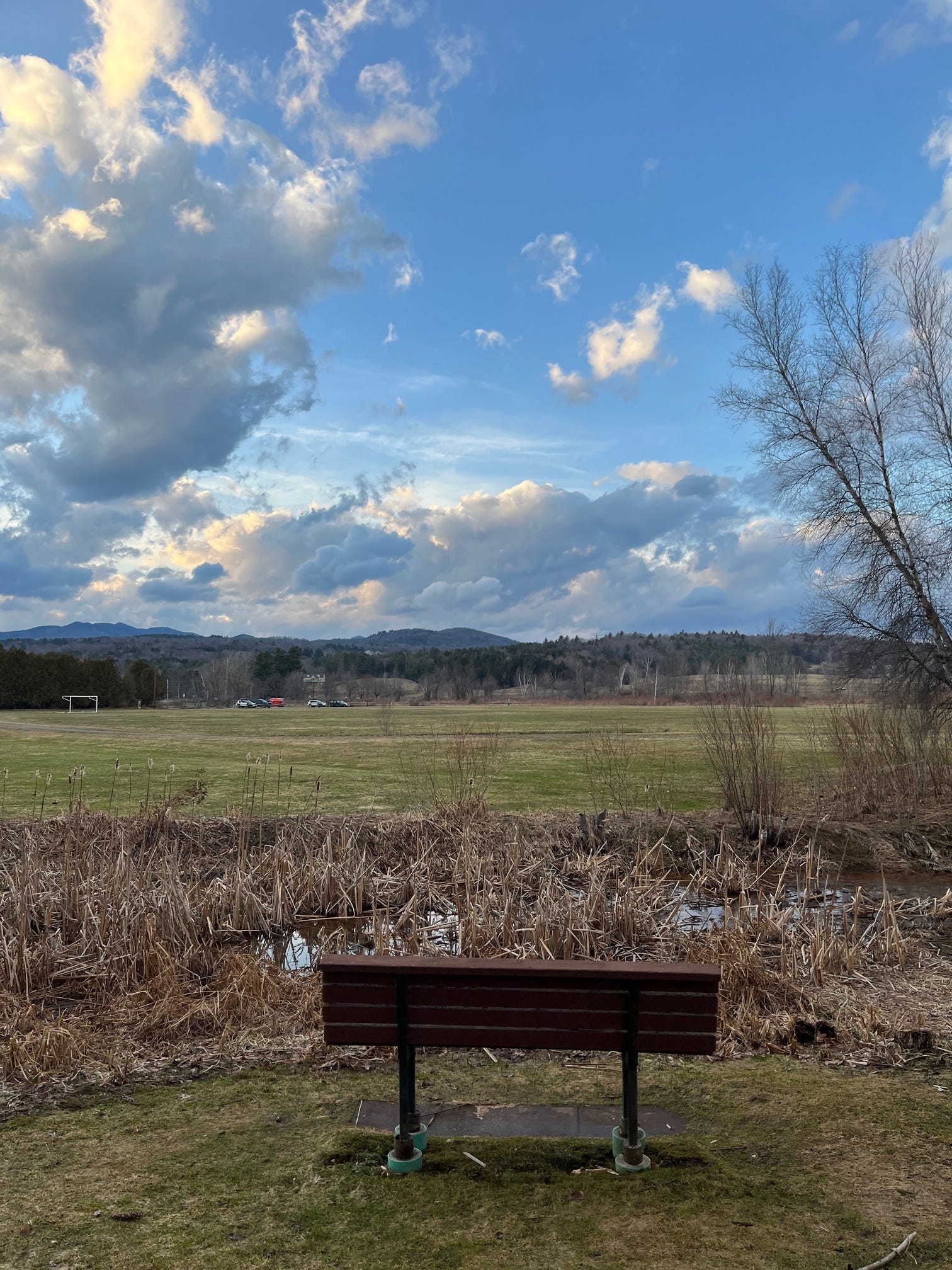
That afternoon, over a consolation ale at The Alchemist, I decided to do some digging into the question of why Vermont closes so many trails for Mud Season, compared to its neighbors. One of the answers is reflected in the landscape itself. If you’ve crossed the border of Vermont and continued into New Hampshire, you’ve probably noticed how the terrain dramatically shifts from placid green hills to more angular peaks and ridgelines. New Hampshire, “The Granite State,” has a lot more underlying crystalline rock than Vermont does. And this provides something of a bedrock buffer for trails in New Hampshire during Mud Season. Trails built on top of firmer surfaces don’t have the tendency to get as waterlogged as trails on softer terrain. Understanding this, I breathed a sigh of relief and chased it with a glug of beer. My Mud Season exploits in the White Mountains and the Great North Woods weren’t as likely to have left scars.
But even if they had been, the odds of getting called out and chewed out by a Granite State authority or busybody would have been near zero. Because land use ethics are regional, and the question of what amount of trail damage is acceptable during Mud Season has a different answer in each place. The lopsided granite ratio between New Hampshire and Vermont partially explains why the neighboring states have their own approaches to trail access during spring. But there are other differences between New Hampshire and Vermont, beyond the elemental. One of these states keeps sending Bernie Sanders to Washington DC and came close to implementing its own universal health care system. The other was invaded by libertarians from the Free State Project and is now slated to suffer public education funding cuts. None of this is to dunk on New Hampshire. I love both of these states, they share a lot of qualities, and they’re more culturally eclectic than many realize. But politically, there is a stark difference in the ways of thinking that drive the respective state governments. In Vermont, a more communitarian mindset prevails, and I suspect that’s another reason why the state bars access to more of its trails in April and May—asking hikers to make a seasonal sacrifice. I can’t really imagine New Hampshire’s current elected leaders asking this.
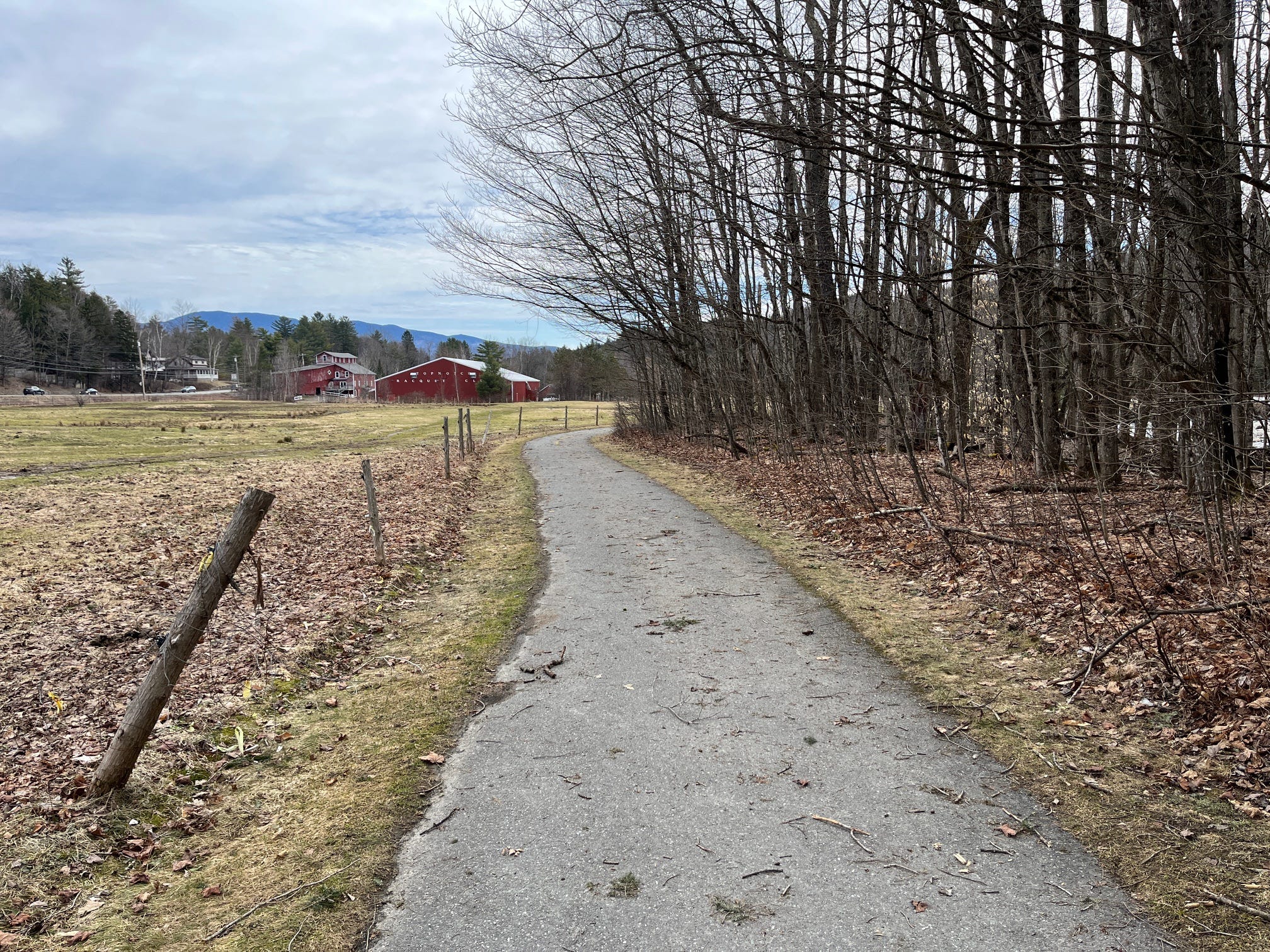
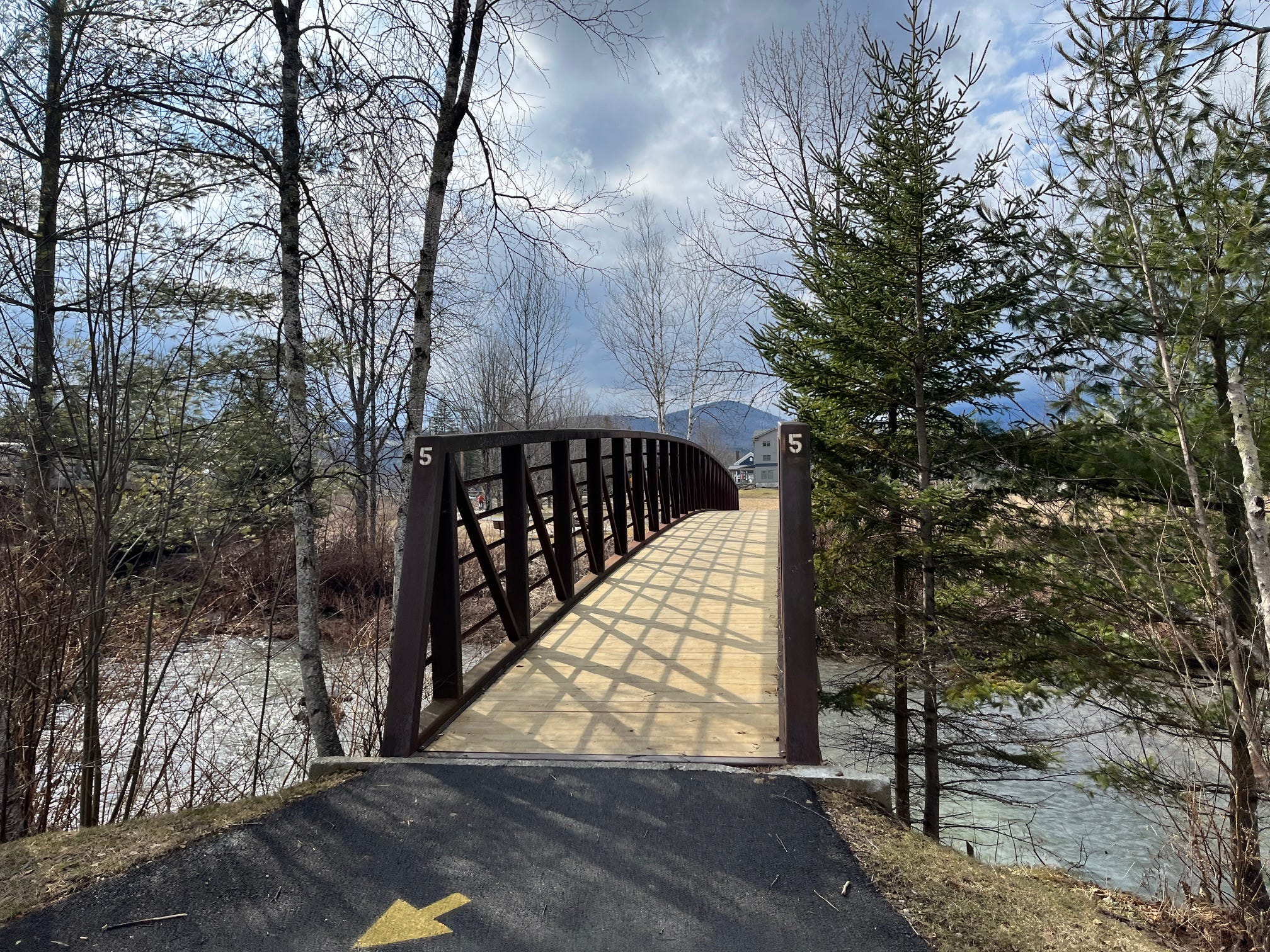
Thankfully, there are enough rock-hard trails throughout Vermont to offer at least a few alternatives during the Mud Season closures, and the one in Stowe (pretty much the only game in town, as far as I could tell) is the paved, winding Stowe Recreation Path. Branching off from Stowe Village near VT-100, it follows the bends of the West Branch of the Little River for 5.3 miles, gradually heading up toward Mount Mansfield and Smugglers Notch. The path crosses the river in several places with the help of footbridges, and it often skirts past VT-108 before dipping back into the woods or cutting across a meadow. That proximity to the road may seem like a buzzkill at first, but it actually offers something kind of cool: the chance to experience Stowe on foot.
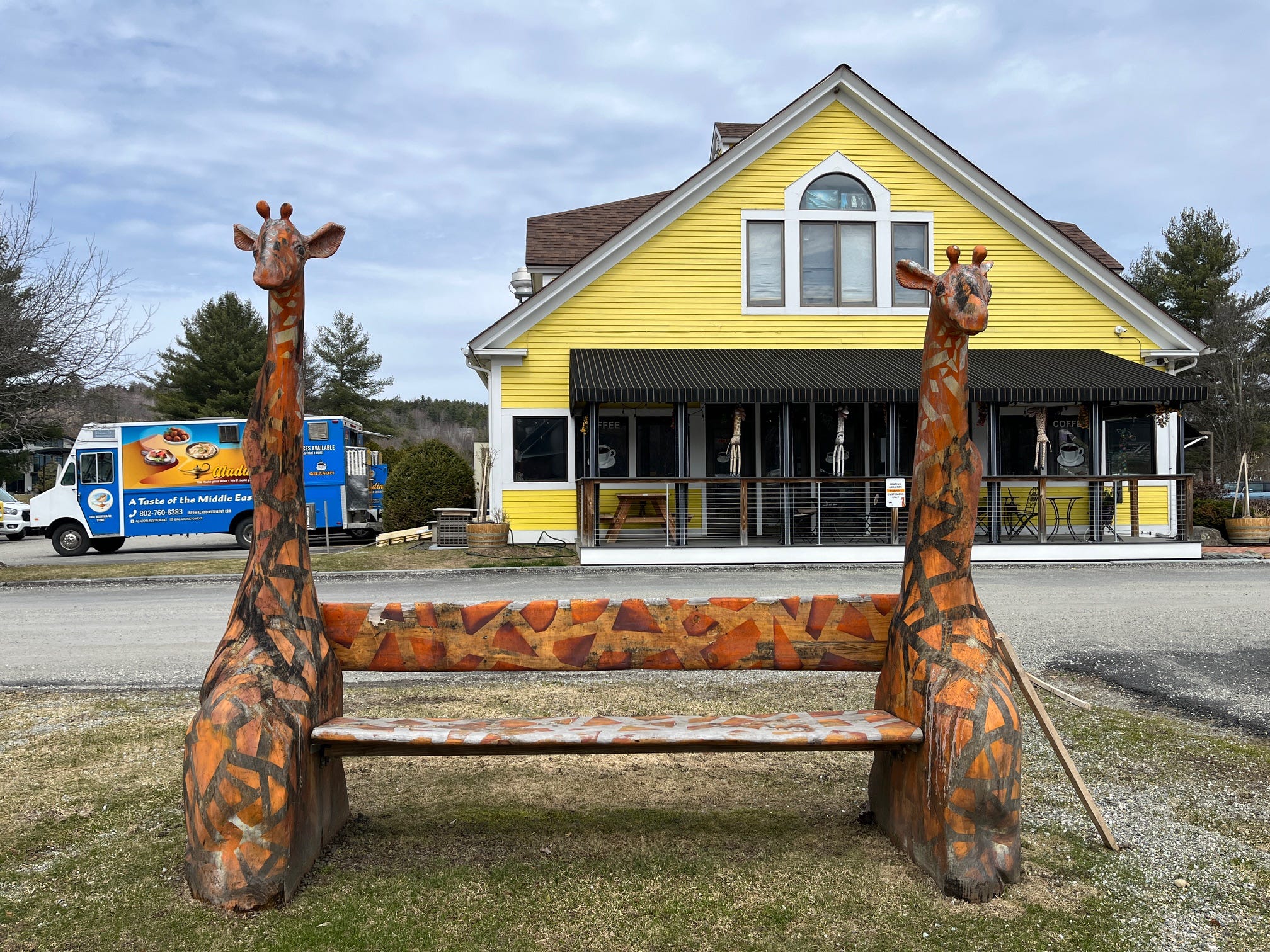
Think about it. The vast majority of towns around Vermont are experienced through the windshield of a car. Sure, you might get out of the car and bumble around the commercial center of a town, or on a trail. But getting from place to place is almost always an automotive task. The Stowe Recreation Path allows you to walk between many of the things that people come to Stowe looking to do. My hotel was steps away from the path, and shortly after I checked in, I followed the path downstream against the sunset and I ended up at Doc Ponds, which does a killer Big Mac-style burger. The next day, I set off in the opposite direction, taking the path toward the mountains. I stopped over at GiraKofi for a small black coffee (which I enjoyed on a wooden bench flanked by carved giraffes) and then I pressed onward to the more rustic northern reaches of Stowe. This quieter stretch of the trail, away from all the eateries and lodging options, offered the kind of creaking woodland immersion I craved from the forbidden muddy trails. It wasn’t the same thing, of course. There were places where the Stowe Recreation Path would emerge from the trees to pass municipal infrastructure or the grounds of another motel. But its existence and the number of people I saw walking it on an overcast morning in early April hinted at good times to come, when the Green Mountain State’s trails finally open up again.
If nothing else, my two brief jaunts on the Stowe Recreation Path left me feeling less conflicted about my Mud Season urges, and the question of whether they were ethical urges. There’s nothing wrong with the desire to squelch across the countryside as the snow melts; just like there’s nothing wrong with accepting an invitation to a friend’s family dinner and showing up at their house licking your lips, ready to chomp some chicken. But of course, you wouldn’t just rip off the fattest drumstick and gnaw away. (I assume.) You would take your cues from your friend and their family, watching how they share and pass the food, and seeing if there’s a grace or anything offered before the eating commences. Going on a Mud Season hike in any state is like being a guest in someone’s house. Observe their customs, follow their footsteps, and enjoy a nice day of squelching; bothered by nothing except the black flies that have just hatched.
CLICK HERE for a map of the Stowe Recreation Path
Beautifully written , Miles! Very thoughtful and deep.
This was very informative! My guess is that repairing trails post-mud season takes time and $$ - both of which are in short supply.