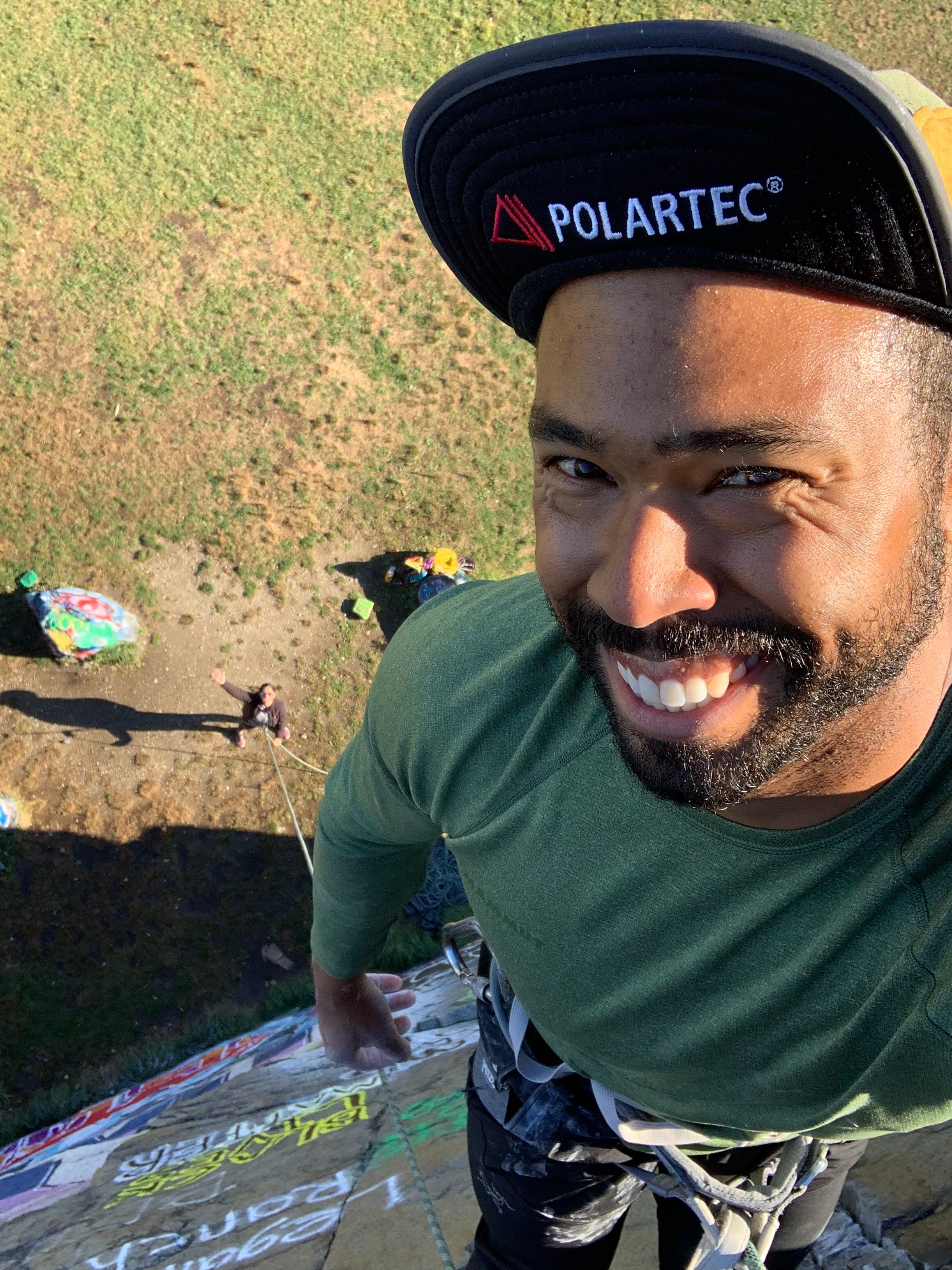
Last winter, around this time—just as the puddles on mountaintops were freezing into beetle-sized skating rinks—I showed up at the Middlesex Fells forest north of Boston to go for a hike with Darren Josey. Or “DJ” to those who know him.
A friend of ours, Rock Fight podcast host Colin True, connected us after learning about a passion we share; outdoor adventuring in the urban areas where the vast majority of Americans live. Darren, who grew up in Greater Boston and hails from the outdoor gear industry, is the founder of two remarkable ventures with a common thread—building outdoor adventure communities within BIPOC (Black, Indigenous, and People of Color) communities that have been historically excluded from the outdoors.
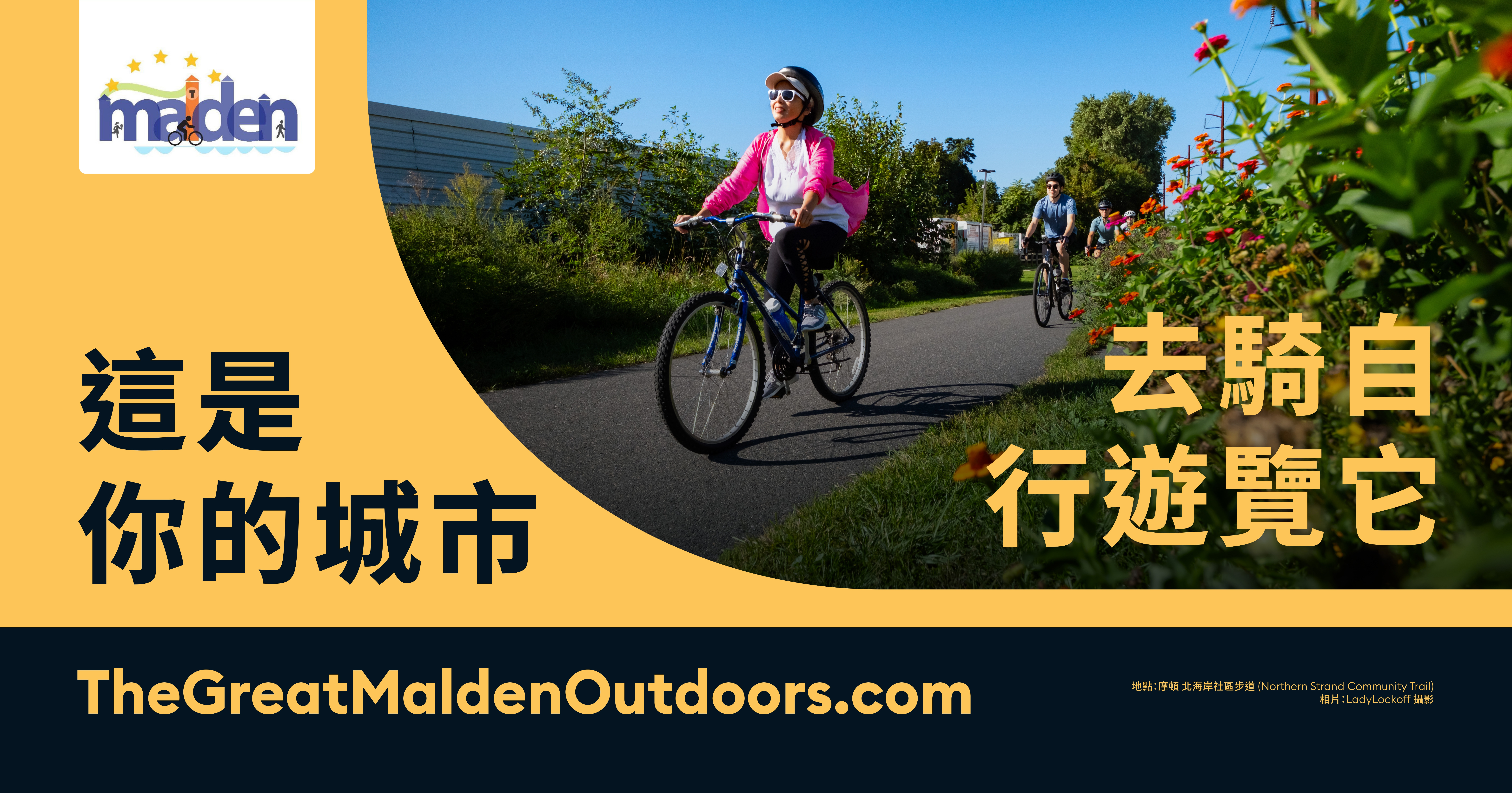
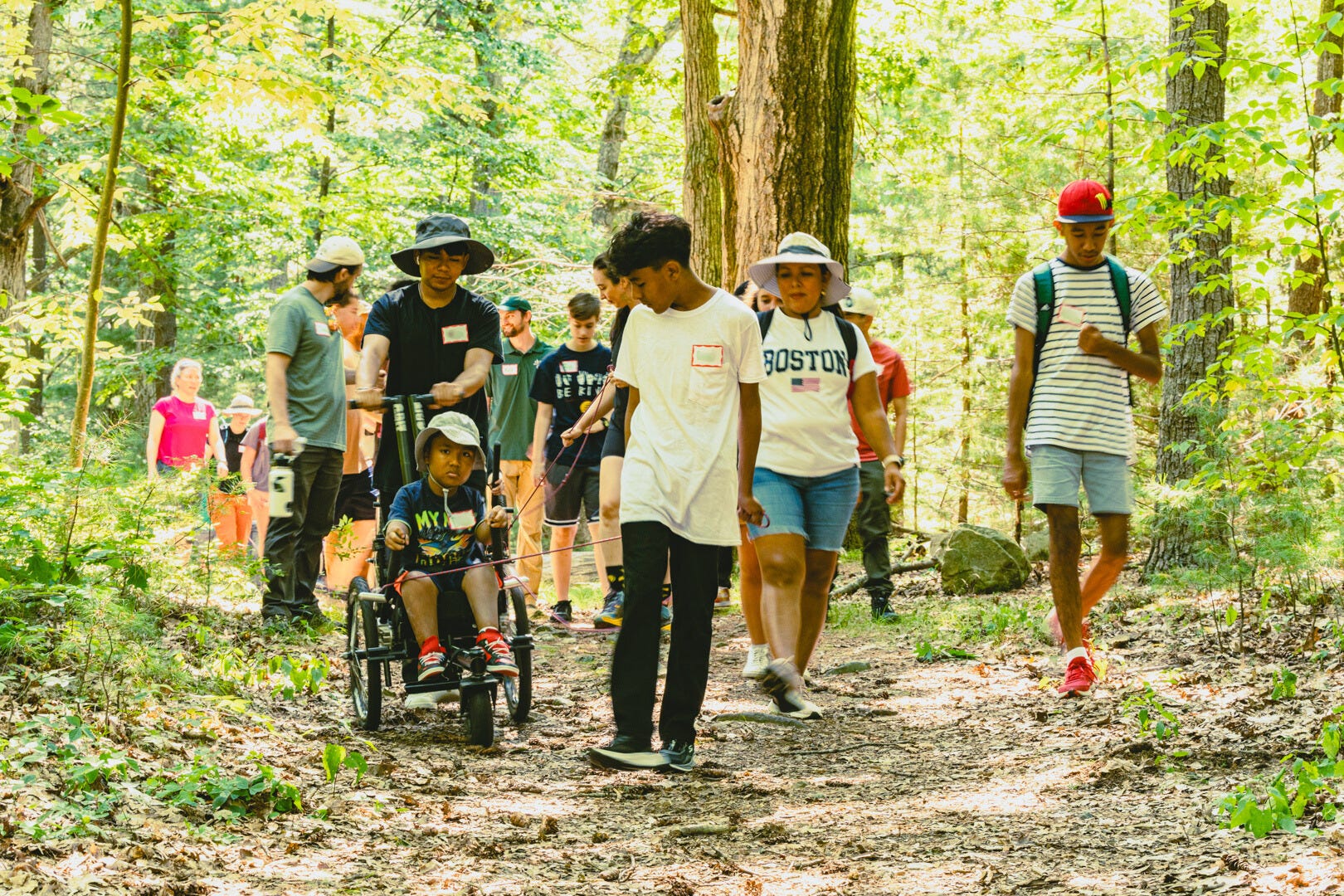
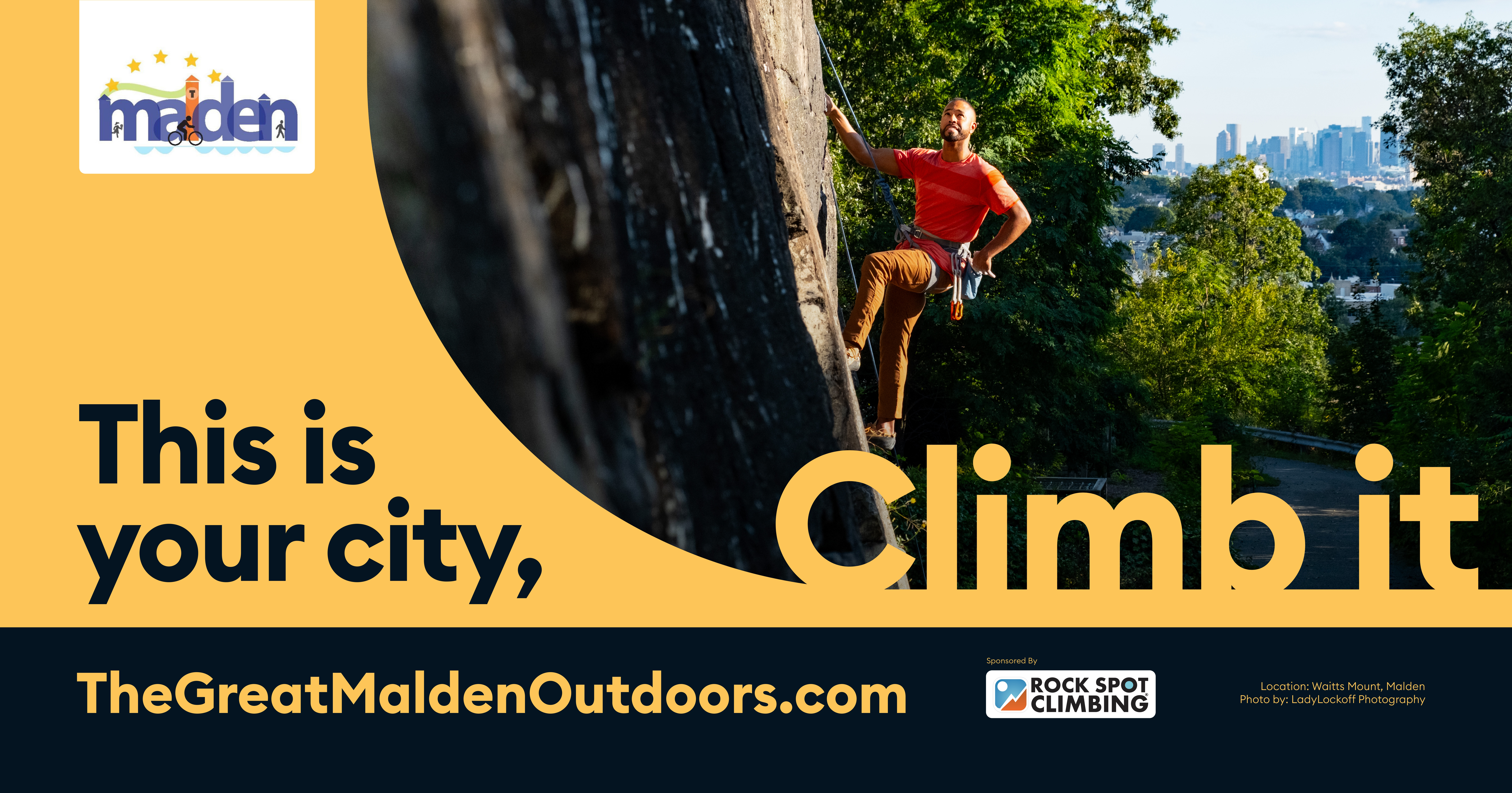
In 2023, Darren started First Seed Sown—a sales and marketing consulting business tailored for minority-owned small businesses in the outdoor rec sector. And less than a year later, he introduced the City of Malden (where he lives) to The Great Malden Outdoors. It’s a series of free and low-cost outdoor adventure programs for anyone looking to try their hand at not just hiking, rock climbing, fishing, and bike riding, but also outdoor artmaking and more ways of engaging with nature. In 2024, the City began running the Great Malden Outdoors as a bonafide municipal program, working with local vendors and nonprofits to offer broadly accessible outdoor experiences amidst the local woods and waters. And that was Darren’s plan all along.
I’ve been meaning to talk with Darren about his story and his great work for Mind The Moss for almost a year. I’m glad to report that this week, I finally got my act together.
One of the coolest things about the Great Malden Outdoors program is how it shows us that gateways to the outdoors can open up pretty much anywhere. What did some of your early outdoor recreation gateways look like?
Well, the whole idea and sense of place behind Great Malden Outdoors really began with my own lived experience as someone who grew up in the Greater Boston area. Being Black and Puerto Rican, I didn’t have a lot of friends or family who were deep into outdoor recreation. But I had a handful of one-off experiences as a child. I grew up on the Mystic River in West Medford, and my mom and I would sometimes witness the annual herring run while walking along the water. Seeing all of these fish traveling upstream to lay eggs was fascinating to me. And my mom, who’s a public school teacher, was like, “Okay, we’ll figure out how to do something.”
So we went back home and we made this fishing rod with a branch, shoestring, and safety pin. Then we dug up worms, put ‘em in a cup, and walked back down to the river. I didn’t catch any fish, but it still opened up this world to me. My parents eventually bought me an actual fishing rod, which I used for a while. That kind of got lost once I was a teenager. School, work, girls, and the X-Games had most of my attention. But nothing really opened the gate to the outdoors until I started working for an outdoor retailer called City Sports during college.
Wow, I remember going to City Sports in 2012—when they were still in business—to get my first pair of Vibram Five Finger hiking shoes. What was the connective tissue between your role at the store and getting into the outdoor rec scene?
Funny enough, I had been working there as a footwear manager, and I was selling lots of Five Fingers. And during the recession, I got my first real “office job” at Vibram, as one of their two customer service people at the time. I was joining a company of 13 employees that made $9 million that same year. And at its peak, we had grown to 60 people and were bringing in $93 million in revenue. So it just exploded. I learned so much about the business of outdoor recreation, went to all of these outdoor gear trade shoes, and worked very closely with our CEO, Tony Post, and our head of sales. I actually asked the CEO if I should get a Master’s in business, and he said, “No, you’re getting it right now and you’re getting paid to do it. So just pay attention.”
There was an expectation that all of us learn more about the industry and the outdoor recreation landscape. So I started doing more things outside. A coworker took me rock climbing, I liked it, and I kept at it. When a buyer at EMS sent me two sleeping bags and a tent, as a thank you gift for helping them organize their order books, I started camping. Whenever I came into a new piece of outdoor gear through the job, it was like, “Alright, I’m going to try this activity.”
Something you alluded to earlier, which I’d imagine was pretty palpable as you waded deeper into the outdoor recreation biz, is that the scene has suffered from white homogeneity in the U.S.—due to the legacies of racial segregation, exclusion, and wealth inequality. As a young person making a career in this space, how did you find the courage to put yourself out there?
When I was growing up, my parents were pretty blunt in telling me, “Look, you’re going to be in situations and there may be some where people don’t want to see you there…but there may be some where people do. You just have to go out and try.” In a lot of spaces where I spent time as a BIPOC kid in New England, I would be the only person of color. When I would walk into baseball camp or tryouts with my dad—a Black man— we would often be the only people of color there. And I do remember one time, while heading into a new camp, my dad saw another Black father there with his son. He sort of gave him a nod, and then we walked over toward them. It was just the four of us standing there, but we got to know each other, connected, and in a way, we made a little community right there.
That’s something I carried with me, all the way to the outdoor industry—identifying opportunities for building community. There were a few people of color at Vibram, and Tony Post was pretty adamant about how important it was for brands like ours to be representative of the communities that they were selling into. But I would often go to the trade shows and think, “Huh, I’m not really seeing myself represented in the advertising for all these boots.” One of my first BIPOC friends in the industry was Mario Stanley, a professional rock climbing guide…and I literally walked over to him at this one show and was like, “Hey man, we gotta know each other.”
So by now, you’ve been hitting all of these trade shows and making your bones in the business. Is this when the proverbial seed for First Seed Sown starts to form?
So, at that point, I had been working in the outdoor industry for 15 years. I had done customer service, sales, and operations. I also managed some grassroots marketing campaigns, as well as multi-million dollar global budgets. And I had been laid off a few times. The first time it happened was during the pandemic, and after the second layoff, I felt like the value proposition for working in-house under one employer wasn’t there anymore. But I had been fortunate to learn a lot from working for a range of companies, including several smaller ones. The more I thought about these businesses, the more I felt like, You know what? I think it’s time for me to start my own.
That thought process led to me taking all of the things I had learned from the industry to launch First Seed Sown, as a means of offering sales and marketing consulting for minority-owned businesses. While there are agencies owned by minorities, none that I could find were focusing on BIPOC businesses. And there’s a level of trust that can happen when that focus is there. I had gotten to experience that occasionally, from the helping side. When I could, I had tried to spend my marketing budget with athletes, photographers, and partnerships owned by People of Color; to make sure that I was putting the company money into an area where I knew it could provide an experience that wasn’t there. But until the First Seed Sown launch, the closest experience I had to working in a primarily BIPOC business environment was toward the end of college, when I went to LA and worked for The Smiley Group—Tavis Smiley’s TV and radio production company. It was an early experience that demonstrated how a Black man could own and run a vast business focused on representing and staffed by People of Color. Kind of a “hey, you could do this too” moment.
In the time that you’ve been in the outdoor recreation industry, there’s been a lot of discourse about the historic exclusion of minority communities from the outdoors, and the imperative of supporting more minority owned businesses in this space. One could get the impression that things have improved in some respects. But I wondered, in the time that you’ve been doing all of this, from the trade shows to these early First Seed Sown years, what is your perception of how much has truly changed for the better, and how far we still have to go?
After the murder of George Floyd, a lot of companies seemed to be like, “Oh, we’re going to do something about this.” And I think a lot of people, myself included, felt like that wasn’t going to last. Like we were going to see people pay attention to this for a short while, and then it would drop off. And that’s what happened. I think the biggest change that remains is the community building we saw between people from underrepresented groups that fall into the “Adventure Gap.” This is when you have a gap between percentages; say, maybe Black people make up 9% to 13% of a local population, but they’re only 8% of the folks getting outside locally.
People who are in these groups have helped each other and they’re continuing to do so, regardless of whether that’s politically good or bad. We don’t need any company to put up a black square on Instagram to signal to the world that they’re trying to help. We can do a lot more work ourselves.
Which brings us to what you first told me about back on our Middlesex Fells hike last winter: the Great Malden Outdoors. Creating barrier-free local experiences that get folks outdoors, bridging the Adventure Gap locally, seems like the natural outcome of what you’re describing. But of course, you did a shit ton of work to conceive this and get it off the ground, to the point where the City of Malden now owns and runs it as a municipal program. What were the first seasons of Great Malden Outdoors like? What memories spring to mind?
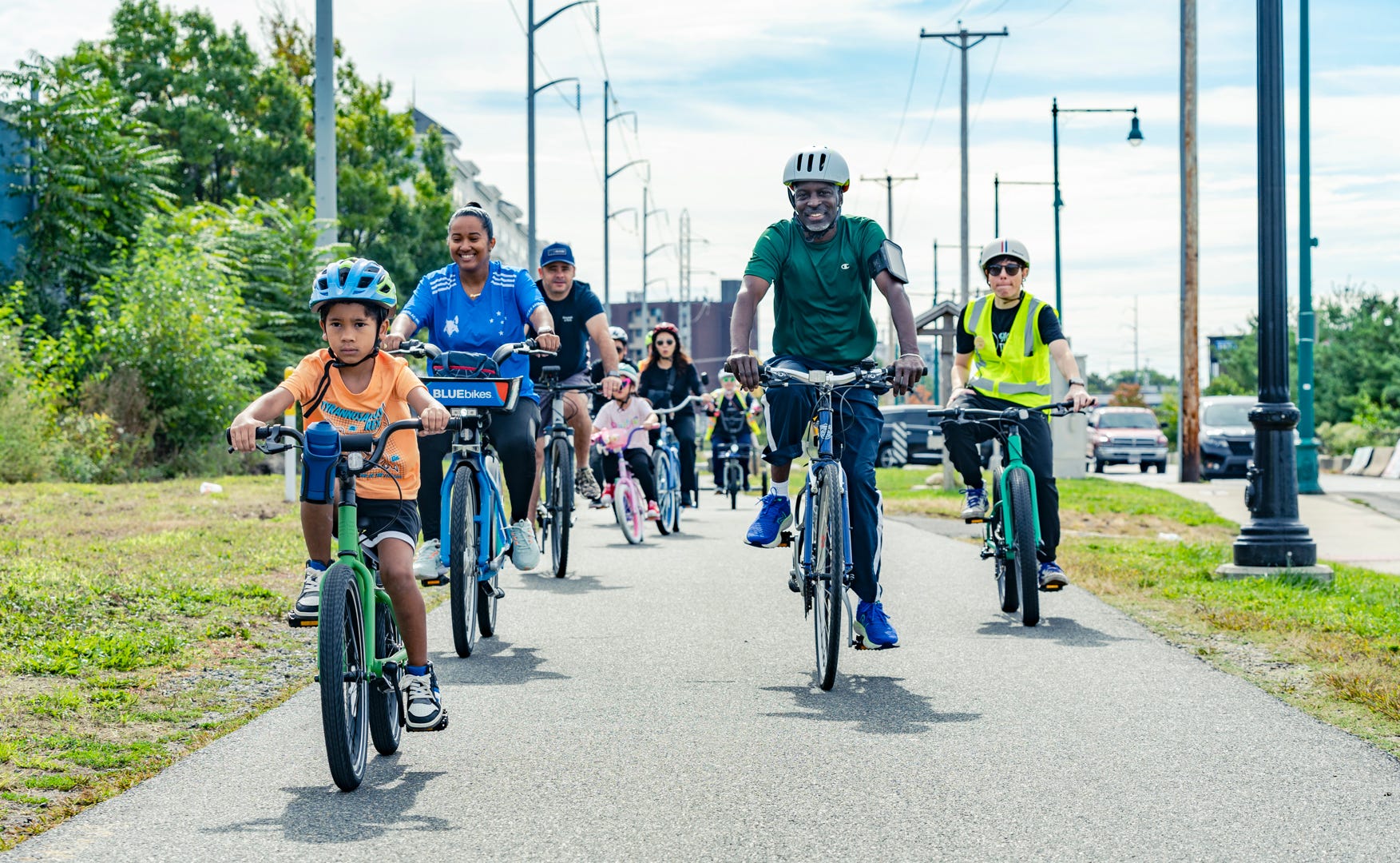
One of the things I’m most proud of is that we got over 1,400 people outside in less than two years. Also, one of our first and largest programs—for people who want to learn how to ride a bike—is now being run by a local vendor. This was a breakthrough because earlier, before they closed their Experiences business, REI had been offering programs like this. But they cost $100 and didn’t come with a bike to keep. Our program cost only $5 and for those who needed it, they got a bike from the Malden nonprofit Bike to the Sea, who took on management of the program. They also hired teens from the community to teach beginner bike riders. We’ve had more than 450 people participate in this program. So that’s another thing I’m really, really proud of, and it’s a program that the city wants to keep running as long as possible.
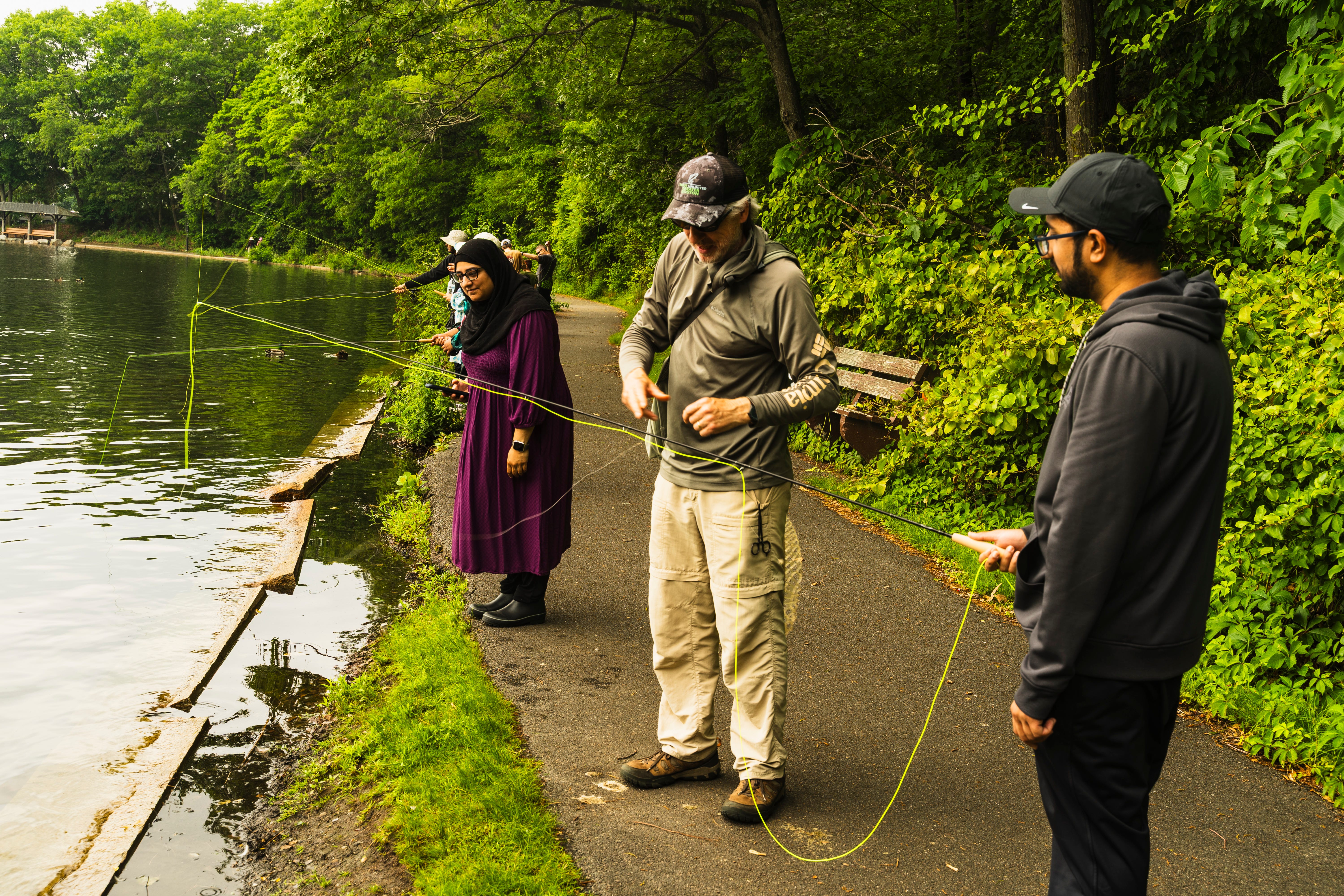
Another experience that I remember well: We had partnered with the Boston chapter of a national nonprofit called Trout Unlimited to teach a Learn How To Fly Fish course, and we quickly got 19 signups for what was initially supposed to be a 8-person event with a waitlist. This one Muslim-American mother who was on the Great Malden Outdoors mailing list had learned about the course, she thought it sounded fun, and she reached out and asked if she could bring her whole family. Of course, we said yes. Her goal was to create a new way to have fun as a family, and that’s what they did. In fact, they all caught a ton of fish!
There was clearly a demand here that even I didn’t anticipate. If you bring something to people where they live, promote it across multiple languages, and have it cost little-to-no money…I think about all the possibilities. How many more Massachusetts fishing licenses could you sell each year? How many Orvis fishing rods and reels could have been sold at the time when Orvis was closing upwards of 30 retail stores a year? Imagine if the outdoor recreation industry invested more into programs like this, in urban areas where we have a population desperately underrepresented when it comes to outdoor recreation.
There’s also a lot to be said about the potential for more public investment into these programs. Which is why the City of Malden owning and running Great Malden Outdoors was such a big deal to me, when you first told me about it. What was it like, pitching the program to the city?
The pitch was, “We are trying to improve the health, the connection, and the utilization of the city by Malden residents, regardless of their ethnic or income status.” And at the time of the meeting we had reached a point where people from neighboring cities and towns were coming here to recreate outside, while Malden residents weren’t. So the Great Malden Outdoors was also something unheard of around here; a tourism campaign for residents to get out in their own city.
The meeting really became a learning experience for the city leaders, about some of the open spaces that exist here and how people have been using them. I showed the mayor and the city council images of people rock climbing at Pinnacle Rock in the Fells and up on Waitt’s Mount (a stony hill near the center of Malden with sheer cliffs). We talked about how there’s an official HawkWatch site in the City of Malden. And we talked about the need for showing off these beautiful public spaces with programming that’s equitable and accessible, so that more Malden residents and visitors can start using them.
The Great Malden Outdoors was really designed to be adopted by the city. I’d like to be a bit of a Johnny Appleseed and bring this to all 26 gateway cities in Massachusetts, but also to other states and regions of the country. I’ve seen a lot of other states look to outdoor recreation as one of their primary drivers for growth in economic opportunities, because it doesn’t cost a ton of money to begin with. We’re not talking about building new roads or bridges or stadiums. Even when skating became popular in the 90s, you still had to convince the city to find a space and then build a skate park. We don’t have to do that. We already have the rivers, the ponds, the rocks and the common crags. One of the core messages of the program and recent ad campaigns such as “This is your city, Climb it / Hike it / Bike it” is that these public spaces belong to the public, by right. So let’s use outdoor recreation to promote and share them!