
Walk to the World Cup
If the rest of the world can do it, we can too

When was the last time that you stepped outside, joined up with throngs of people, and walked downtown together to experience something big? If you live in a town that hosts a fair, maybe you and your neighbors sauntered there together, lured by the luster of fried dough and tilt-a-whirl lights. If you’re based in a city, the recent protests against the Trump administration—many of which took place in downtown areas—could have sparked a similar surge of walking.
But throughout much of the world, there’s another kind of event that reliably gets thousands of people walking together: soccer games. Sometimes called a “fanwalk,” these intentional marches usually begin from a centralized meeting place, from which the casual fans and the psycho fans set off for the stadium. I experienced this once in Prague, where I spent a college semester abroad, and the thrill of walking to the game with people decked out in red and blue facepaint was like nothing I had experienced in the U.S. It felt like we were marching to a battlefield for the Slavic equivalent of Braveheart, but instead of getting dismembered by swords and axes, we were going to get pumped up and then, extremely wasted.
So in 2018, when the real life Bond villains of FIFA announced that the United States would be hosting the majority of the 2026 World Cup games, I couldn’t quite picture how this would work. In America, most sports fans get to stadiums by driving there; especially since our stadiums are often located on the edge of town or beyond it, with limited public transportation service. From downtown Boston, it’s a 40-minute drive (without traffic) to reach Gillette Stadium, where the New England Patriots play. The MBTA does offer a special train from Boston to Gillette, but its capacity is limited and prices are often jacked up for major events. Earlier this year, when it was announced that roundtrip World Cup train tickets to Gillette Stadium would cost $80, the public backlash was swift. But the price-gouging could have been worse. In New Jersey, the initial price for a World Cup train ticket to MetLife Stadium was going to be $150! It sparked such outrage that NJ Transit eventually lowered the price to $98.
Between paying through the nose for public transportation or suffering through traffic and then paying even more money for parking, the America-based World Cup games were beginning to look like a landmark event that most Americans would only get to experience through secondhand accounts. It was a paradox; spending so much public money to host something that we would only get to lay eyes on through broadcasts or stories. This, I imagine, is why so much of the pre-game discourse in the U.S. focused on the headaches of hosting the World Cup. But a few weeks before the first Boston match between Haiti and Scotland, I started picking up a more optimistic transmission from Twitter and Reddit. Visiting soccer fans bound for New York City were trying to figure out whether they could walk to MetLife Stadium.
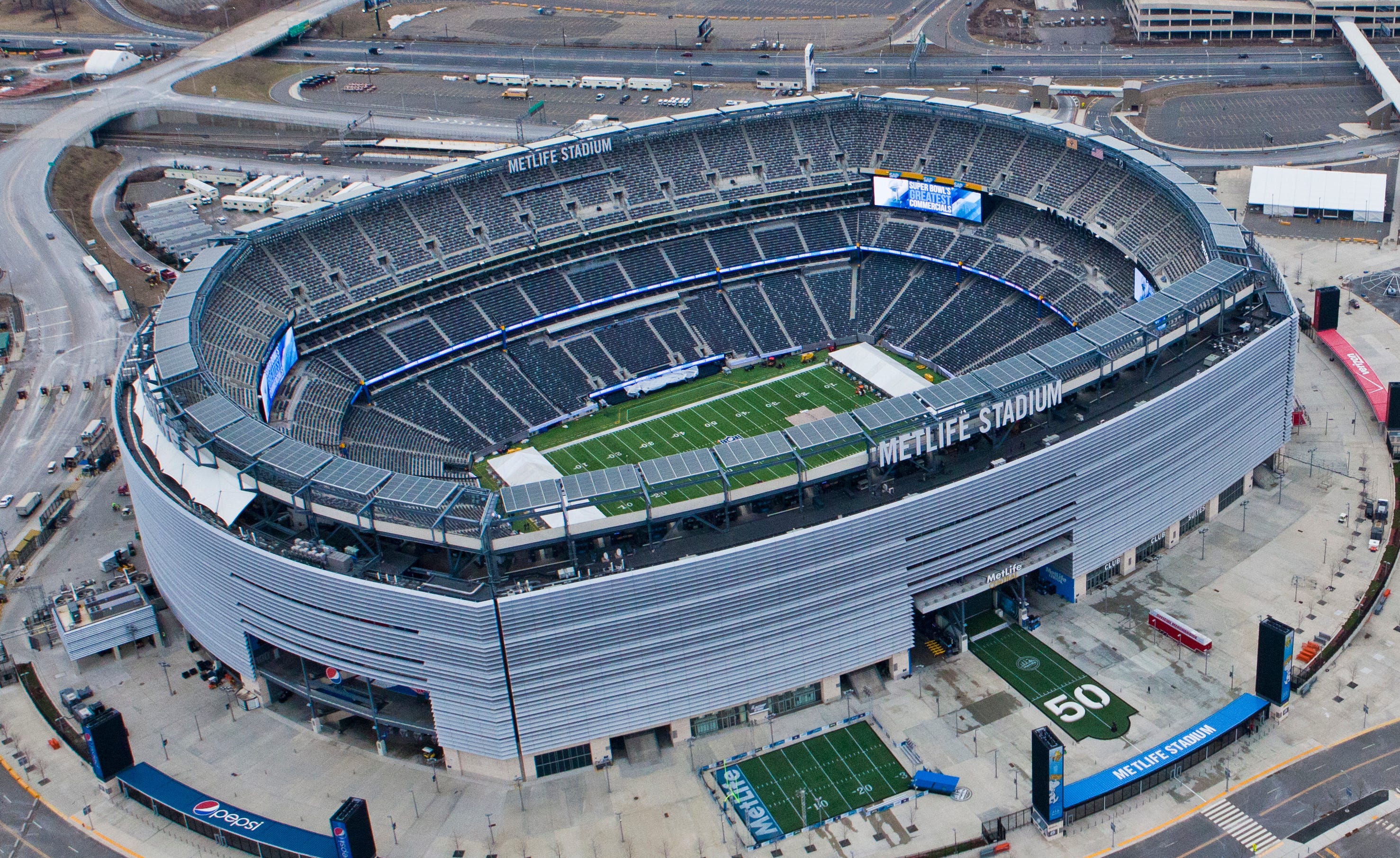
Never mind that the land between NYC and MetLife leans heavy on industrial territory and marshes, or that there was a literal ban on accessing the stadium grounds by foot. World Cup-goers coming from parts of the world where walking to a big game is the norm were determined to solve this puzzle. And as I imagined French and Moroccan fans flopping over chainlink fences, rock-hopping across streams, and dodging traffic on the shoulders of busy roads, it occurred to me that no such pedestrian ban was being enforced at Boston’s World Cup stadium.
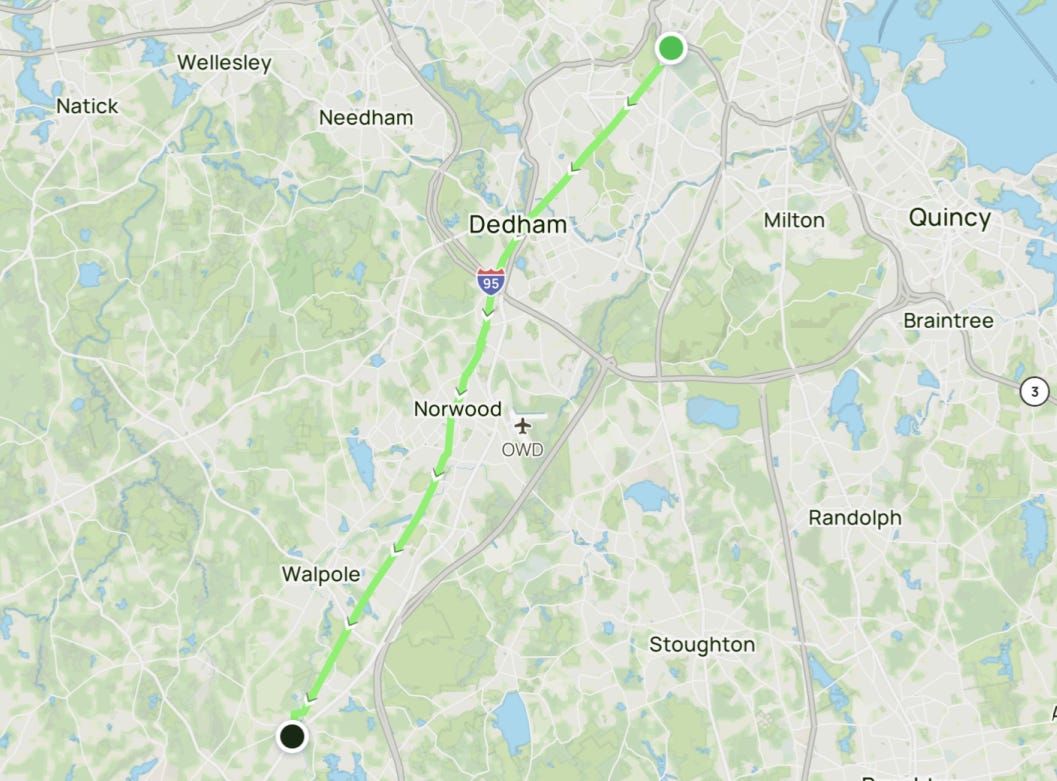
Thanks to Google Maps and its streetview feature, it took me all of 20 minutes to discover that it’s entirely possible to walk from Boston to Gillette Stadium on consistent sidewalk. From Forest Hills Station, a major transit hub on the south side of the city (close to where I live), it would be a foot journey of 17 miles, with a respectable elevation gain of nearly 900 feet. A lot of cities have streets that continue through the neighboring suburbs in various permutations, and the one that connects Boston to the northern edge of the Gillette Stadium grounds is Washington Street. It made me smile, knowing that a viable path to the stadium was hidden in plain sight.
Still, actually walking to the World Cup did not initially strike me as a venture worth taking. For one, I didn’t have a game ticket. And even if I did, we were entering the muggiest months of summer and no amount of sunblock and Gatorade would be enough to make walking 17 miles in those conditions pleasant. But then, two days before the kickoff game—while doing some work from a coffee shop in Jamaica Plain—I started to pick up on something through the window. A lot of people were walking past the shop.
At least half of them were wearing kilts.
Much has been said of Scotland’s so-called Tartan Army and the gregarious cheer they bring to cities hosting soccer matches that include Scotland; drinking bars dry, putting traffic cones on statues (a tradition that began in Glasgow on the Duke of Wellington statue), and even cleaning up their own refuse. That, in itself, is a story I might have to dig into in the future. But all those Scots were coursing past my neighborhood coffee shop because it’s located next door to The Haven—the only Scottish pub in Boston. The owner, Jason Waddleton, had known what was coming to Boston and had thrown out all the stops in planning a multi-day World Cup watch party with big screens, big tents, and enough kegs of Tennent’s Lager to keep the good vibes cranked to 11. The presence of all these Scots in their kilts and dark blue jerseys, spreading cheer and crushing beers, made the World Cup games feel real to me. And suddenly, I felt the urge to lay eyes on the epicenter of this historic event. Like Richard Dreyfuss in Close Encounters Of The Third Kind, climbing Devil’s Tower just so he can take a look at the alien spaceships on the other side, I needed to see Gillette Stadium on a game day.
The forecast for the day of the Haiti versus Scotland game called for temperatures in the upper 80s. So I left my apartment with a Mark Zuckerberg amount of sunscreen plastered to my face, an umbrella for additional UV protection, and a backpack full of water, crunchy snacks, and electrolyte packets. My plan was to reach Gillette Stadium around 6 PM, on the hunch that most of the fans would be rolling in around then on trains and chartered buses. I suspected there also might be a couple of illegal tailgate parties happening in some of the wooded parking lots on Route 1, near the stadium. Maybe one of the revelers would have an extra can of Narragansett.
The long walk began with a climb up Boston’s southernmost portion of Washington Street toward the summit of Bellevue Hill in West Roxbury; the highest natural point in the City of Boston. As I approached the top, I had to remind myself to look over my shoulder for a stunning view of the city skyline. On a regular walk, this vista would be a climactic reward for the accrued mileage. But on this particular broiling Saturday morning, the view was only a measure of how far I had left to walk: about 15 miles.
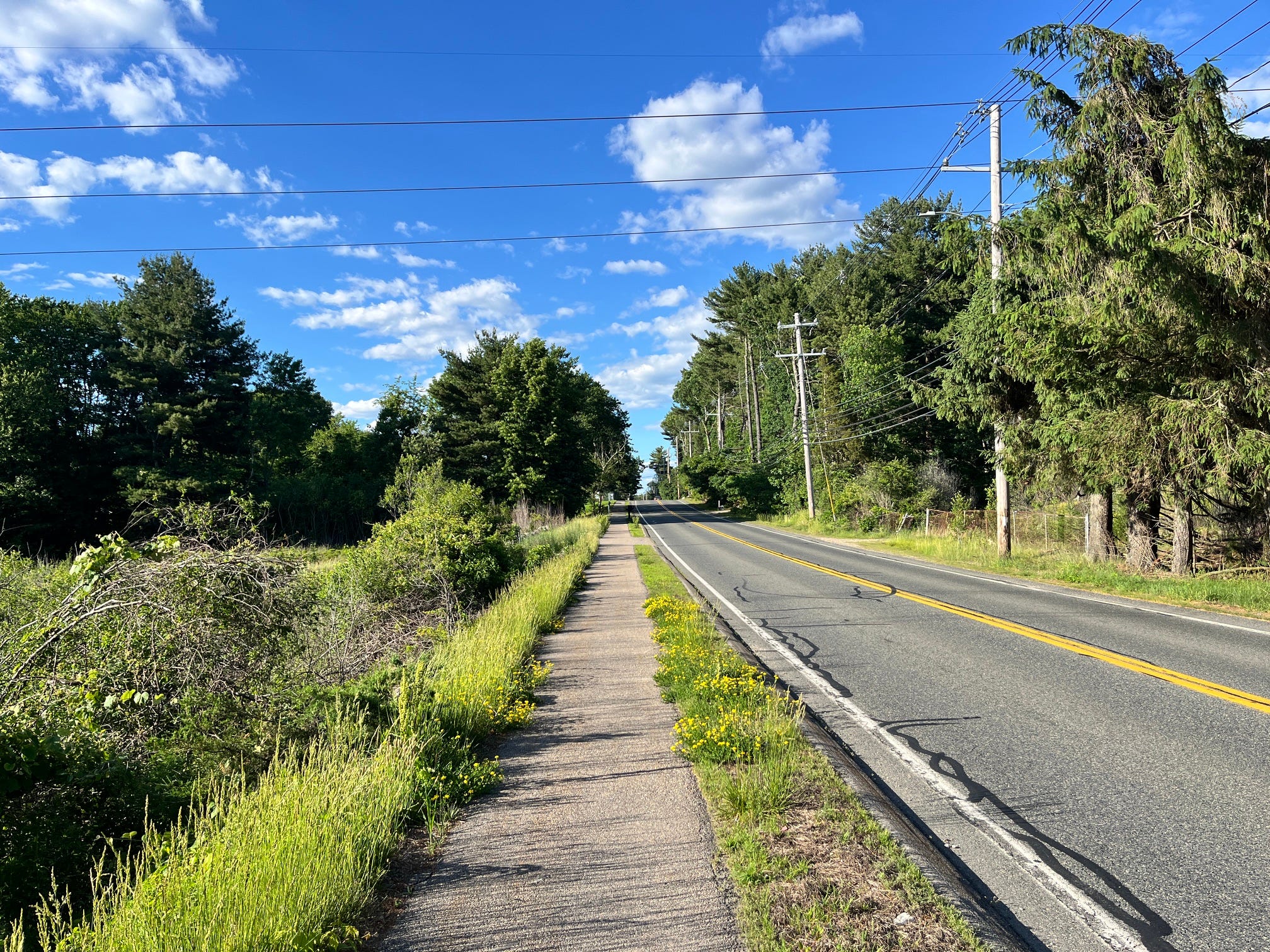
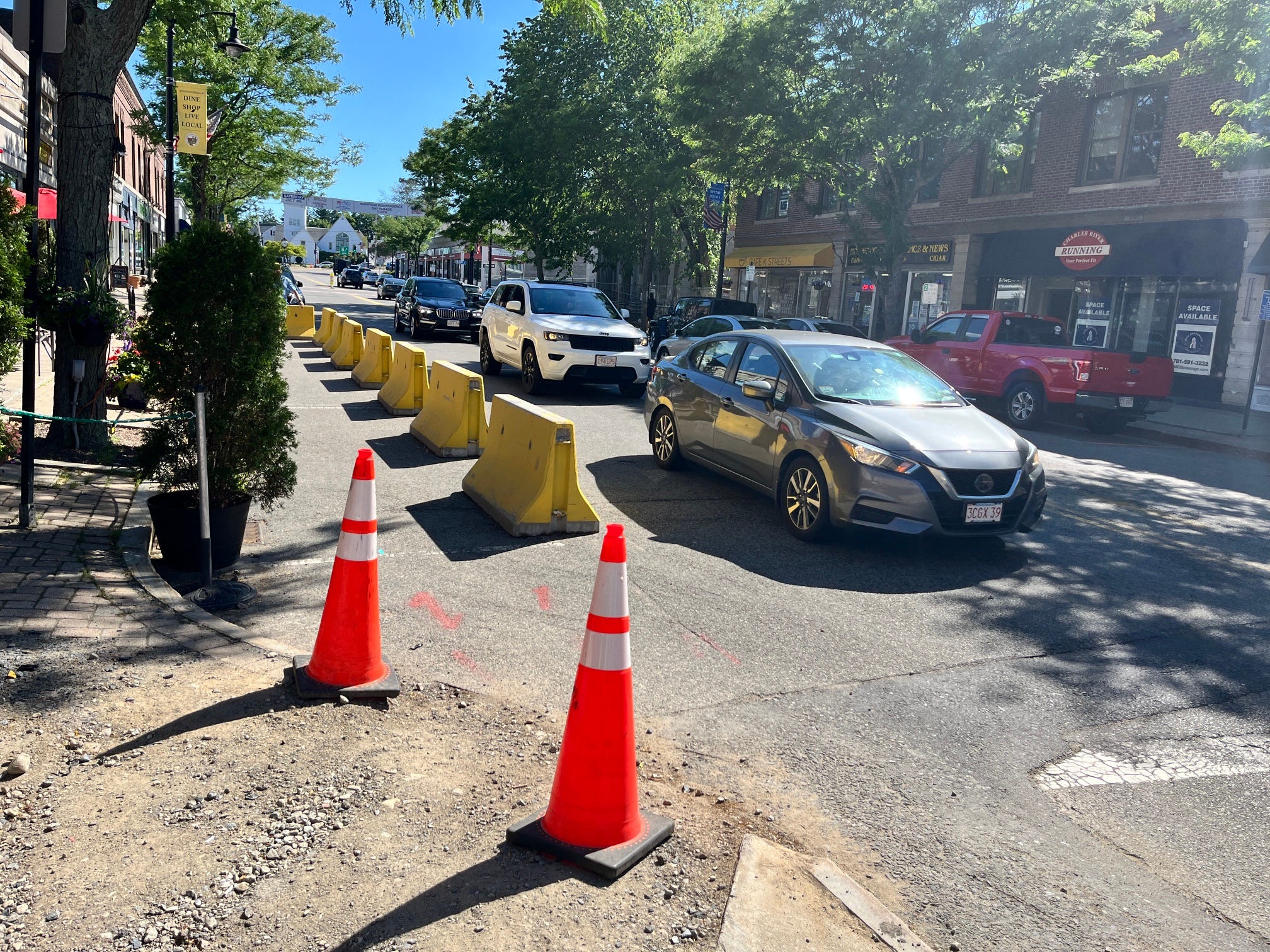
I had a feeling that somewhere along the walk to Gillette, the joy of the World Cup would pop up in unexpected places. But the first 5 miles from Forest Hills, up and over Bellevue Hill and then down to Dedham, tested my optimism. I had started the walk early in the day, but within an hour of setting off, I still looked like I had been trekking through a rainforest. The sweat poured down my face as I crossed above I-95—which was less congested than I had expected for a game day—and by the time I made it to the town of Norwood, I was struck by how quiet the walk had been so far. Everybody else seemed to be inside, hiding from the heat. So I joined them, ducking into a pizza joint for a pepperoni-mushroom slice, a rest, and a re-evaluation of my life choices.
When I emerged to resume the pilgrimage, a flash of blue and red down the street grabbed my attention. Ten people garbed in Haiti team jerseys were gathered around a table set up on the sidewalk, laden with a multicourse feast procured from a nearby Caribbean restaurant. Two of the guys wore Haiti flags like capes. The enthusiasm of their game day celebration powered me through the next few miles of the walk. Still, even with regular breaks, I was getting tired, and mostly, I was weary of walking by myself. But then, up ahead through some maple trees, I spotted a lone man in a kilt.
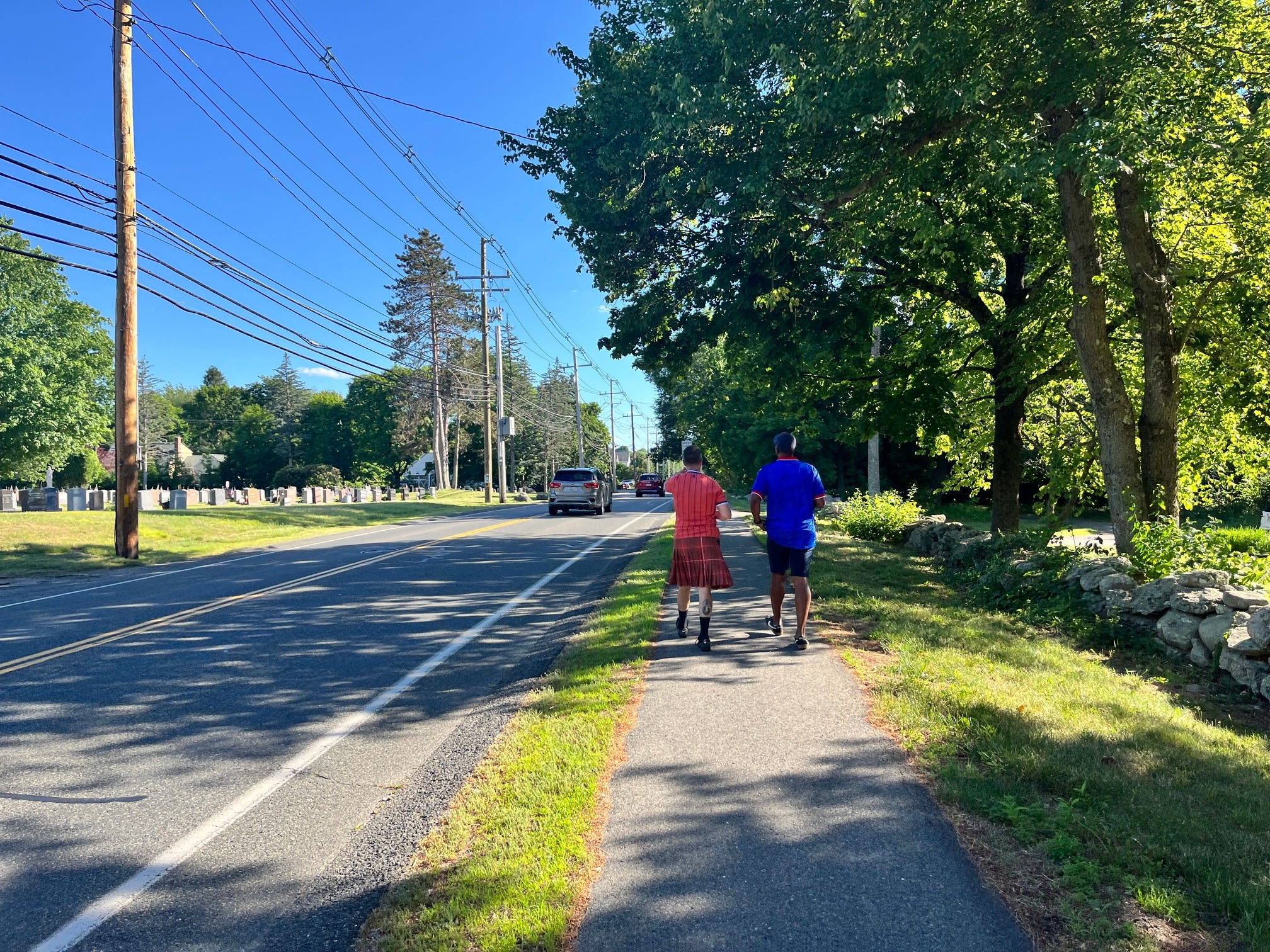
As I got closer, I saw that the Scotsman was walking with another soccer fan sporting Haiti swag. These two strangers were sauntering toward the stadium; the Scottish guy was coming from a nearby Airbnb, and the other guy who was rallying for Haiti lived in the area. They were sipping beverages and shooting the breeze. It was around this point in Walpole Heights, 3 miles from Gillette, when the traffic along the road (pedestrians and cars) finally started stacking up. I caught up with more Tartan Army members, dressed in navy and heading to the game on foot. The thick brogues and cracking of beer cans became as ubiquitous as the sound of all those engines and squeaky brakes. When we reached the terminus of Washington Street, where the cars veered left for Route 1 and the stadium, those of us on foot kept to the right and made our way to a wooded path at the end of a tranquil, dead-end street called Shufelt Road. This allowed for a more direct and emission-free passage to a parking lot on the edge of the stadium grounds.
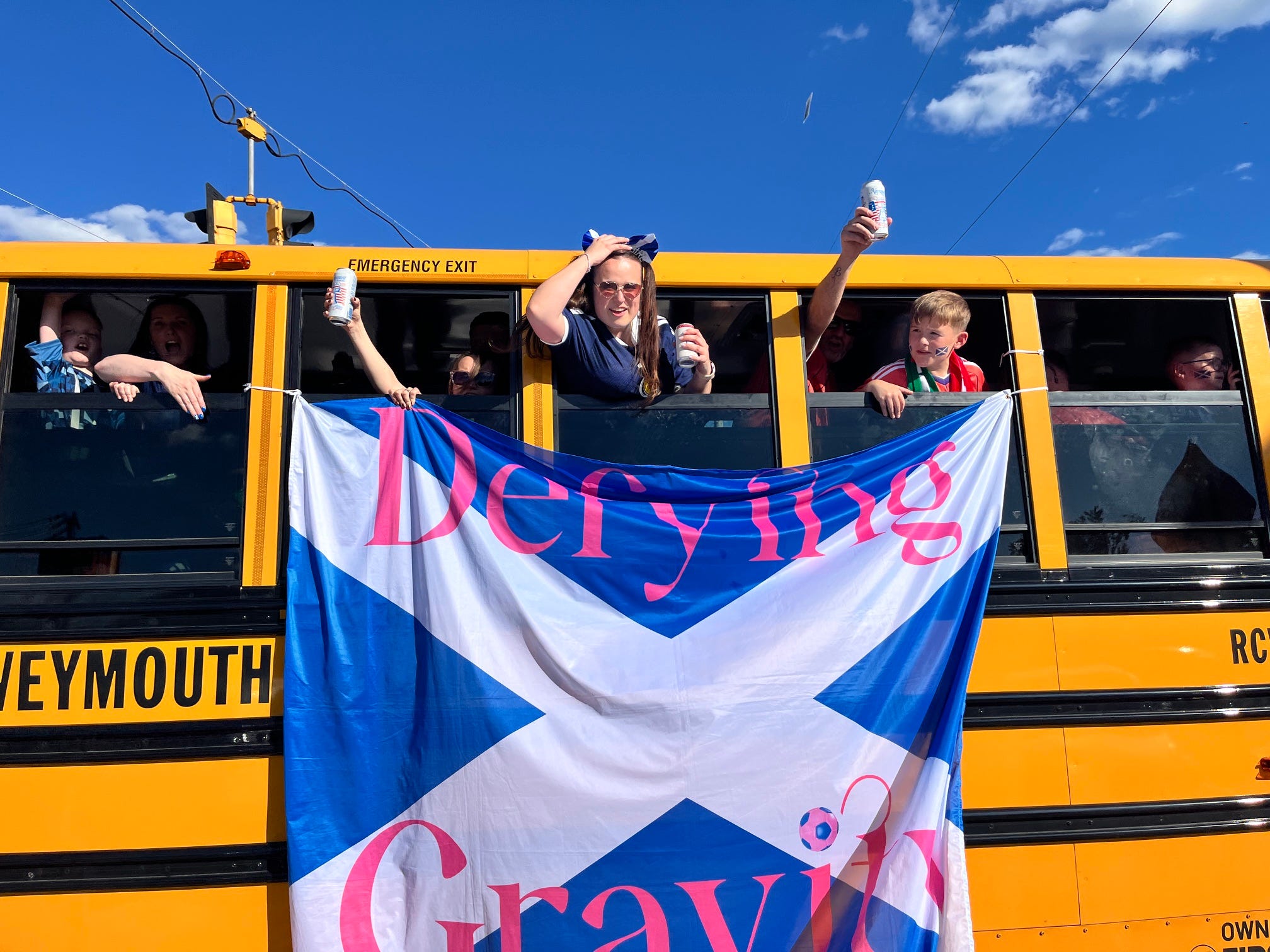
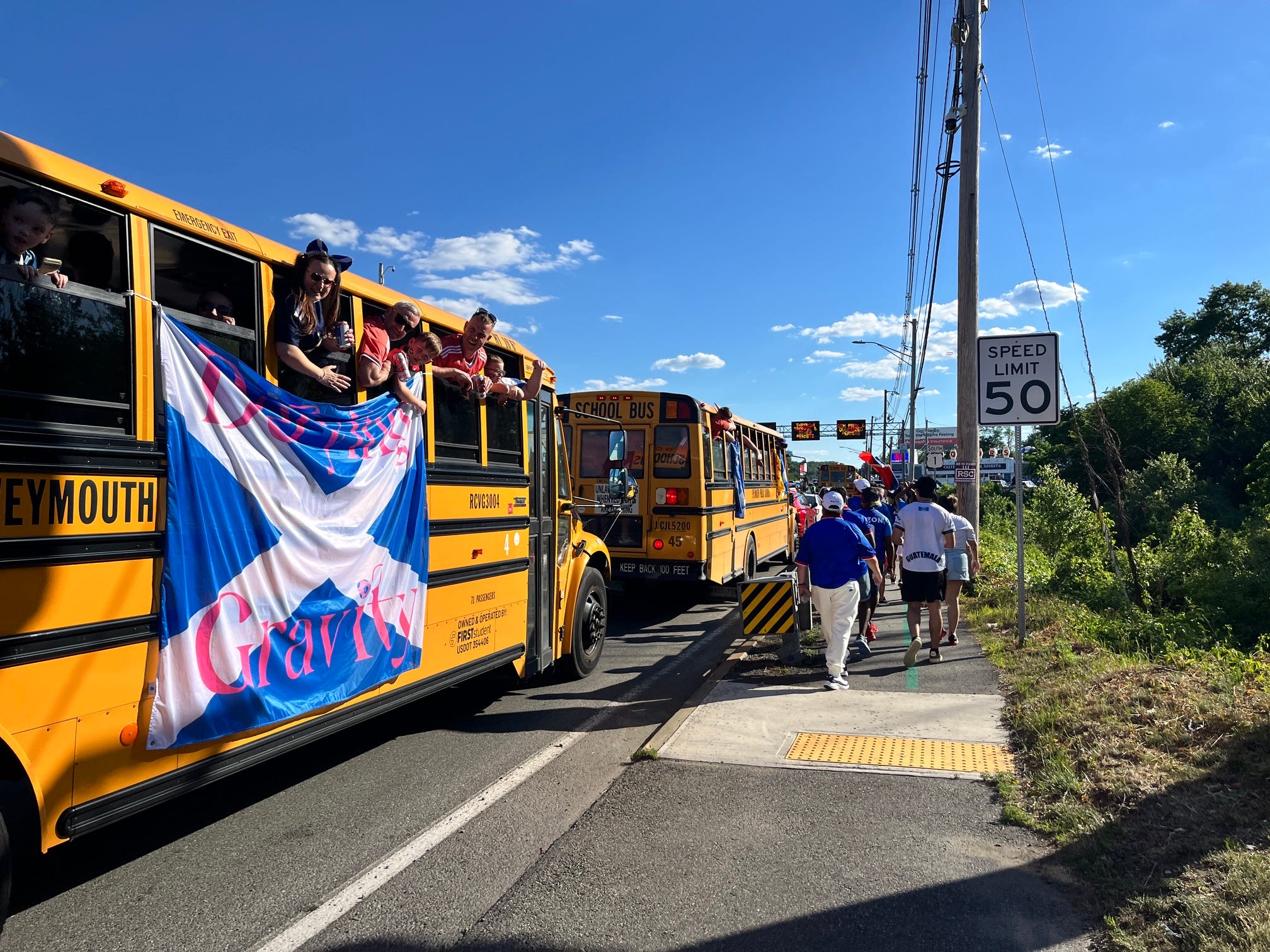
In the woods, I had passed a couple of rag-tag tailgate gatherings and hadn’t worked up the social courage to crash any of them. But as I reached the sidewalk across from Gillette, the other walkers and I were given a hero’s welcome from legions of cheering Scots crammed into yellow school buses that were inching their way through traffic toward the stadium entrance. Big Scottish flags were unfurled. A young lad handed me a Narragansett tallboy through one of the bus windows as it crept by. It was the most satisfying gulp of lukewarm beer that I’ve ever enjoyed; even more so than the Rolling Rocks some friends and I once shared at sunrise on the top of Mount Pierce, after a nocturnal traverse of New Hampshire’s Presidential range. It didn’t matter that I wouldn’t get to continue into the stadium with the fans. By walking there, I had gotten to be part of something bigger and more inspiring than any of the games.
You can experience this too. The finale of the World Cup games is approaching! The last game at Gillette Stadium goes down on July 9th. The championship game will take place at MetLife Stadium on July 19th. And while that pedestrian ban is still in place, it didn’t stop Sean Gregory from taking a long walk from New York City to the edge of the Metlife grounds. Like me, Gregory didn’t have a game day ticket and he was also pleasantly surprised to find the route heavy on sidewalk and less exposed than one might assume. You can read an account of his journey in TIME. (I recently wrote about my own pilgrimage for The Boston Globe.) If I’ve manage to convince you that hiking from Boston to Gillette Stadium is a long, strange trip worth taking, I’ve included a link to a map at the end of the newsletter, which will show the route.
But here’s the note I actually want to end things on. Walking to the World Cup in an American metro region is sort of like getting into soccer as an American. In both of these instances, we’re catching up on something that most of the world has enjoyed for a long time. A part of me wonders what might happen if more of us tried walking to games in American metro regions long after the World Cup is over! How might city or town officials respond to an army of Patriots fans, trekking across the hills to Gillette when there’s snow flurrying in late October? What would the vibe among the fans be like?
I’m even less literate with football than I am with soccer. But I’m tempted to find out.
CLICK HERE for a map of my walking route from Boston to Gillette Stadium
Oh, and by the way, if you’re thinking of walking to Gillette but unsure of how you’d get back to Boston, you can catch the MBTA’s 34E bus from nearby Walpole Center.
I suppose you could also make your trip a lot easier by using the 34E bus to get part-way to the stadium as well. But who knows what—or whom—you might miss out on.
Great article! https://www.nytimes.com/2026/06/07/opinion/world-cup-new-york-new-jersey-transit-walk.html?smid=nytcore-ios-share
My son-in-law, Tom Wilson, a photographer and his friend, Alex Wolfe, a writer did this together.
I started reading it like "It'd be cool if he'd actually done it" and was SO delighted to learn that you had! I am zero tempted to walk to Foxboro on July 9th, but I might try the walk from the 34E to Gillette on a game day. Maybe.