

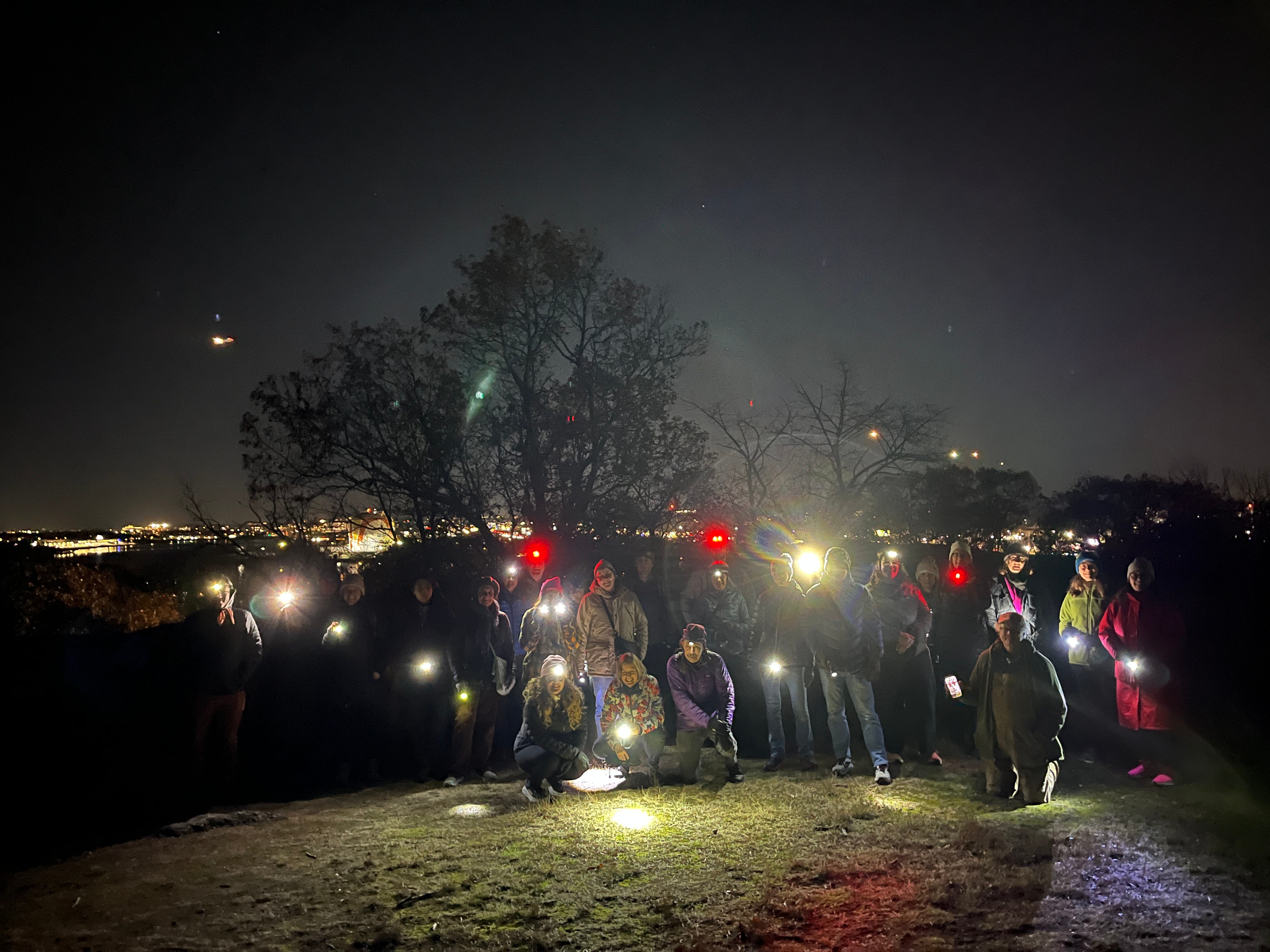
Friends: I’ve been back on my home turf in Boston for three weeks since wrapping up field research for the fall foliage guidebook that I spent most of the fall conducting. I don’t think I’ve ever felt this grateful to be resettled—alternating between being cozy at home and active in the community. On a recent Wednesday evening, a bunch of us put on headlamps, met up at a subway station in Dorchester, and hiked to the sands of Malibu Beach and the summit of Savin Hill itself. (Our next night hike—which you can sign up for—will take us into the forested Boston burbs!) Last weekend, I caught three Oscar bait movies in 72 hours thanks to the miracle of AMC A-List, which allows you to catch up to four weekly movies for only $25 per month. This afternoon, I need to drop off a few window insulation wrap kits for an anonymous mom of three from my neighborhood Facebook group, who’s been struggling to pay their heating bills.
For all of the terrible things about social media, it can offer a window into the lives of those around you; people whose sufferings were once invisible. And something that has become as seasonally routine for me as winter walks and movies is reading social media posts from neighbors being brave enough to ask for help with food, utilities, and other winter essentials that have become increasingly expensive since the onset of the pandemic. Even in “blue states” like Massachusetts, social safety net programs often come with burdensome means-testing hurdles that make it hard for people to get help. Because I guess the thought of one unqualified person receiving a penny is more odious to our lawmakers than hundreds or thousands getting their heat shut off when temperatures drop to freezing. Now, under Trump, the number may be millions.
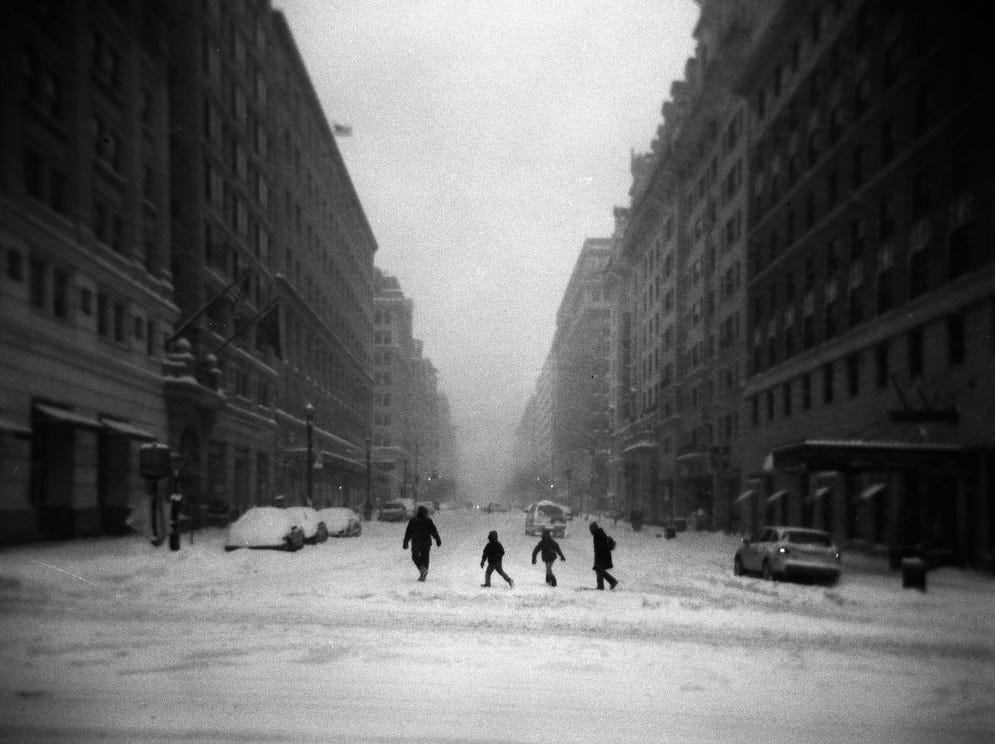
I would imagine that a great deal of you are taking a hard look at your budget for the next several months. I certainly have been. Because when you’ve got executive leaders driven by insatiable greed, any government program that softens the blows of zombie capitalism is potential kindling for the woodstove at Larry Ellison’s ski chalet. So, in the interest of offering up something nice amid these dark times and briefly cleansing the palate of commerce, I have decided that for the remaining weeks of 2025, I am going to make every upcoming Mind The Moss newsletter free. Knowing that the newsletter has actually gotten lots of you out and about, in the sticks and streets, has made it clear to me that stories or ideas can be gateways to walking. And while walking isn’t a solution for what’s tormenting us, it could be a means of getting closer to finding one.
I am referring, of course, to the historic precedent of marches and demonstrations as change agents. Getting together to occupy and move through a space doesn’t offer a framework for a new normal, but it does break us out of isolation—thereby raising the odds that a real blueprint for something better future does materialize at some point.
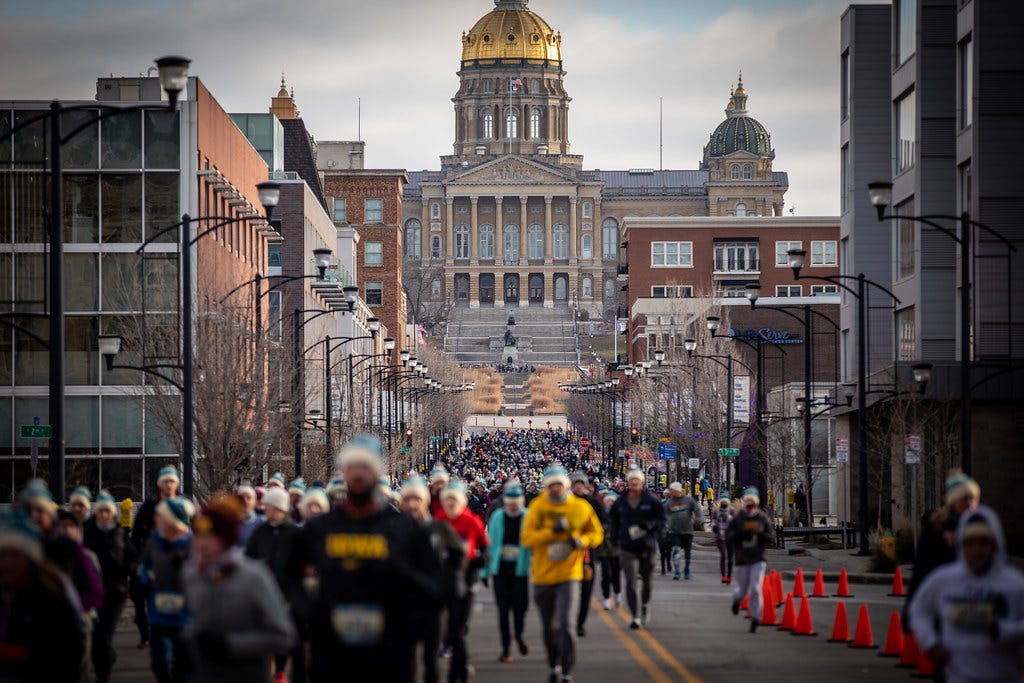
You can witness a quieter version of this connective power at mass movement events that aren’t hitched to any cause beyond, “Hey, let’s get back together.” Consider the Turkey Trot, which some of you might have participated in on Thursday. A 5K road race staged just a few hours before the feasting of Thanksgiving is a proven way to deepen your appetite and jumpstart your metabolism before pushing Parker House rolls into your face later that afternoon. That’s why I initially started participating in these fun runs. But over time, I came to enjoy the presence and camraderie of all the runners most of all. It’s not that I was lacking for the warmth of family and friends on T-Day (something for which I’m deeply grateful.) Rather, the Turkey Trot allowed for everyone to experience some version of that warmth, no matter the windchill or the amount of ice on the sidewalk. I don’t know if this would be enough to stave off the pain of a Thanksgiving spent alone or in a household full of lingering resentments, as many of us experienced at some point in our lives. But it was still a fleeting comfort.
It’s enough to make me wonder if mass movement events could become a fixture of more seasons. Here in New England, the historybooks are packed with old ideas and lost traditions that could be reignited at any point. And earlier this summer, while on my way to a work conference in upstate New York, I made a stopover in the southern Berkshires town of Stockbridge to track one of those lost traditions in the local forest.
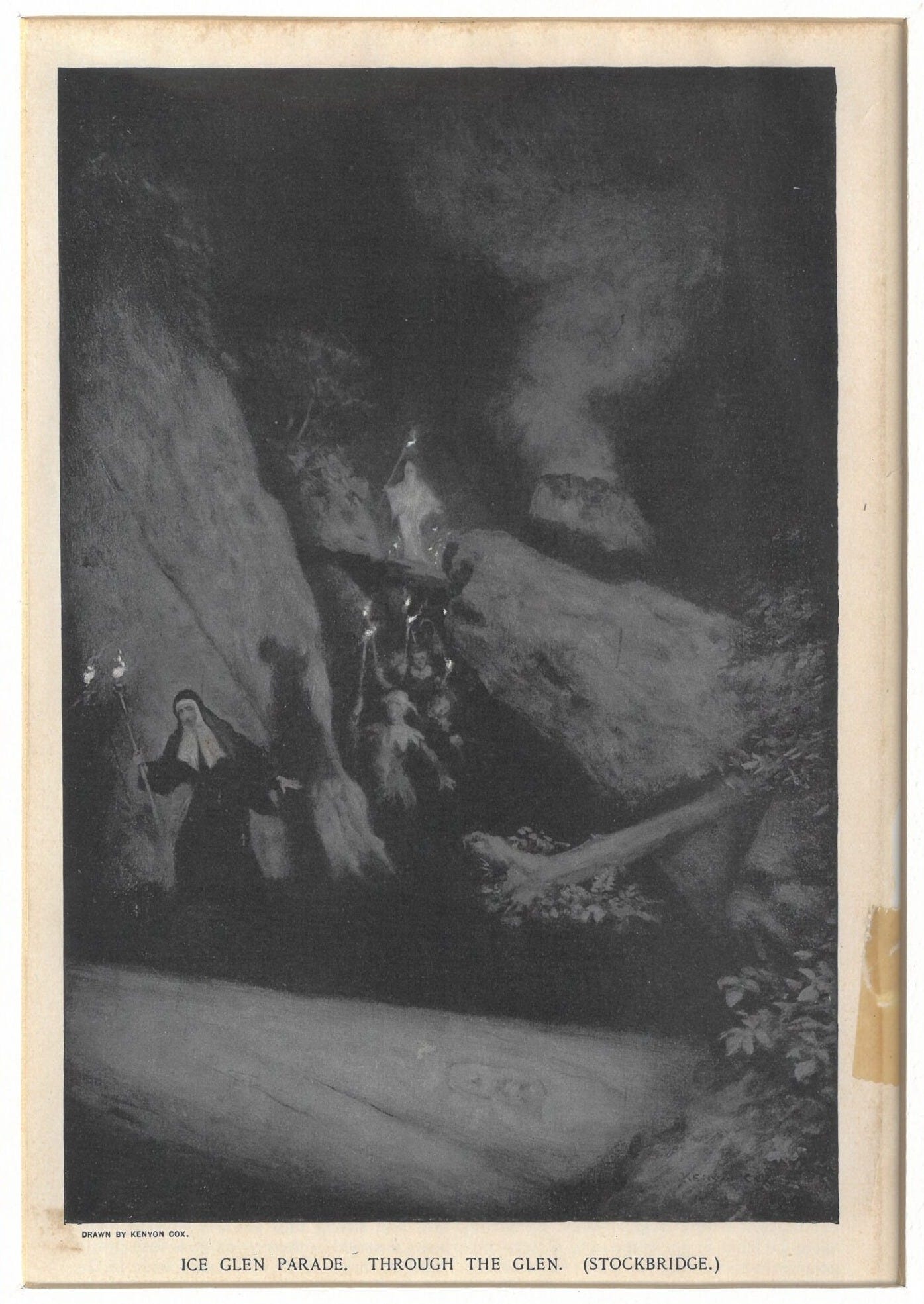
You see, in the mid-19th Century, it was a summer custom for Stockbridge residents to walk into those woods carrying torches. Just for the hell of it. The winding, glowing procession would make its way to the Ice Glen—a mossy ravine where a base layer of ice survives underneath the rocks, filling the ravine with cooling vapors. Those who didn’t participate in the torch parade often gathered to watch the torchbearers, and two witnesses of note were Nathaniel and Sophia Hawthorne. After seeing the torch parade re-emerge from the forest and cross the bridge over the Housatonic River, Sophia would subseqeuently write about this ethereal viewing experience, noting how, “It looked as if a host of stars had fallen out of the sky and broken into pieces.”
There are contemporary versions of light parades that offer a similar enchanting sight. In Boston, I have somehow managed to miss the Jamaica Plain Lantern Parade around Jamaica Pond each year. This event, organized by Spontaneous Celebrations, involves creating lanterns out of craft supplies, lighting them up, and circling the pond with the lanterns in hand. Multiple times, I have been driving back into the city after spending that Saturday or Sunday elsewhere, only to see a winding column of lights circling the dark pond, at which point I exclaim, “Shit! It was this weekend?!?” But as I followed the fern-flanked trail to the Stockbridge Ice Glen, listening to the soft patter of rain on the leaves overhead, I imagined the more visceral glow of torches illuminating the woods at night. And I wondered why we’ve allowed this tradition to either die or be hijacked.
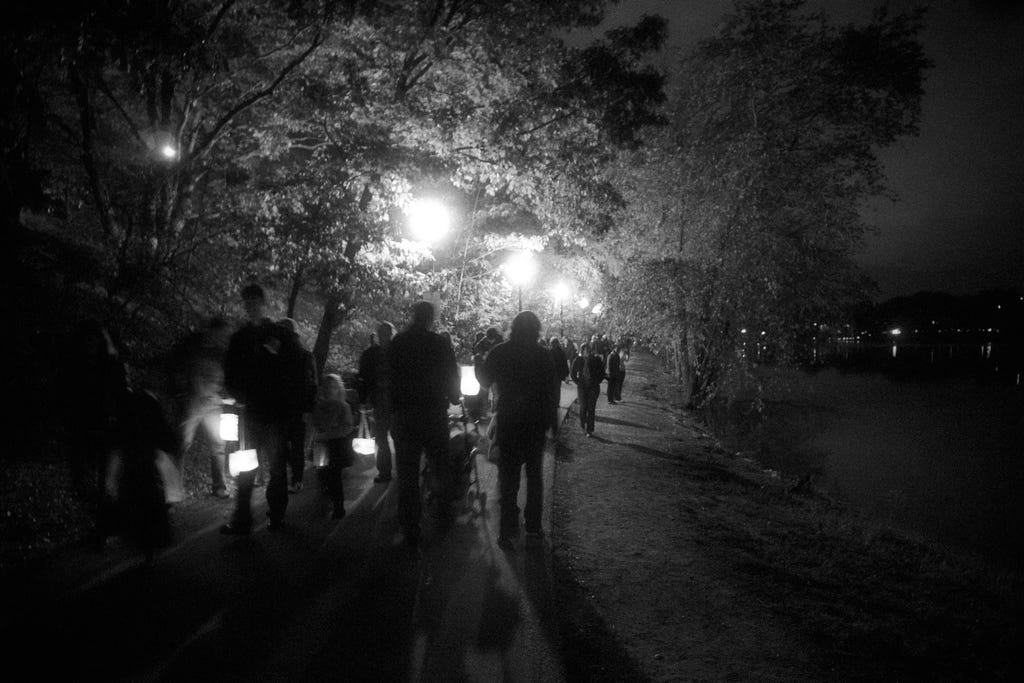
The first outcome I sort of understand. Carrying a flaming stick through the forest is a very optimistic act, and I would assume that historic records only account for a small fraction of the times when 19th Century torchbearers were barbecued after tripping over a thick tree root. Handing out flaming torches to families with small kids seems like a pretty dodgy way to build community spirit and solidarity; unless putting out a giant brush fire togther, Days Of Heaven-style, is the real bonding experience there.
What’s more troubling is how torch parades have become something that many of us now associate with menace and cruelty. Remember all of those polo shirted neo-Nazis who invaded Charlottesville, Virginia with tiki torches back in 2017? That spectacle was borrowed from the Ku Klux Klan and Germany’s Third Reich, both of which routinely used torches in marches and gatherings that would usually lead to violence. Because a torch can be an instrument of possibility and destruction. You can use a torch to find your way through the world, by making it visible. Or you can use it to burn the world.
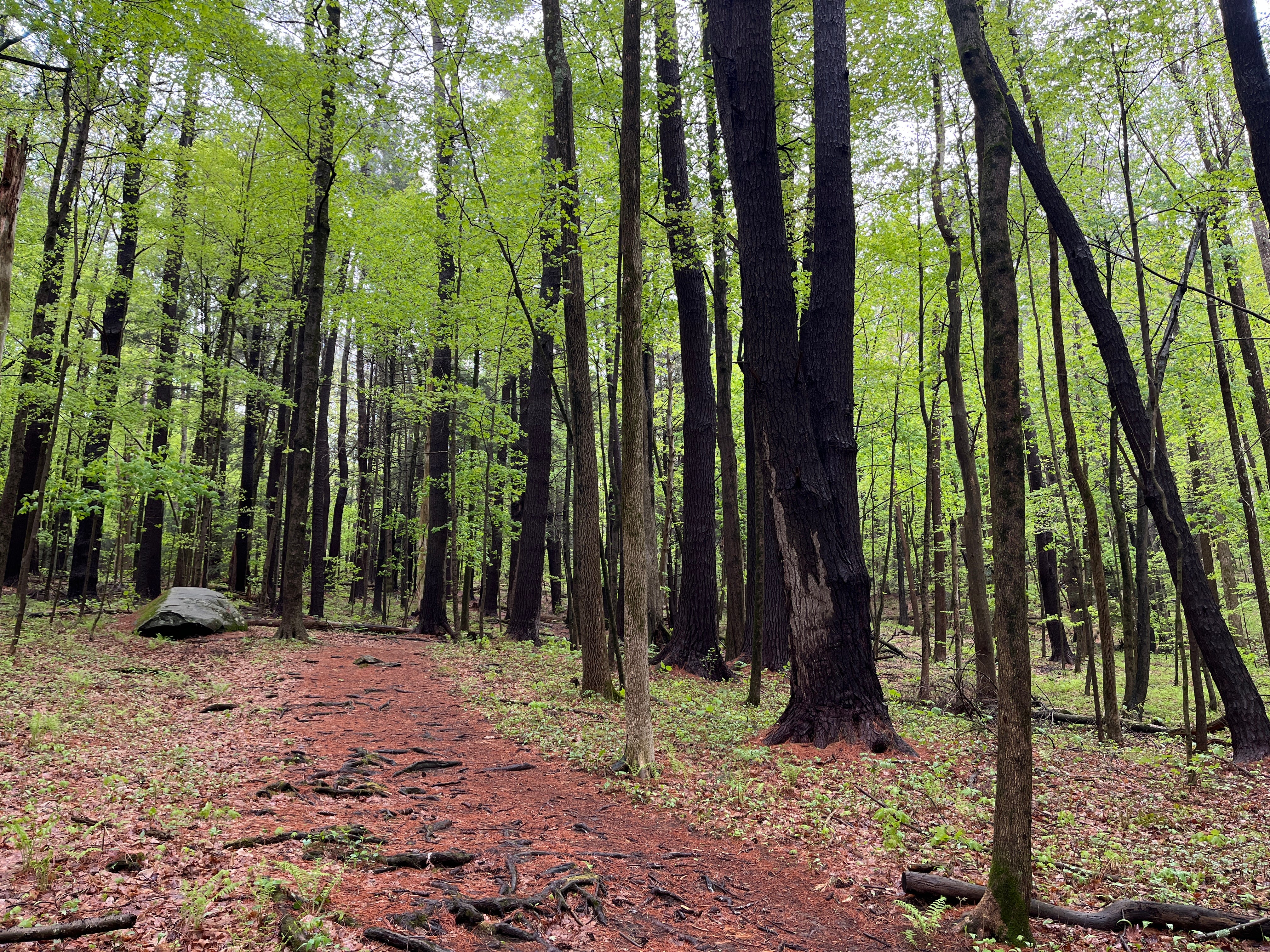
Torch events like the old Stockbridge Ice Glen parade present an intriguing queston. What if those of us don’t want to burn everything down could reclaim this tradition? It’s a question that the Town of Stockbridge is actively mulling over right now. According to a recent Berkshire Eagle story from Sally Bergmans, the local Selectman and Fire Chief have gotten behind a long-brewing plan to revive the torch parade sometime in the next few years. The ice glen would be lit up by “strategically placed flares,” the torches for participants would be designed by the local psychiatric health center with safety in mind, and the whole event would conclude with a bonfire and hot dog roast.
This wouldn’t have happened without enduring curiosity and support for an Ice Glen parade revival at the grassroots level. We’ll have to wait and see if the plan is greenlit by Stockbridge’s chief of police and its Parks and Recreation Commission. If approved, the reincarnation of the parade is something I’ll be putting on my calendar. But even if the idea is shot down out of safety concerns, there’s something to be said for trying to revive or take back what’s been lost. Imagine if we did this more often—even when what’s been lost is a tradition or activity that carries some risk. The people that have exacerbated the poverty and immiseration that millions are suffering right now are many things, but they are not afraid of being assertive. Re-taking the torch parade, for good, would at least demonstrate some willingness to fight back. You know, the thing that more and more Americans are saying they want to see from their elected leaders.
We should continue pushing our Senators and Representatives (even the ones we like) to be much bolder. But we can also start bringing the fight—and the light—ourselves.
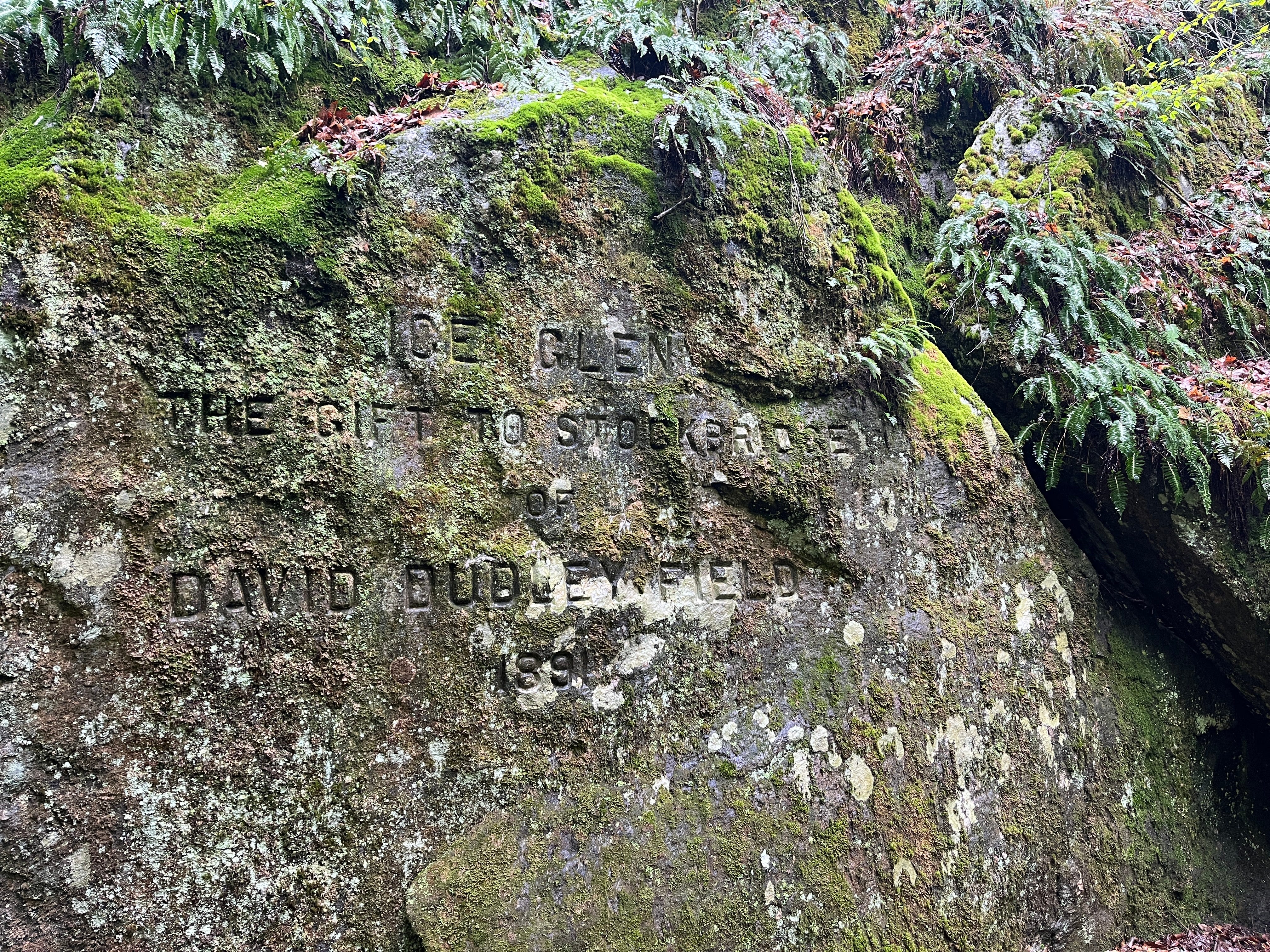
The Stockbridge Ice Glen
Hike distance: 1.4 miles out-and-back
Elevation gain: 216 feet
CLICK HERE for a trail map
Because I enjoy shamelessly using Mind The Moss as a vehicle for amateur film critic musings, here are those three Oscar bait films that I mentioned watching earlier:
Wicked: For Good. *** out of ****. As someone unversed in musicals and the original Wicked book and Broadway show, I feel the least qualified to opine on Jon M. Chu’s two part movie adaptation. What I will say is that I went into the theater with friends who did know both of these worlds intimately, and I was pretty much swept off my feet by the music and the sense of place. When watched back-to-back with the first Wicked installment from 2024, I think the two films make for an even stronger piece.
Sentimental Value. **½ out of ****. I had really high hopes for this one, as a Nordic curious person in general and a huge fan of Joachim Trier’s The Worst Person In The World—one of my favorite films of the decade thus far! The idea of a filmmaker who was a lousy, absentee father (Stellan Skarsgard) reuninting with his daughters (Renate Reinsve and Inga Ibsdotter Lilleaas) and driven by the hope of casting one in his final movie had promise. But despite terrific performances and a few scenes that I’ll likely remember for a long time, I think Trier trips into the same gulch as a lot of directors do when they make films about directors. There’s a little too much sympathy for the filmmaker, and the notion of art as a vehicle for understanding or reconciliation just didn’t feel honest here. That said, I’m clearly in the minority with my middling take!
Rental Family. *** out of ****. Now this was a nice surprise, on a couple of levels. It’s been great to see Brendan Fraser landing interesting film roles since re-emerging to headline The Whale in 2022, and I had no idea that he was working on this one—the story of an American actor living in Japan who ends up working with an agency that hires performers to impersonate friends or loved ones for clients. It’s directed and co-written by Hikari, who helmed the outstanding pilot episode of Beef (the highlight of the whole first season, in my opinion) and while I could have done with a little more background on Fraser’s character and how he ended up living a solitary life in Tokyo, the relationships that he develops with a number of clients are affecting enough that I just went along for the ride, with several laughs and some misting eyes along the way.
And with that, here is Underworld to close us out. On-the-nose, but what a lush track.
Hey, Miles. Great idea for a night hike. Will try to make it.
Re: the signup page:
There is probably no chance that first-time visitors to Oak Grove T Station will be confused if they head for the turnstiles, but is that really Oak Grove? How many decades ago!? I live nearby, and would be happy to (re-)shoot it for you!