
Of Grouse and Grinds
Sharing your name with a giant and making it your own

Among other things, my late grandparents and I were movie-going buddies. When I was in high school, mainlining films from fucked up European directors, the three of us started attending the Telluride By The Sea festival in Portsmouth, New Hampshire. This was where we caught high-octane cinema like House Of Flying Daggers, Kontrol, and La Mala Educación. The last film that my grandmother and I saw there, in 2013, was 12 Years A Slave. If you’ve seen this movie, you know that it's an immersive and devastating experience. The entire theater was silent as the last scene faded to black. But once the credits started rolling, an audible murmur swept through the crowd as the first credit—”Directed by Steve McQueen”—appeared in the center of the screen.
”He’s still alive?!” I heard one person whisper, alluding to the action icon who starred in 60s blockbusters like Bullitt and The Great Escape. I chuckled, realizing that a good deal of the audience was unaware that there are two Steve McQueens in cinema. The one who adapted Solomon Northrop’s memoir on the horrors of slavery comes from London’s contemporary art world, where he won a Turner Prize before breaking into narrative film with Hunger and then Shame. Both of those films, respectively exploring life in captivity for IRA prisoners and sex addiction, made waves with critics but barely broke out of containment from the indie scene. 12 Years A Slave, produced by major studios and distributed widely, showed the public that it’s possible to make a name your own; even when you share the name with a legend who almost everyone knows.

The same thing applies to places where you might find yourself walking this summer. In U.S. cities and towns, there are several “Crosstown” Trails that can take you across an eclectic range of scenery. The Crosstown Trails that most people know are the ones that spiderweb around San Francisco’s eucalyptus forests, canyons, and beaches. But in the tony Boston suburb of Wellesley, Massachusetts, there’s a much shorter, flatter Crosstown Trail that offers mixed hardwoods and glimpses of rich homeowners’ yards. Across New England, there are quite a few high points called “Mount Misery,” which is perfectly fitting with our Puritan heritage but topographically varied—from molehills to actual mountains. And recently, while driving through northern Vermont for work, I happened upon a more jarring example of a name shared by two very different trails.
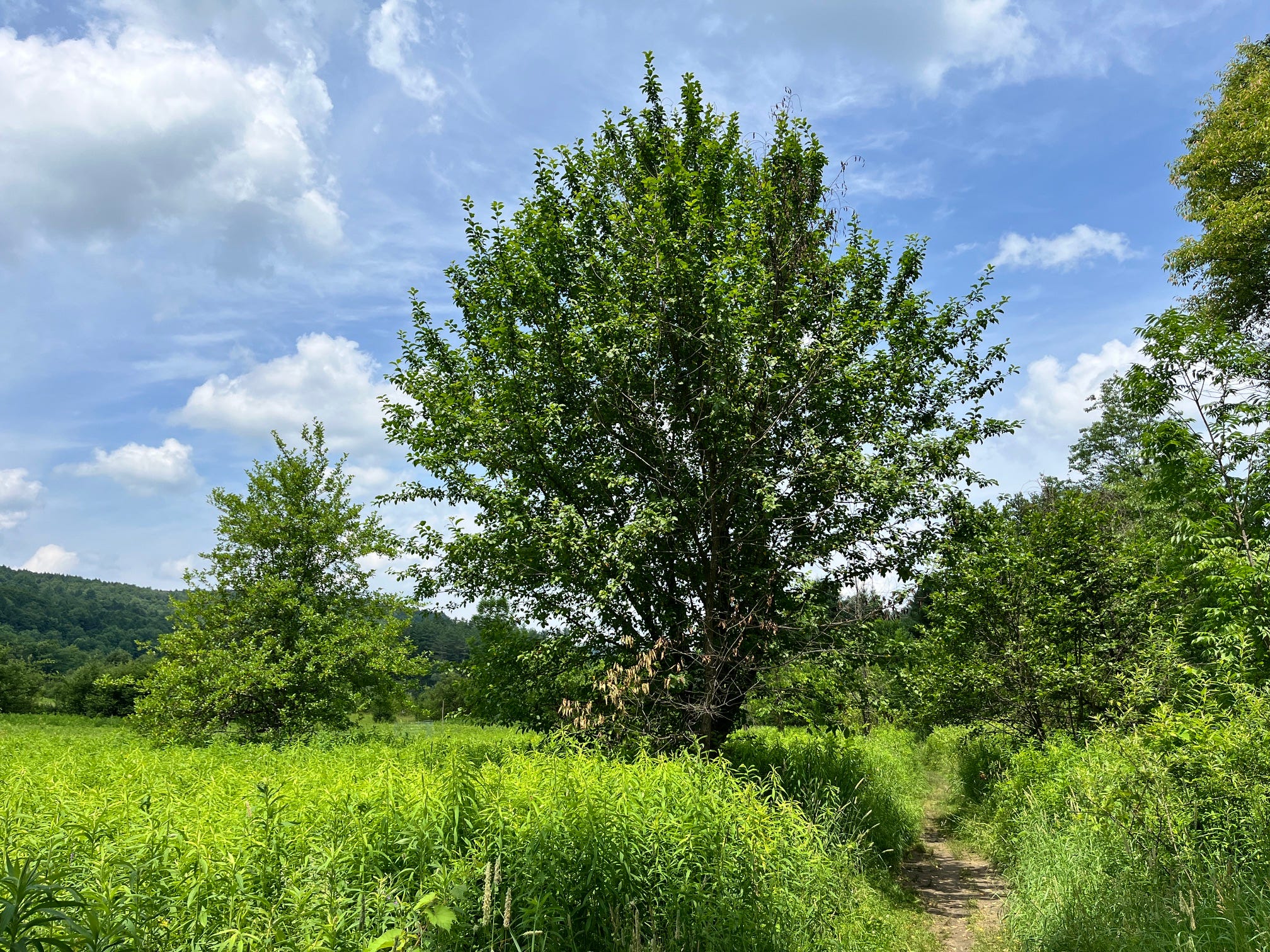
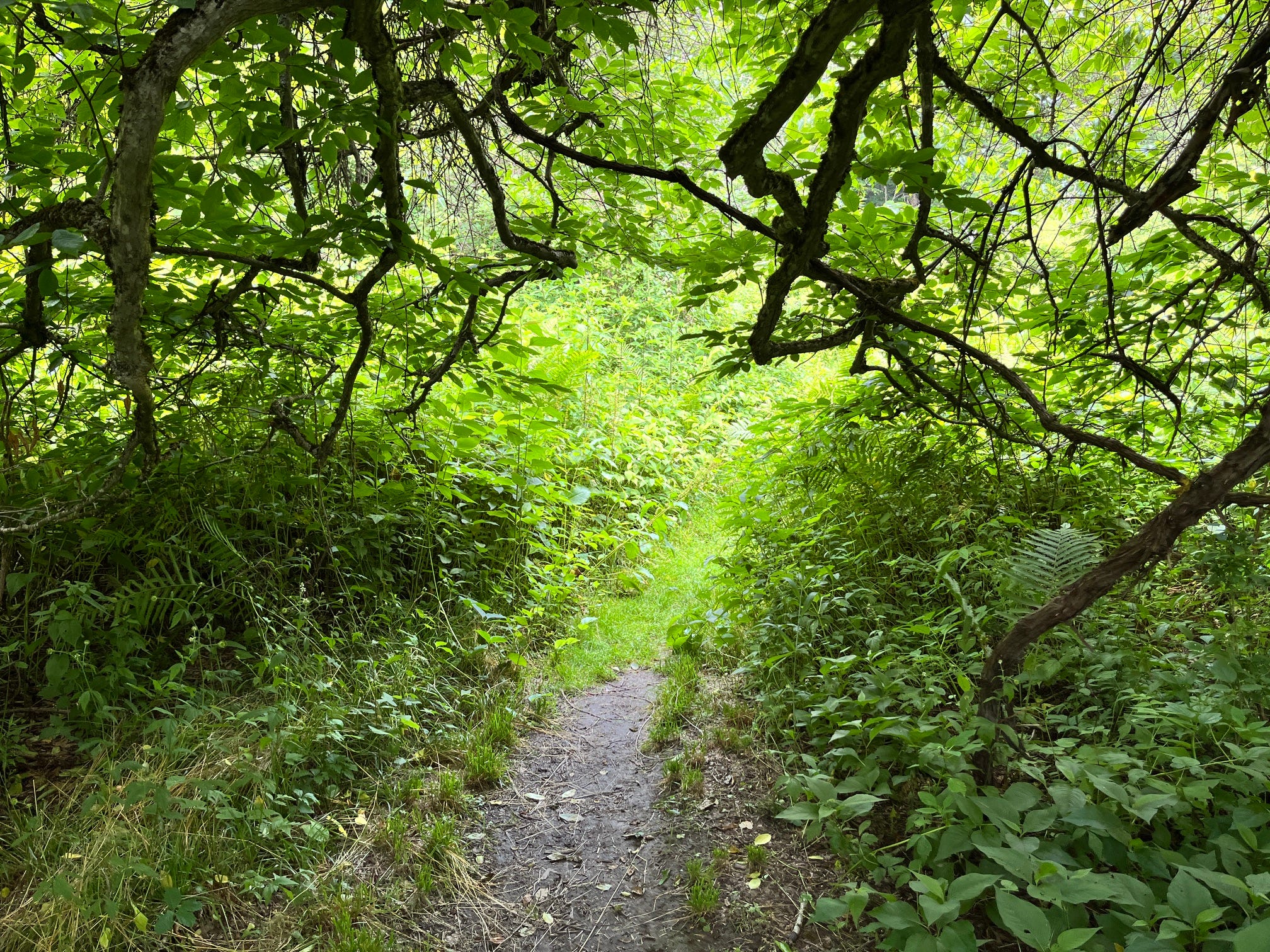
July can be a dangerous time to be in Montpelier, the state capital, and that’s because the local waterways sometimes flood after heavy rainstorms that materialize when the region is swamped with humidity. Millions of us watched this happen via YouTube and TV reports during the summer of 2023, when the waters of the Winooski River flowed through downtown Montpelier. The natural, forested floodplains around the city were not enough to stave off disaster, but in many other cases, they’ve played a crucial role during stints of rain; giving all those floodwaters a chance to spread out and disperse, before they crash into homes or businesses. The floodplains around the North Branch River, which approaches Montpelier from the north, are a lovely place for a saunter in summer and fall. A small, brushy network of footpaths at North Branch Park (plus the adjacent North Branch Nature Center) make it possible to appreciate floodplains at a grassroots level, and that’s what I was doing on a toasty afternoon when I discovered that one of these paths is called “Grouse Grind.” It’s a short, grassy trail that ascends one of the wooded hills flanking the North Branch floodplain. It couldn’t have taken me more than 10 minutes to reach the high point of the path, which runs uphill past paper birches at a gentle, almost meditative grade. When I reached the end, I had to laugh. Because the “Grouse Grind” that most people know is anything but meditative.
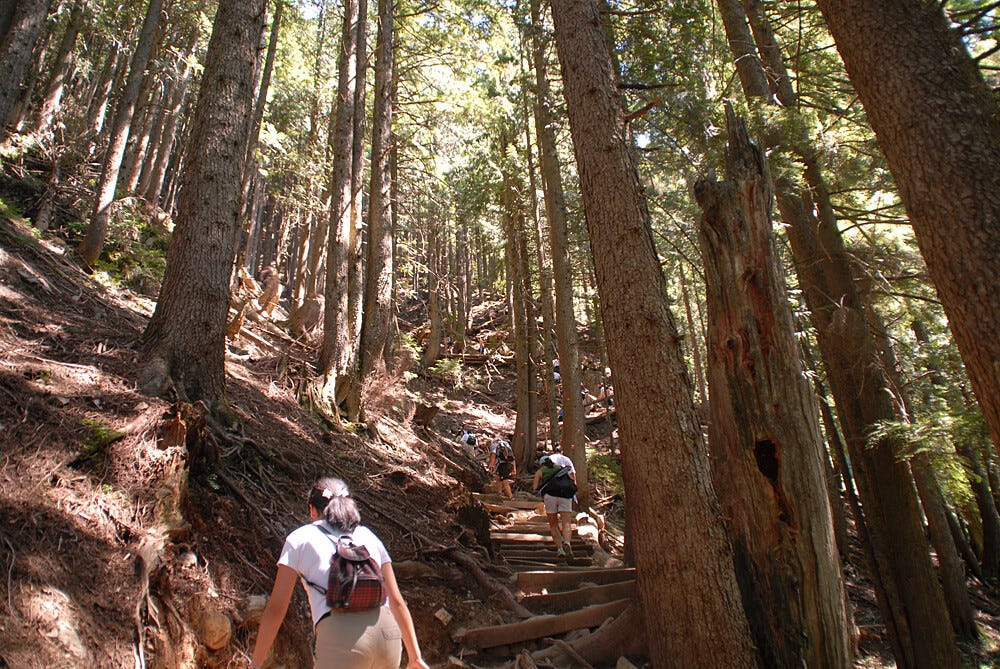
That trail, tucked in the forest on Vancouver’s Grouse Mountain, is the sort of natural landmark that reduces uber-outdoor athletes to blubbering wrecks—especially in the west, where the ubiquity of groomed switchback trails can make a hiker overconfident and annoying; a person who gushes about crushing a 4,000 footer before breakfast. I think the simplest way of describing the British Columbia Grouse Grind is this: Picture the longest set of wooden stairs that you’ve encountered along a hiking trail. Imagine if those stairs were the backbone of the entire trail. Now, try to think about how many stairs you would need to climb to gain 2,624 vertical feet in just 1.5 miles. Also, think about how steep those stairs would have to be. Finally, consider that once you reach a certain point along that stair climb, throwing in the towel and turning back becomes impossible, given the twisty, narrow dimensions of the stairs and the column of hikers wheezing and hauling ass behind you. In fact, turning around is not allowed by Metro Vancouver’s trails department! Grouse Grind is a one-way ascent through hell. As The Seattle Times’ Tan Vinh put it, “Lemme tell you….the Grouse Grind is not misnamed.”
Climbing these legendary stairs, stopping countless times along the way as the fitter hikers squeeze by, collapsing at the top—a heap of quivering quads, dying gasps, and sweat—and then riding the Grouse Mountain gondola back down to the foot of the mountain, has been a dream of mine for several years. I might finally get a chance to take a crack at it in September, when I visit my friends George and Zarya in Seattle. It would be fitting, since George is the person who put Grouse Grind on my radar. But life is hard to predict, especially during stressful times like these, and if slogging up the stairs on Vancouver’s most evil trail just isn’t in the cards for 2026, that’s alright.
Because, technically speaking, I can still tell people that I have climbed Grouse Grind. And when I start vocally reminiscing about the beauty of the surrounding floodplains with their beeches and sugar maples—if someone pipes in and says, “Wait, there’s a Grouse Grind in Vermont?”—I get to emerge from the conversation with hipster cred.
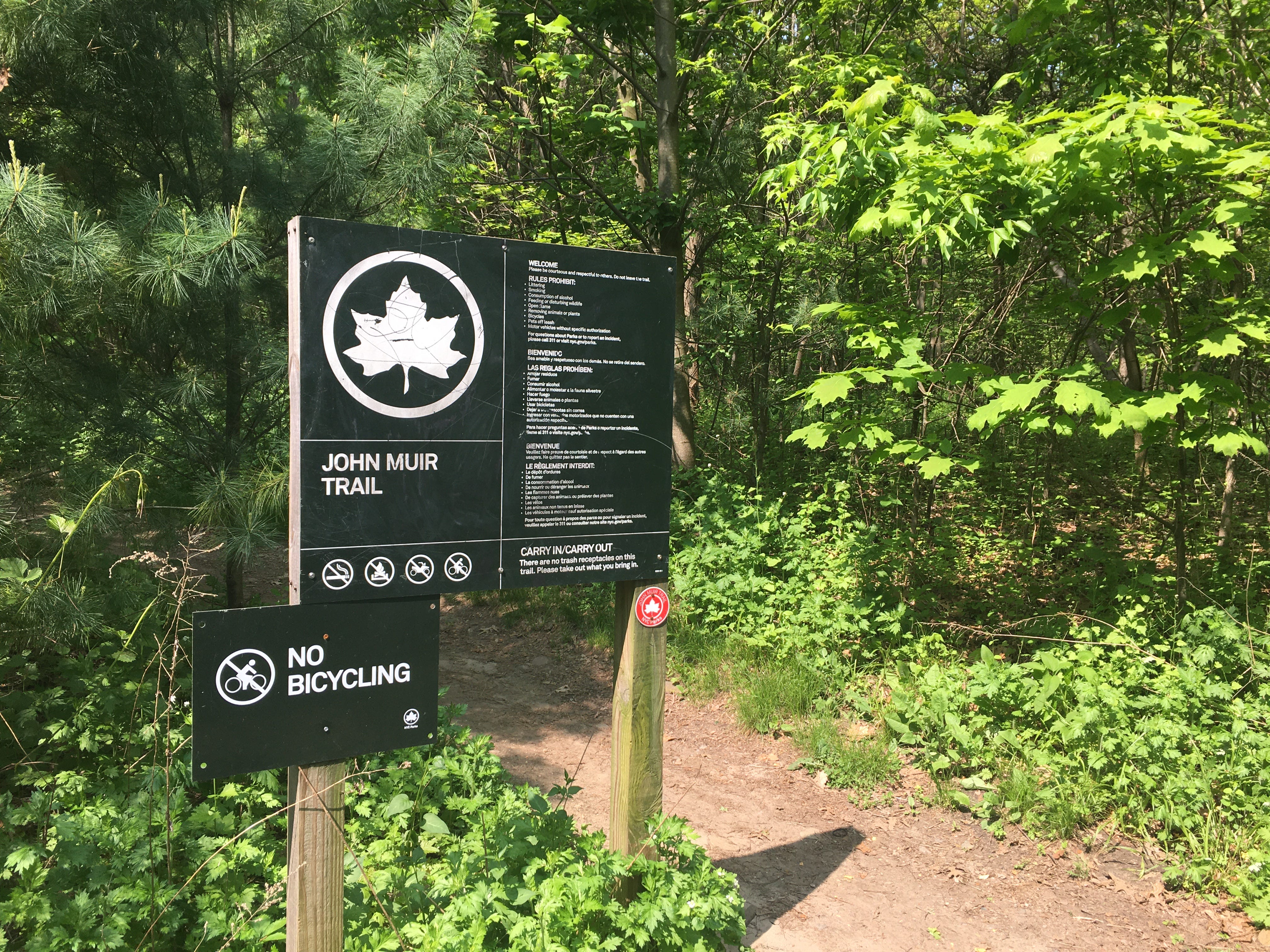
Maybe you’ve been through this before. Perhaps you’ve finished the “John Muir Trail” that winds through the forests and golf courses of Van Cortlandt Park in The Bronx. Of course, it’s not the same thing as the 211-mile John Muir Trail that climbs through the Sierra Nevadas. But it’s a legit hike in its own right. Knowing that it’s overshadowed by a namesake juggernaut shouldn’t stop you from going, “Yeah, I’ve hiked the John Muir Trail,” if you find yourself in the company of chest-thumping hikers. You might have to defend your valor from some reductive blowhard who insists that there can only be one John Muir Trail. But I’d wager that most folks will be intrigued to learn that there are multiple trails in the U.S. that are beautiful enough to be named after John Muir.
You may even consider going out of your way to experience lesser-known namesakes of iconic trails and places. For years, I’ve wanted to visit Versailles, Kentucky, which is pronounced “VUR-SAILS.” Part of my agenda while there would be mis-pronouncing the town name in conversation with residents—instinctually leaning toward its French sister city—and then getting corrected. On a more rugged note, there are more than a dozen mountains in the United States called “Mount Washington.” While the one in New Hampshire’s White Mountains is fittingly majestic for such a hallowed historic figure, I’m intrigued by the Mount Washington in Arizona, right on the U.S./Mexico border; particularly because there do not appear to be any trails to its summit. Why name a lonely, inaccessible peak like this after George Washington? As it turns out, the mountain got its moniker from an old 19th Century mining settlement, which was known as the Washington Camp. Perhaps, when you’re living and toiling away near a parched peak, you need to import a sense of majesty to your desolate surroundings.
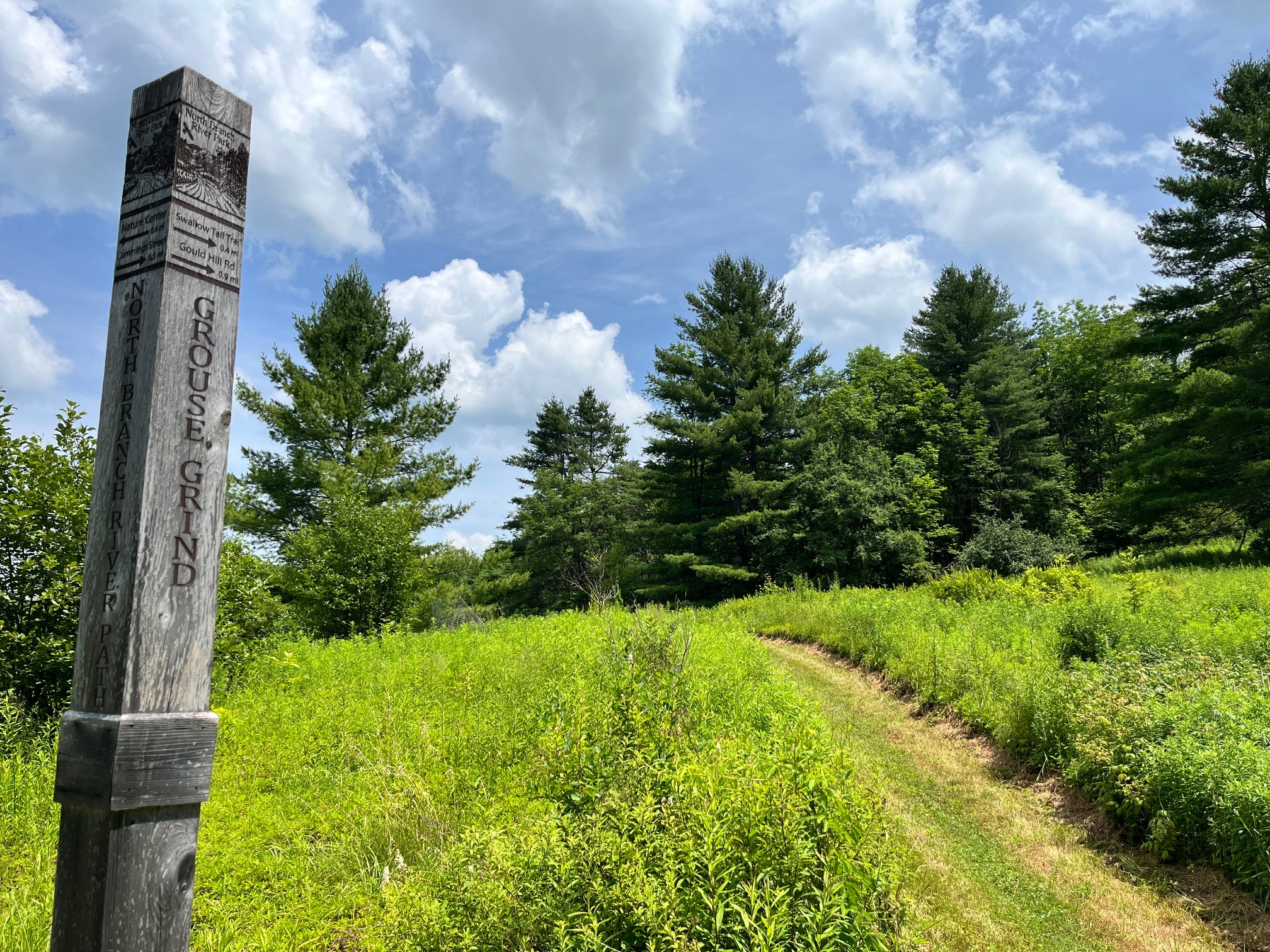
I haven’t been able to get as much insight as to why that gentle hillside path on the North Branch floodplain of Montpelier shares its name with one of the most brutally masochistic trails in North America. Given how many hikers from around the world tend to cross-pollinate in the Green Mountain State, I’m thinking that there could be some cheeky intention here. But then again, what makes a “grind” can be relative. The person who planned Vermont’s Grouse Grind probably had to bushwhack their way up that little hillside at some point, long before the trail was cut. A sudden fluttering of grouse from the understory might have caused them to dart away into a patch of poison ivy, twisting an ankle in the process. It might not make for the best story, in the way that hundreds of steep mountainside stairs would, but I would still call it a grind.
CLICK HERE for a map of Montpelier’s North Branch trails
CLICK HERE for a map of Vancouver’s Grouse Grind