
Something to believe in
The regenerative potential of a good myth

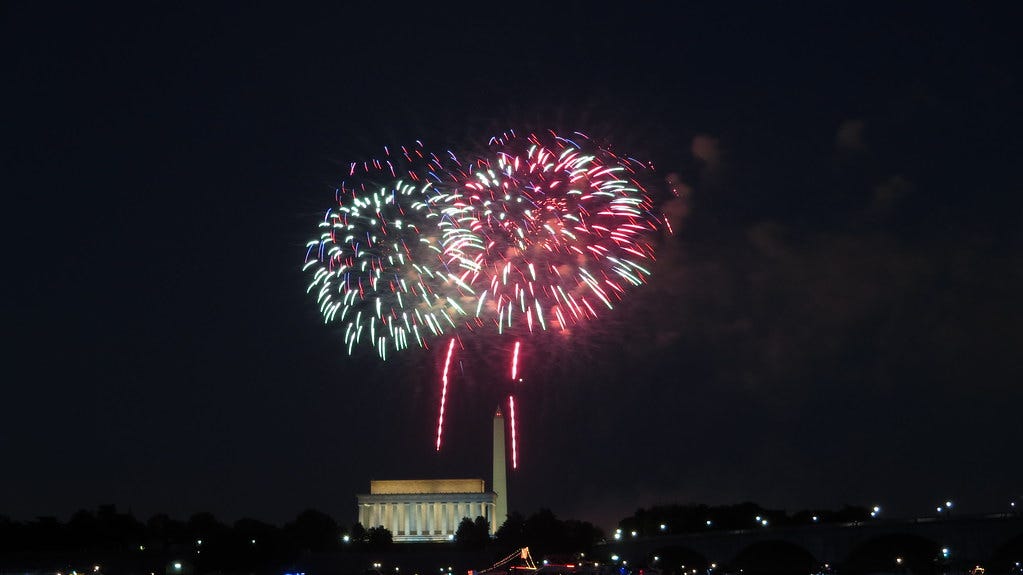
I’m going out on a limb and guessing that at least a couple of you have approached recent Independence Days feeling conflicted. You know, given the wealth inequality, wars of aggression, and social antagonism that America has been engaged in lately.
Of course, there are plenty of Americans who see this stuff as worthy of celebration, and those folks get to enjoy July 4th, 2026 in the fullest sense. But tonight, for the first time in years, I’m intentionally seeking out a fireworks show and attempting to toggle my brain into another mode of thinking about America’s birthday. Rather than trying to tune out the political nightmares of the present, I’m approaching this July 4th as a celebration of the myth undergirding America. Not the idea that we’re exceptional, or the Horatio Alger fantasy that we can each bootstrap our way into prosperity, but the myth of America as a place where freedoms of all people can be honored and upheld.
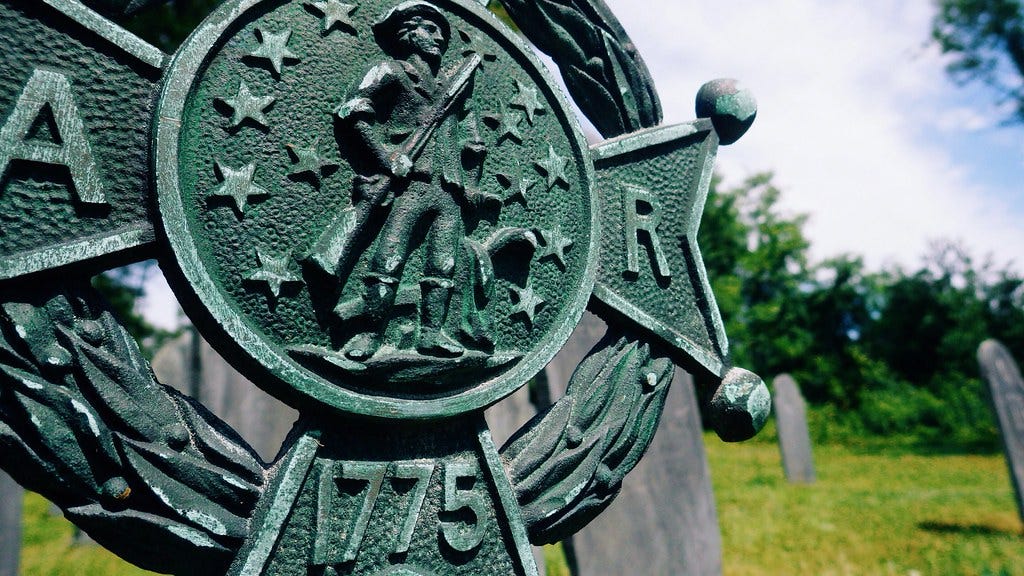
It’s a lovely idea; definitely something that would inspire a bunch of us to crush a few beers, wolf down a few burgers, and blow off a few fingers with a Roman Candle. It also couldn’t be further from the ground truth of how the United States of America was founded against a backdrop of genocide and slavery; the echoes of which still haunt us to this day, reanimated in gruesome detail with the Trump administration. But it would be short-sighted to overlook the moments in U.S. history when we have gotten closer to touching the flame of our own mythology; the extensions of voting rights to all peoples, defeating the tide of global fascism in World War II, and around the same time, a New Deal that bolstered Americans’ economic backbones, allowing them to take more control of their own lives. That many of the New Deal programs excluded agricultural and domestic laborers—a decision that hit Black Americans disproportionately hard—is a reminder of how far we still have left to go, in living up to the myth that catalyzed this country. Understandably, given our slow progress and numerous setbacks, our founding mythology has come under a lot of scrutiny lately.
But as strange and discrepant as July 4th can feel these days, I would not brush off the power of a good myth. In fact, now might be a time for embracing our own mythology.
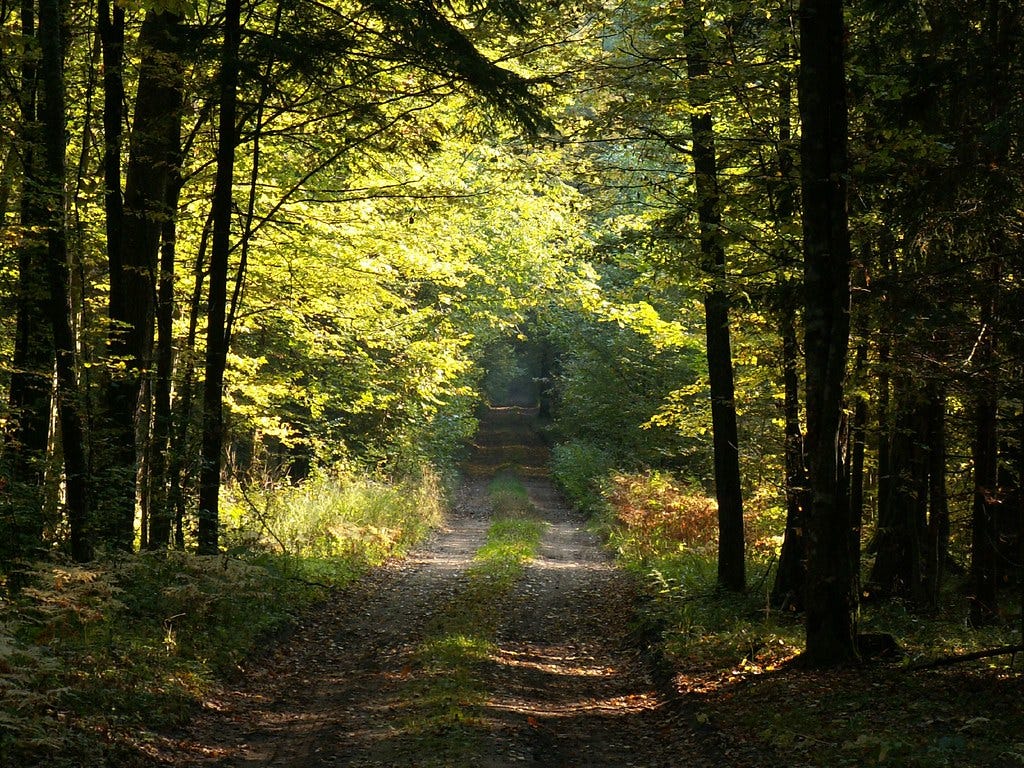
Looking beyond the landscape of American politics—to the greener, pitiless beauty of nature (which you must describe in a Werner Herzog accent)—some myths have had positive impacts for the flora and fauna in many parts of the world. Consider the old Slavic legend of the Leshy, a shapeshifting forest spirit that can appear as a Sasquatch-esque giant, a tiny insect, or an old peasant with a long green beard. The Leshy was best known for fucking around with hunters and lumberjacks who took more game and wood than they needed. It would cover their trails in brush, sabotage their tools when they weren’t looking, and occasionally lead them into festering swamps. Myths can sometimes reflect our cultural priorities, and the myth of the Leshy was a glimmer of how people living in Europe’s Slavic region in the Middle Ages were starting to see forests as living ecosystems. Today, the region contains some of the largest protected woods on the continent, like the 350,000-acre Białowieża Forest that connects Poland and Belarus. This enormous old-growth forest is home to hundreds of European bison!
The River Boyne, which runs across eastern Ireland for 70 miles, also has an inspiring backstory involving deities and humility in the face of nature. As the story goes, Dagda—essentially the Irish Zeus—maintained a well that offered wisdom to all who walked around it clockwise, following the path of the sun, and drank from its waters. Anyone who caught and ate one of the well’s resident salmon was endowed with even more smarts. At one point, Dagda had a fling with a goddess named Boann, who apparently grew tired of her lover’s grandstanding. So one day, she decided to knock Dagda down a peg by walking counter-clockwise around his old well. The waters surged and exploded, imbuing Ireland with a beautiful, winding river that’s now known as the River Boyne. And until the last few decades, Irish citizens and governments honored the myth of the River Boyne’s creation by keeping it well-protected from pollution.
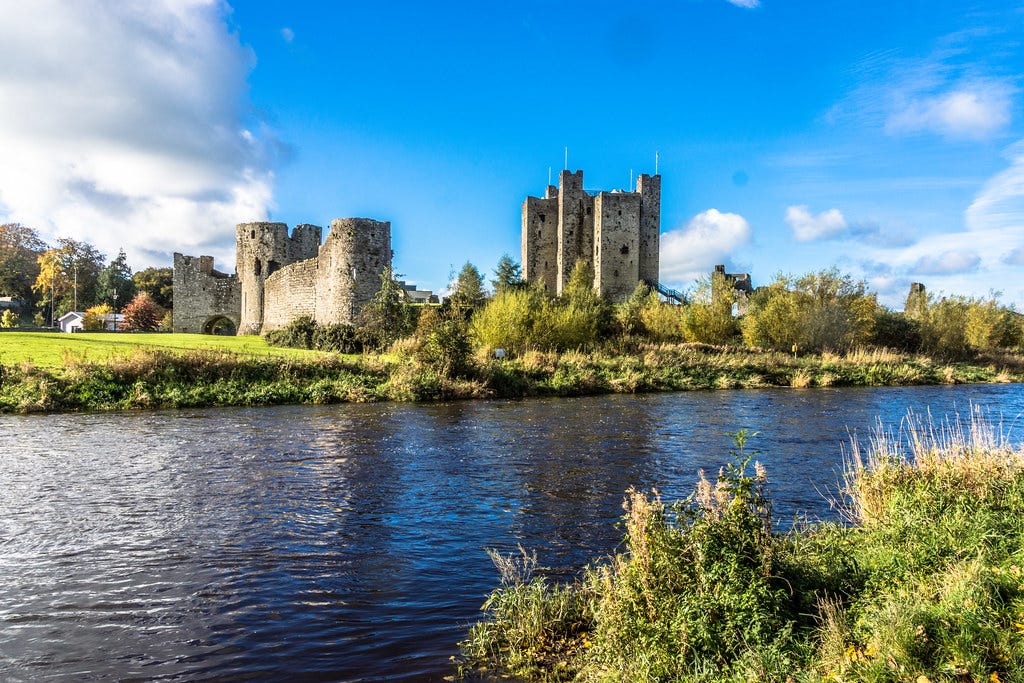
The erosion of those protections over recent years, which has led to more wastewater and industrial runoff finding their way into the river, feels reflective of where we are these days. Too many of us have lost touch with the awesome, spellbinding power of the natural world, which once inspired the naturalist John Muir to call the mountains “God’s first temples.” These days, life can feel increasingly dictated by the power of spreadsheets and algorithms. A year ago, while watching a John Wick movie on the packed opening night, I overheard a guy behind me breathlessly telling his girlfriend how the sequel would present so much potential for intellectual property crossovers with other action franchises. That was what he was fixated on; not the amazing fight choreography or the charisma of Keanu Reeves, but the corporate enrichment that an IP merger might yield. It was one of the most depressing things I had ever listened to.
When our imagination and sense of possiblity become so corroded that we treat the desires of CEOs like our own, things start to fall apart. There’s no single answer as to how America got to this current rut in history, but I have long felt that as a country, we’re long overdue for a humbling from something bigger than ourselves. Another movie that’s currently in theaters, Steven Spielberg’s Disclosure Day, offers a hopeful look at how this could go if we were confronted with proof that aliens exist. While it’s not as awe-inspiring as Close Encounters Of The Third Kind, Spielberg’s latest is one of the most unabashedly optimistic blockbusters I’ve seen in recent memory, and it left me wondering how our own, terrestrial realm could knock our socks off again, in the not-too-distant future. Suppose we learned how to communicate with plants one day. It’s already been established that underground mycorrhizal fungal networks act like marketplaces, trading elements with the trees and plants, and thereby sustaining each other. Earlier this year, I wrote a story for the Phillips Exeter alumni magazine on Dr. Toby Kiers, one of the trailblazing mycologists studying this invisible market. It left me wondering what might happen if mycologists determine how these fungi “talk” to the flora. This, in theory, could allow humans to break into one of their conversations.
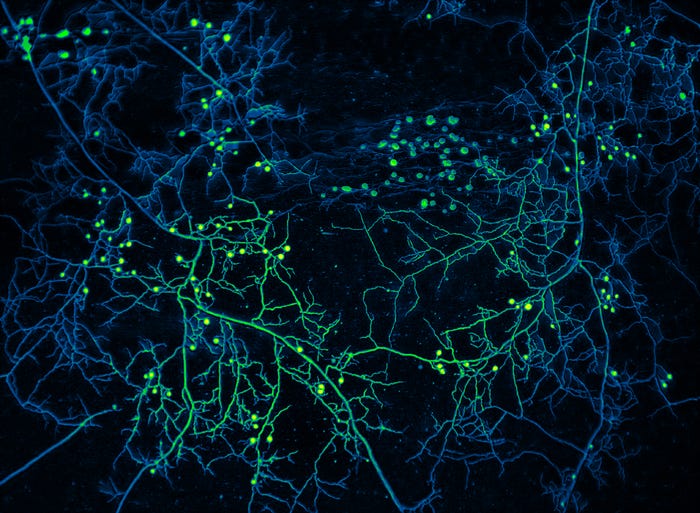
A development of such earth-shaking nature would invite millions of questions, and it’s often moments like this, when a door opens up and minds are blown, that inspire mythology. Historically, we have leaned on myths to try and make sense of the world around us. One could argue that the spread of conspiracy theories in recent years is a symptom of how urgently we crave logic and meaning, at a stressful moment when it feels like the world is on fire, as inequality widens and people are pitted against each other. Perhaps this is wishful thinking, but I wonder if a sudden, staggering revelation of a more positive nature—maybe rooted in nature—could push us toward another kind of myth; the galvanizing genre of mythology, by which America was conceived.
Would a renewed sense of wonder, for the world around us, bring us closer than ever to realizing our myth to its fullest extent? Could it spark a movement…for a version of America in which the bedrock freedoms and dignities of all are peoples are honored?
Whether it comes from the cosmos or from the ground beneath our feet, a humbling like this—a moment of mass astonishment—could be a turning point for this country. It would be an acknowledgment of forces at play that are bigger than us and all of the things we’ve built up and accumulated. Maybe I’m giving us way too much credit, in imagining a positive response to a revelation like this. But clearly, there’s a hunger out there for something. The other day, I learned that Christopher Nolan’s newest film, The Odyssey, is going to be allowed to drop into theaters on July 17th with an R-rating (for “violence and some language.”) That never happens with blockbusters that cost over $200 million to make. But someone at Universal Pictures decided that a hard-edged version of Homer’s centuries-old myth, with its gods and monsters, would get enough adults to the cinemas to yield a profit. I hope they’re right, and I’ll do my part to help.
For anybody wondering, “Wow, why am I getting two new Mind The Moss newsletters in less than 72 hours?!?” the short answer is that I’m giving myself a mini-vacation this coming week. But this particular newsletter has been on my mind for ages, and before I log off for the week ahead and touch some grass, I wanted to share this one with you. I hope today and the rest of your weekend allows plenty of room for wandering and brooding about this country’s history, and where our next chapter might take us.
you might be interested in the indigenous futurism short story collection "Buffalo is the New Buffalo"
I also believe in the power of a good myth. My last post covers the glorious myths of Finnish grenade baseball and the Dartmouth Indian. Great myths bring people together...until they don't. https://jayheinrichs.substack.com/p/the-inspiring-power-of-grenade-baseball?r=8h1ks&utm_campaign=post-expanded-share&utm_medium=web